Mission Drishti: Indian start-up to launch world’s first multi-sensor EO satellite in 2026
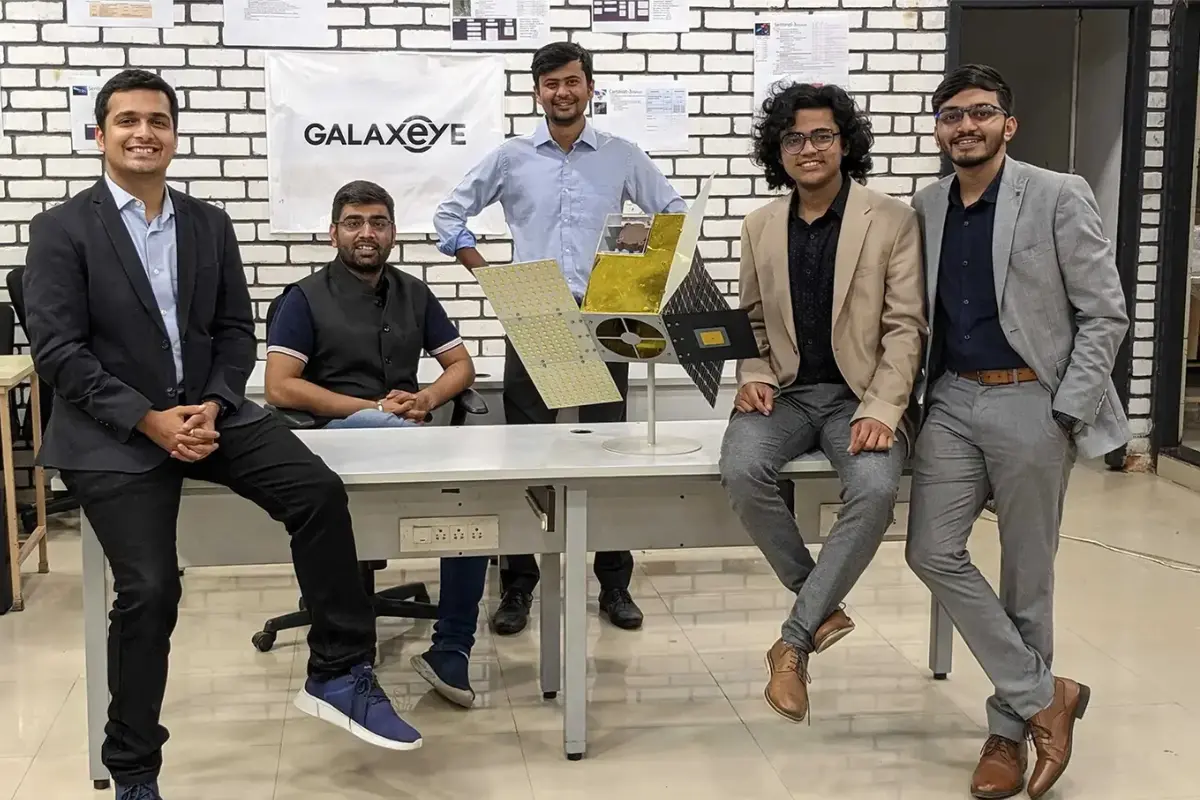
New Delhi: Space-tech start-up GalaxEye announced on Monday that it will launch the world’s first multi-sensor Earth observation (EO) satellite, Mission Drishti, in the first quarter of 2026. The launch marks the beginning of a planned constellation of 8-10 satellites over the next four years.
Weighing 160 kg, Mission Drishti is India’s largest privately built satellite and the highest-resolution satellite developed in the country. It carries both synthetic aperture radar (SAR) and high-resolution optical payloads, enabling Earth observation under any weather conditions and at any time of day.
The satellite offers a 1.5-meter resolution, allowing governments, defence agencies, and industries to perform advanced geospatial analysis across a wide range of applications, including border surveillance, disaster management, defence, utilities and infrastructure monitoring, agriculture, and financial and insurance assessment.
"With Mission Drishti, we are unlocking a new era of actionable data through space exploration. For the first time in the world, we are deploying a satellite that combines multiple sensing technologies on a single platform, enabling us to observe the Earth in ways that were previously impossible," said Suyash Singh, co-founder & CEO, GalaxEye.
The company said the satellite has undergone rigorous structural testing in extreme temperatures to ensure its capability in harsh space conditions. Each satellite in the constellation is engineered as a remote-sensing Earth observation system, optimised for spatial, spectral, and temporal resolutions to capture high-precision imagery.
"This mission places India firmly on the global space map and creates a system that turns space technology into intelligence that businesses, governments, and communities can rely on," Singh added.
He further highlighted the potential of the satellite in current global scenarios, saying, "With the recent geopolitical events increasing, next-generation imaging technologies with AI infusion, we look forward to providing unparalleled imagery intelligence."
Singh also noted the growing interest in the technology, adding, "We already have interest from defence and security agencies, utilities, agriculture, and financial companies, and we are truly excited about the potential of this technology to transform decision-making and operational efficiency across industries."