After reports of over 100 exits, ISRO restricts resignations of scientists on flagship missions
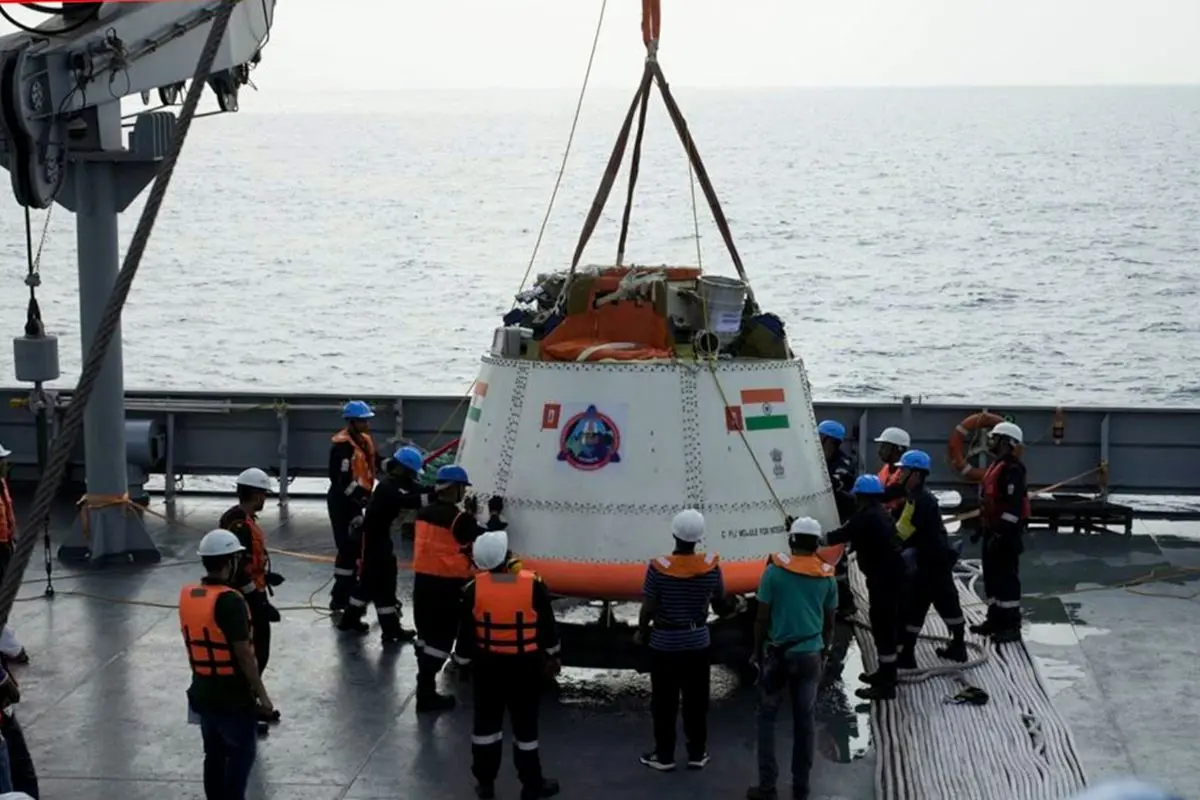
New Delhi: The Department of Space (DoS) has tightened rules governing voluntary retirement and resignations of Indian Space Research Organisation (ISRO) scientists, directing its major centres not to routinely accept requests from personnel associated with the Gaganyaan mission and other strategically important projects.
The directive, issued on July 14, comes amid a reported rise in resignations within the space agency, particularly among Group 'A' scientific and technical personnel.
According to the memorandum, circulated to major ISRO centres including the UR Rao Satellite Centre (URSC) and the Vikram Sarabhai Space Centre (VSSC), resignation and voluntary retirement requests from scientists involved in Gaganyaan and other critical missions should not be approved as a matter of routine.
"Of late, it is noticed that there has been a spate of requests for voluntary retirement and resignation from Group 'A' Scientific/Technical personnel of ISRO, including those associated with the prestigious Gaganyaan and other important missions/projects, severely impacting the implementation of projects of national importance," the directive said.
It further stated that all such requests should be forwarded to the Department of Space along with the recommendations of the respective centre directors for a final decision.
The order effectively reverses a 2020 administrative decision that had delegated powers to ISRO centre directors and heads to approve resignations and voluntary retirement requests of Group 'A' scientific and technical personnel up to the Scientist/Engineer-SG level.
Apart from URSC and VSSC, the directive has also been issued to the Satish Dhawan Space Centre (SDSC), Liquid Propulsion Systems Centre (LPSC), Space Applications Centre (SAC), National Remote Sensing Centre (NRSC), ISRO Telemetry, Tracking and Command Network (ISTRAC) and the Master Control Facility (MCF).
Over 100 reported exits
The move comes amid reports that more than 100 ISRO personnel have resigned in recent months, with Bengaluru-based URSC and Thiruvananthapuram-based VSSC recording the highest number of departures.
Among those who left was senior scientist Victor Joseph T, who served as Project Director of the Launch Vehicle Mark-3 (LVM3) project at VSSC. The LVM3 rocket is the launch vehicle designated for India's ambitious Gaganyaan human spaceflight mission.
Several former ISRO scientists are reported to have joined private space companies following the opening up of India's space sector to private participation in 2020 and the introduction of the Indian Space Policy in 2023.
India now has more than 400 registered space start-ups, which have collectively attracted around 500 million US dollars in investment, including nearly 150 million US dollars in 2025. Companies such as Pixxel, Dhruva Space, Skyroot Aerospace, Agnikul Cosmos and Bellatrix Aerospace have emerged as leading players in the sector.
Focus on upcoming missions
The latest administrative changes also come at a time when ISRO is recovering from recent mission setbacks.
The agency's Polar Satellite Launch Vehicle (PSLV) suffered two mission failures within a year. In January, PSLV-C62, carrying the EOS-N1 Earth observation satellite and commercial payloads, deviated from its intended trajectory after disturbances during the third stage of flight. Earlier, in May 2025, PSLV-C61/EOS-09 failed to place its satellite into orbit following a chamber pressure drop during the third stage.
Despite the setbacks, ISRO continues to focus on several flagship programmes, including Gaganyaan, Chandrayaan-4, the proposed Bharatiya Antariksh Station (BAS) and Mangalyaan-2, India's next planned Mars mission.