ISRO’s SpaDeX de-docking: What does this mean for India’s space future?
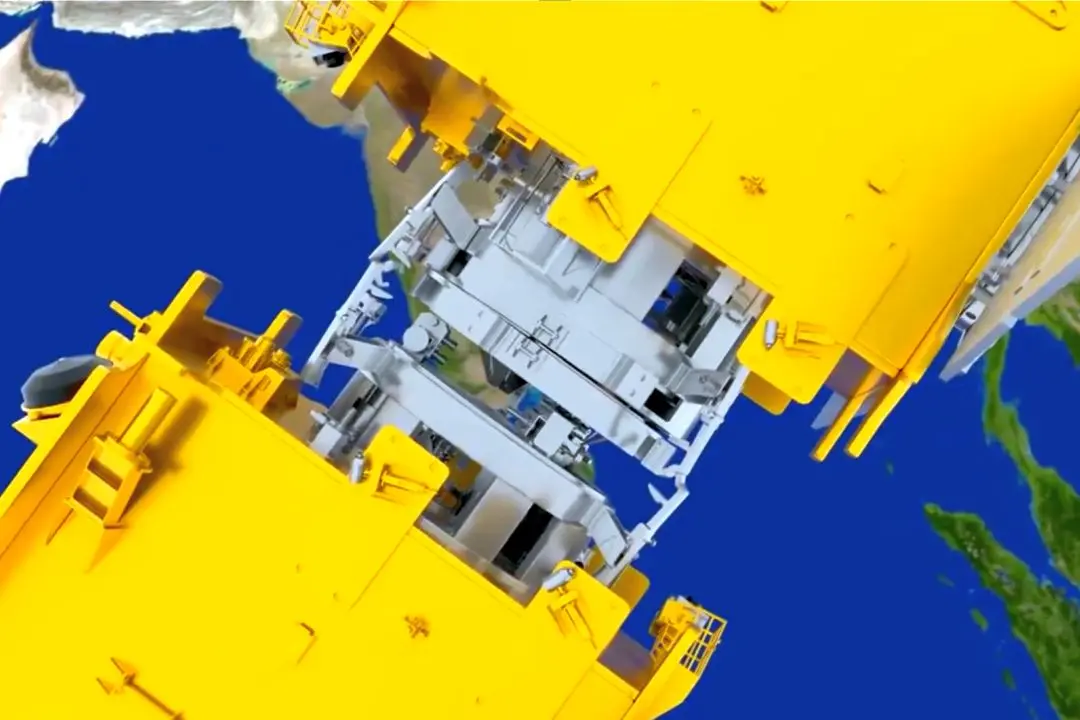
New Delhi: The Indian Space Research Organisation (ISRO) on Thursday announced the successful completion of its SpaDeX mission's space de-docking, marking a significant milestone in India's progress in space exploration.
Union Minister Jitendra Singh congratulated the ISRO team following the achievement, stating that the "SPADEX satellites accomplished the unbelievable de-docking," and called the event "heartening for every Indian!"
He further emphasised the mission’s importance for India's future in space, saying, "This paves the way for smooth conduct of ambitious future missions, including the Bharatiya Antriksha Station, Chandrayaan 4, and Gaganyaan."
Singh also credited Prime Minister Narendra Modi for his unwavering support, adding that "PM Narendra Modi's continuous patronage keeps the spirits soaring."
Precision de-docking of SpaDeX satellites
The undocking process involved a meticulously planned sequence of manoeuvres, leading to the successful separation of the SDX-01 (Chaser) and SDX-02 (Target) satellites. These satellites were launched on 30 December 2024 using the Polar Satellite Launch Vehicle (PSLV)-C60 from the Satish Dhawan Space Centre in Sriharikota.
The de-docking procedure included the controlled extension of SDX-02, the planned release of Capture Lever 3, and the disengagement of the Capture Lever in SDX-02. Following these steps, the decapture command was executed in both SDX-01 and SDX-02, leading to their successful separation.
India joins elite league in space docking technology
ISRO had earlier completed the docking of the two SpaDeX satellites (SDX-01 and SDX-02) in the early hours of 16 January 2024. This achievement positioned India as the fourth country in the world—alongside China, Russia, and the United States—to have successfully developed space docking technology.
According to ISRO, the groundbreaking SpaDeX mission demonstrates India's technological capabilities in spacecraft rendezvous, docking, and undocking—an essential capability for future missions involving satellite servicing, space station operations, and interplanetary exploration.
Significance of the SpaDeX mission
SpaDeX serves as a cost-effective technology demonstrator, proving in-space docking capabilities using two small spacecraft launched via PSLV. This technology is crucial for India's long-term space goals, including placing an Indian on the Moon, executing sample return missions, and constructing and operating the Bharatiya Antariksha Station (BAS). Space docking technology is essential for missions that require multiple rocket launches to achieve a common objective.
The SpaDeX spacecraft were designed and developed by the UR Rao Satellite Centre (URSC) with support from other ISRO centres, including the Vikram Sarabhai Space Centre (VSSC), the Liquid Propulsion Systems Centre (LPSC), the Space Applications Centre (SAC), the Inertial Systems Unit (IISU), and the Laboratory for Electro-Optics Systems (LEOS).
ANI