Are we truly alone? New study reveals possible signs of life just 120 light years from Earth
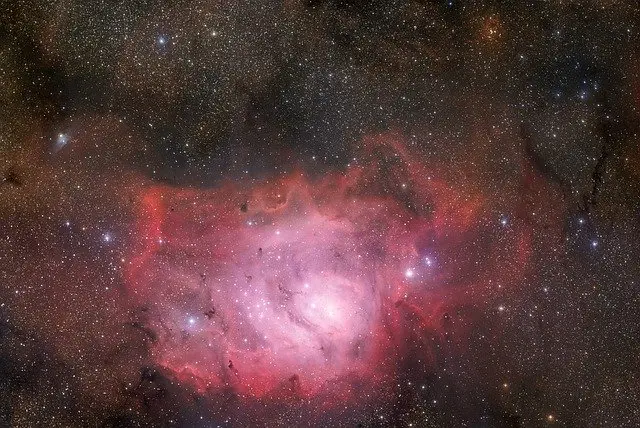
A study led by the University of Cambridge has sparked fresh excitement in the search for extraterrestrial life, after researchers found possible signs of biological activity on a planet just 120 light-years away.
The study, published last week in Astrophysical Journal Letters, reported the detection of fingerprints of dimethyl sulphide and dimethyl disulphide — molecules known to be produced by marine organisms on Earth — in the atmosphere of the exoplanet K2-18b. However, astrophysicists remain cautious, urging independent verification of the findings.
The exoplanet, classified as a 'sub-Neptune', is 8.6 times as massive as Earth but smaller and less massive than Neptune. Interestingly, Earth's most common hypothesis of life’s origin points to the oceans — a connection that lends additional intrigue to the discovery of marine-related molecules on a distant world.
The research team, led by Nikku Madhusudhan, professor of astrophysics and exoplanetary science, claims the study provides evidence with 'three-sigma' significance — representing a 99.7 per cent confidence level that the results are not due to chance.
In an interview with PTI Videos, Madhusudhan said, "When you have big breakthroughs and big paradigm shifts, you want to be really sure because it changes the very fabric of science and society in fundamental ways." He added, "So then, the measure of robustness there is that we want to be sure to a level that there is less than one part in a million chance of a fluke, which is a very, very, very small chance of a statistical fluke or a 'just by chance'. We want to be that robust."
Despite the promising results, the study’s interpretations have faced scrutiny from other experts in the field. Ryan MacDonald, NASA Sagan Fellow at the University of Michigan, warned that the findings may not yet meet the usual standards of detection in exoplanet science. "It is not a 'detection' according to the usual standards of exoplanet science," MacDonald told PTI.
MacDonald explained that the study relied heavily on data from the James Webb Space Telescope's MIRI instrument, analysing starlight transmitted through K2-18b’s atmosphere. He criticised the analysis for assuming that half of the new data could only be explained by dimethyl sulphide and dimethyl disulphide, without fully considering other possible gases. "The study assumes that half of the new data from the Webb telescope can only be explained by dimethyl sulphide and dimethyl disulphide, neglecting other possible gases, thereby attaching a much higher statistical significance to the claims than the data supports," he said.
Further questioning the certainty of the findings, MacDonald added, "Using the statistics in the study, the actual probability of the molecules not being present (in K2-18b's atmosphere) is about 28 per cent. Therefore, the announcement projects (a) near-absolute confidence in a result that has a good chance of not being real."
Other scientists echoed the need for caution. Jayesh Goyal, reader at the School of Earth and Planetary Sciences at the National Institute of Science Education and Research (NISER), Bhubaneswar, noted the challenges involved but also acknowledged the step forward the study represents. "The observations on K2-18b's atmosphere highlight the extent to which this class of sub-Neptune or super-earth exoplanets could be characterised as these targets are extremely challenging to study," he said.
Goyal described the study’s results as significant for pushing the limits of the understanding of exoplanet atmospheres and habitability, while emphasising that further validation is needed.
Asa Stahl, an astrophysicist whose PhD at Rice University focused on exoplanets, praised the methodology while urging caution. "It's an immensely difficult task -- trying to piece together what a planet over a hundred light years away is like from how starlight filters through its atmosphere," he said.
Stahl added, "However, it is also a relatively new method, and astronomers are still figuring out the best practices for this sort of thing."
Stephen Schmidt, a graduate research fellow at Johns Hopkins University, also raised concerns after re-analysing results from an earlier 2023 study by Madhusudhan’s team. Schmidt’s re-analysis differed from the original findings and suggested higher levels of methane relative to carbon dioxide, a scenario he said makes the existence of a habitable liquid water ocean — and therefore life — "very difficult and unlikely."
"The result indicated 'a lot more methane compared to carbon dioxide' and therefore, 'very difficult and unlikely for the exoplanet to have a habitable liquid water surface ocean, and also a biosphere or life'," Schmidt explained.
He stressed that while the Cambridge-led study pushes the capabilities of the Webb telescope, it also demonstrates that initial findings must be treated carefully. "This can result in potentially exciting findings that aren't substantiated after further observations," Schmidt said.
The origins of dimethyl sulphide and dimethyl disulphide molecules themselves remain a subject of debate. Although they are associated with life on Earth, studies have also found these molecules in lifeless environments, such as comets and the space between stars. Madhusudhan’s team is working to address this aspect in future research.
Goyal said additional observations of K2-18b, coupled with a detailed study of laboratory spectra of the relevant molecules, could help tighten or challenge the study’s conclusions.
MacDonald pointed out that future studies should consider a wider variety of molecules and be more transparent about the model's capabilities in detecting chemicals. "Further, a model's ability to detect chemicals accurately should be quoted in a paper, after 'considering a wide variety of different molecules, rather than just those one assumes are there'," he said.
Ultimately, scientists agree that no single chemical signature will be sufficient. A combination of multiple chemicals, produced in significant amounts and contextualised within the planet’s broader environment, will be necessary to confirm signs of life.
Nonetheless, researchers see promise in the methods used. "If we ever discover life in another world, this method could be how we find out," said Stahl.
(With inputs from PTI)