Teen quantum genius defends PhD at 15, stuns global scientific community
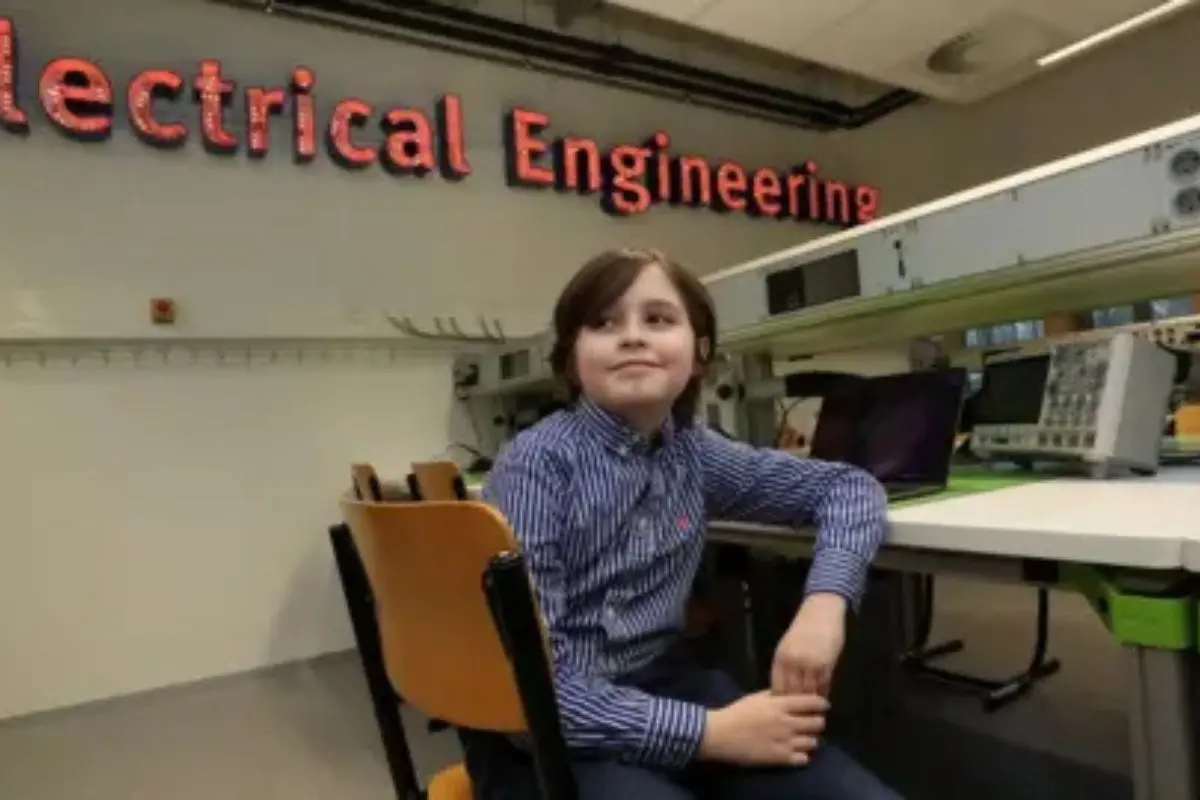
Antwerp: Laurent Simons, the 15-year-old widely celebrated as “Belgium’s little Einstein,” has achieved yet another extraordinary milestone: he has completed a PhD in quantum physics at the University of Antwerp.
Flemish broadcaster VTM confirmed that Laurent successfully defended his doctoral thesis last week, marking what experts say could be one of the fastest recorded completions of a physics doctorate in modern academia.
Laurent’s doctoral work examined complex theoretical questions surrounding Bose polarons in superfluid and supersolid systems — areas of quantum research typically approached by seasoned researchers far into their academic careers.
His supervisors described his contribution as “highly advanced,” noting that he grasped difficult concepts and mathematical frameworks with uncommon ease.
Simons’ academic journey has been anything but conventional. He began primary school at age four and completed it by six. By 12, he had already earned a master’s degree in quantum physics, studying bosons, black holes and other areas that challenge even top graduates.
Teachers from his early years recall a child with “extraordinary concentration” and “a natural curiosity for scientific problems far beyond his age.”
Reports over the years have highlighted Laurent’s photographic memory and an IQ reportedly measured at 145 — a score achieved by only a small fraction of the global population.
His parents say his abilities became clear early on, but they also emphasize that their priority has been to ensure he grows “as a full human being, not just as an academic.”
Behind Laurent’s intellectual motivation lies a deeply personal story. At age eleven, after losing both his grandparents, he declared that his life’s mission was to extend human life. He has repeatedly said that he hopes to pursue medical science, not for personal advancement but “to help people live longer, healthier lives.” His long-term dream blends physics, biology and medical innovation — disciplines he believes must work together to push the boundaries of human longevity.
Even as global universities and tech companies begin to take notice of the young prodigy, his family remains firm about balance.
“We want both sides of Laurent to grow — the scientist and the child,” they told Belgian media outlets, stressing that his emotional and social well-being are as important as his academic feats.
While Laurent’s achievement has captured international attention, he is not the youngest PhD holder in history. Guinness World Records still lists Karl Witte, who completed his doctorate in 1814 at the age of 13.
In physics, the youngest in recent years has been Carson Huey-You, who earned his PhD at 21. Yet Laurent’s pace and depth of study at such a young age remain exceptionally rare in contemporary academia.
For now, Laurent is expected to continue his studies in Europe as he charts his next academic steps — ones that could place him at the frontier of scientific discovery in the decades ahead.