Are we headed for a cosmic crash? The Milky Way’s fate just got complicated
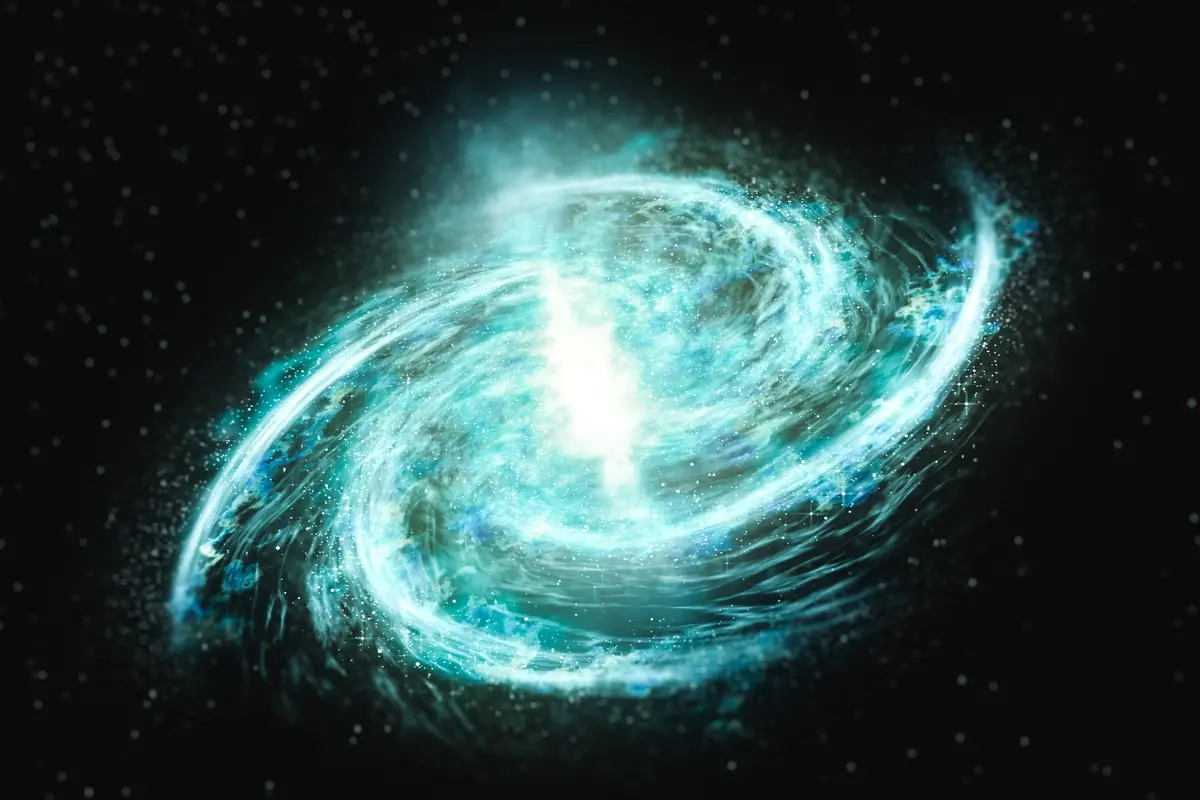
For years, scientists believed that our home galaxy, the Milky Way, was on a collision course with our massive neighbour, the Andromeda galaxy.
But new research brings a surprising twist: there’s now only a 50-50 chance they’ll ever collide, and if they do, it likely won’t be for another 10 billion years.
That’s right, the galactic crash might not happen at all.
What changed?
The updated forecast comes from an international team of astronomers, led by Till Sawala from the University of Helsinki. Using the most recent data from NASA’s Hubble Space Telescope and the European Space Agency’s Gaia mission, the team ran simulations to better understand how the galaxies move and interact.
Earlier predictions suggested that the Milky Way and Andromeda would slam into each other in around 5 billion years, forming a new, giant galaxy nicknamed Milkomeda. But these new simulations show it’s just as likely that they’ll pass by each other without a crash.
What affects the collision odds?
Two other galaxies have a say in this cosmic drama:
Triangulum Galaxy: Its gravitational pull might increase the chance of a collision.
Large Magellanic Cloud: Its presence might decrease the chance.
When these factors were added in, the result was a 50-50 chance, like flipping a coin.
Will we be around to see it?
Not likely.
The Sun is already 4.5 billion years old, and it’s expected to die in about 5 billion years. Before that happens, it will become so large that it could engulf Mercury, Venus, and maybe even Earth. Even if our planet survives, it will be too hot and dry for life as we know it.
So, even if Andromeda does collide with the Milky Way, humanity won’t be around to watch—unless we somehow find a way to survive billions of years into the future.
Why does it matter?
Understanding whether galaxies like the Milky Way will collide helps scientists learn more about the universe; how galaxies evolve, interact, and reshape themselves over time.
As astronomer Raja GuhaThakurta from UC Santa Cruz (who wasn’t involved in the study) put it, “The fate of our Milky Way is a subject of broad interest—not just to astronomers.”
What happens if they do collide?
If a full collision happens, the Milky Way’s beautiful spiral shape could turn into a milky blob of stars—losing the starry band we see in the night sky. But if Andromeda just does a harmless flyby, our galaxy could remain mostly intact.
So, is our galaxy doomed to crash?
Maybe. Maybe not.
There’s still a lot we don’t know about how galaxies move. But for now, scientists say the "inevitable galactic crash" may not be so inevitable after all.