All about Falcon 9: The SpaceX rocket taking Indian astronaut Shubhanshu Shukla to space
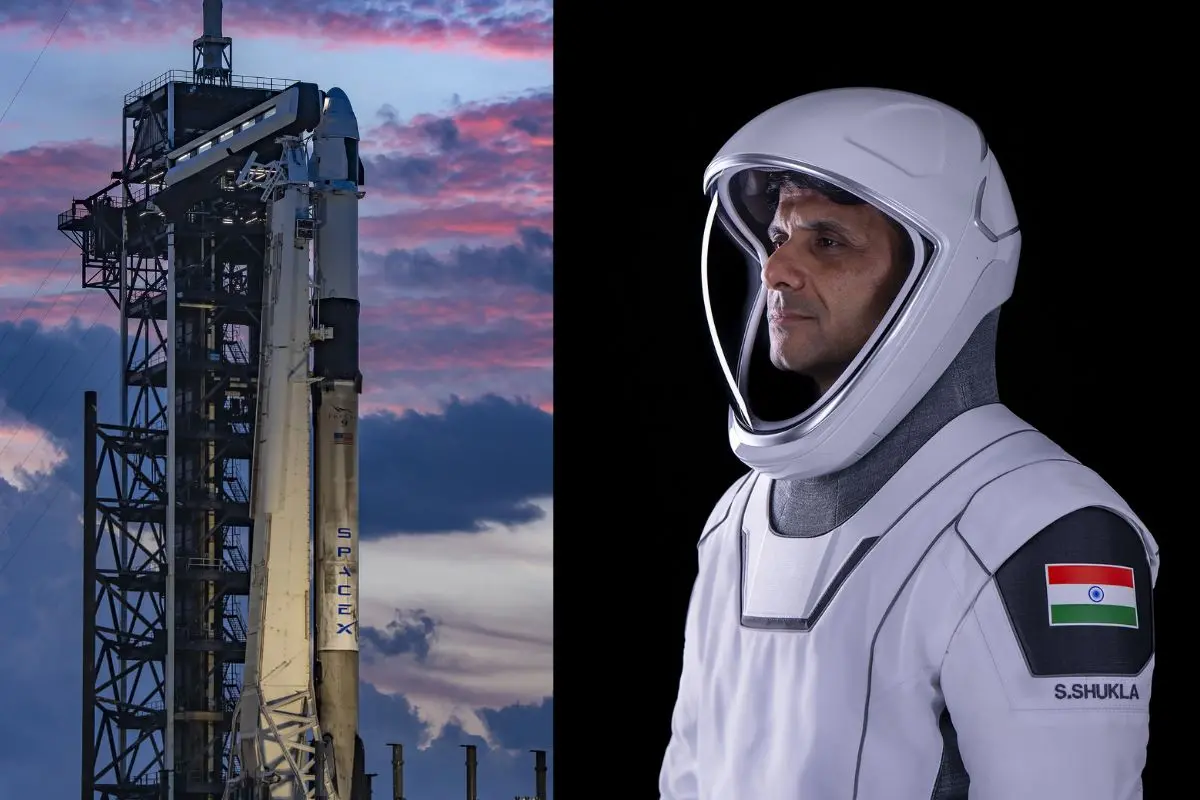
New Delhi: Indian Air Force officer Group Captain Shubhanshu Shukla is set to launch into space on Wednesday aboard SpaceX’s Falcon 9 rocket as part of the Axiom Mission 4 (Ax-4). The liftoff is scheduled for 12:01 pm IST from Launch Complex 39A at NASA’s Kennedy Space Center in Florida, with docking at the International Space Station (ISS) expected on June 26 at approximately 4:30 pm IST.
About Falcon 9 Block 5:
- At the heart of today’s launch is the Falcon 9 Block 5 rocket, SpaceX’s highly reliable, medium-lift launch vehicle designed to carry astronauts and cargo into orbit. Built by Elon Musk’s SpaceX, the Falcon 9 is partially reusable, with its first stage designed to return to Earth and land vertically for refurbishment and reuse. This innovation lowers the cost and increases the frequency of space access.
- First launched on May 11, 2018, the Block 5 variant debuted by placing Bangladesh’s Bangabandhu-1 satellite into orbit. Since then, it has completed 16 crewed missions with a flawless 100% safety record and has become the first commercial spacecraft system to be certified by NASA for regular human spaceflight since the Space Shuttle era began in 1981.
- Equipped with nine Merlin engines, the Falcon 9 features advanced safety systems, including triple-redundant flight computers and the capability to complete a mission even if one engine fails. The rocket has now launched 438 times, with 437 successful missions—an extraordinary 99.77% success rate, making it one of the most reliable vehicles in spaceflight history.
- Capable of delivering up to 22,800 kg to Low Earth Orbit (LEO) and 8,300 kg to Geostationary Transfer Orbit (GTO), the Falcon 9 uses a combination of liquid oxygen and refined kerosene (RP-1) for propulsion. Its reusable features, titanium grid fins, retractable landing legs, and thermal protection systems have revolutionised modern rocketry.
India’s space legacy continues
This mission marks a major milestone for India, as Shukla becomes only the second Indian to venture into space, following in the footsteps of Wing Commander Rakesh Sharma. Sharma flew aboard the Soviet Soyuz T-11 spacecraft on April 3, 1984, spending seven days aboard the Salyut 7 space station as part of the Interkosmos programme. During his mission, Sharma famously described India as “Saare Jahan Se Achha” when then-Prime Minister Indira Gandhi asked how the country looked from space.