Musk’s X transparency push; users to see government takedown requests
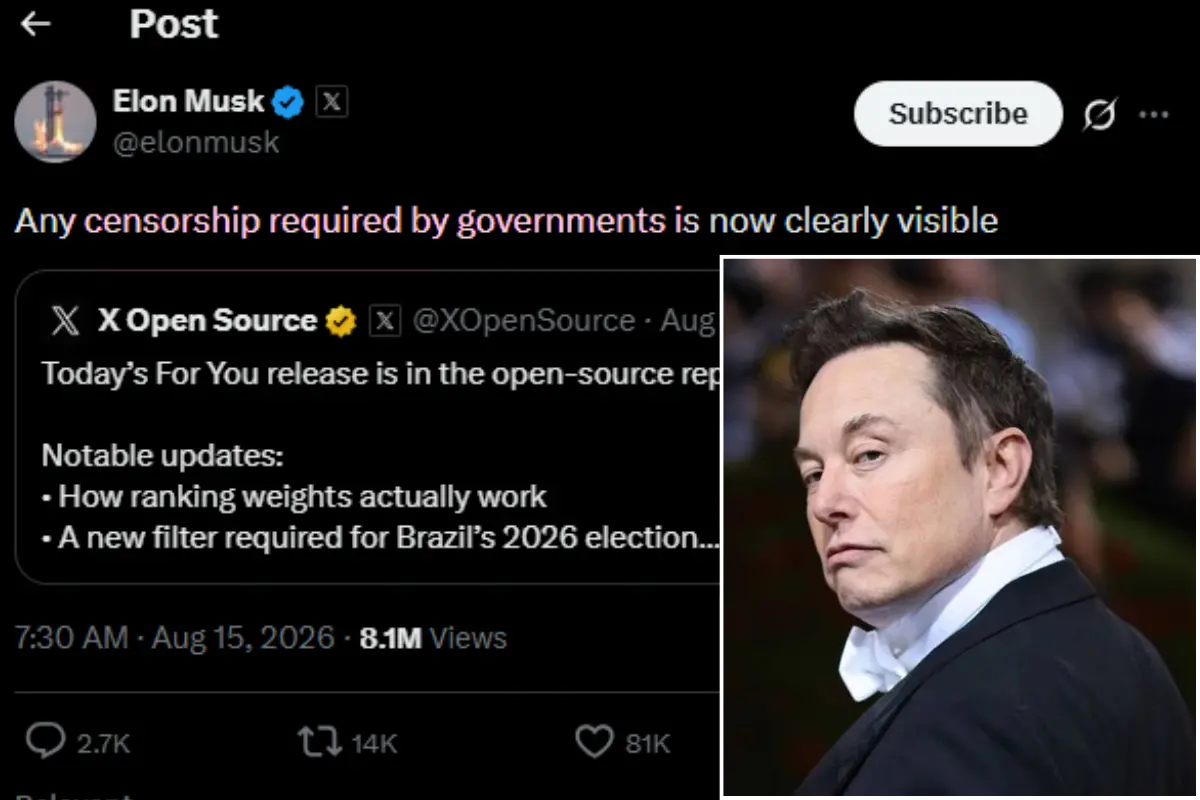
Elon Musk has announced that X will make government requests to remove or restrict content more visible to users, including identifying the government agency involved and, where available, the legal basis for the request.
Musk said on X that “any censorship required by governments is now clearly visible”.
Under the proposed approach, users would be informed when a government authority asks X to remove a specific post, restrict content or take action against an account.
X would also identify the state agency that made the request and provide the legal justification or reasoning supplied by the authority, where that information can be disclosed.
Musk pushes transparency around content restrictions
The move is part of Musk's broader emphasis on transparency around content moderation and how posts are distributed on X.
Government authorities in different countries can request that social media platforms remove content or restrict access to posts and accounts. Such interventions can sometimes be difficult for users to distinguish from moderation decisions made directly by the platform.
The proposed disclosures could make that distinction clearer.
Transparency does not mean X will reject requests
The announcement does not necessarily mean that X will refuse government takedown demands.
Reports have indicated that X has complied with a large proportion of government removal requests during Musk's ownership, although reported compliance rates vary depending on the period and methodology used.
The proposed system would therefore provide more visibility into government requests without necessarily changing whether X complies with legally binding orders.
Previous X-government disputes
The announcement comes after several disputes between X and governments over content restrictions.
In India, the government previously rejected X's claim that authorities had issued a fresh blocking order covering 2,355 accounts, including Reuters and Reuters World. The government said it had instead directed X to restore access to the accounts after they had been blocked in India.
The episode highlighted the difficulty users can face in determining whether content has been restricted because of a platform decision or a government request.
What X's move could mean
If implemented as described, the policy could give users more information about the origins of content restrictions. Identifying the requesting authority and the legal basis could help distinguish government intervention from X's own moderation decisions.
The move could also increase scrutiny of governments by creating a more visible record of requests to restrict online content.
At the same time, transparency over government requests is different from a guarantee that content will remain available. X may still comply with requests where it is legally required to do so.
The policy could therefore become an important test of how social media platforms balance government regulation, legal obligations and freedom of expression.