Apple India launch November 6: Touchscreen MacBook, OLED iPad mini prices
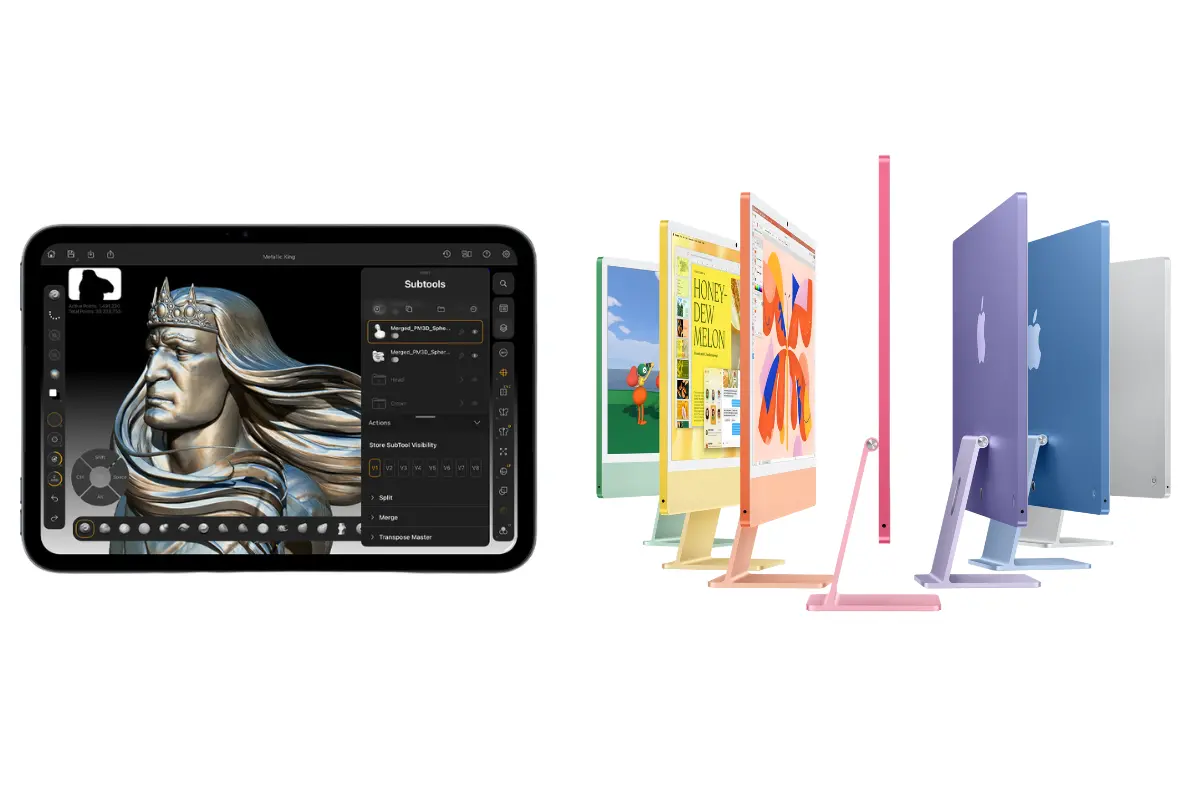
Apple is bringing five new devices to India this November, including its first touchscreen MacBook Pro models and an OLED-equipped iPad mini. While three products arrive on November 6, the two touchscreen MacBook Pro models are scheduled to go on sale on November 9.
Apple India launch: five new devices and their prices
Apple's latest product range includes an upgraded iPad mini, a new iMac and three MacBook Pro configurations. The biggest change is the introduction of touchscreens to the MacBook Pro range, a feature Apple has not previously offered on its laptops.
Pre-orders for all five products opened on October 28. Here is a breakdown of their features, prices and India availability.
1. iPad mini with OLED display and A20 Pro chip
The new iPad mini receives a major display upgrade with an 8.5-inch OLED screen, offering deeper blacks, improved contrast and richer colours. It is powered by Apple's A20 Pro chip, designed to support demanding applications and AI-related tasks.
Other features include a 12MP Centre Stage front camera, IP67 water and dust resistance, and Apple Intelligence support. It will be available in Midnight and Starlight colours.
India price: ₹82,900 (Wi-Fi); ₹1,00,900 (cellular)
Availability: November 6
2. iMac with M6 chip
Apple's updated iMac features the M6 chip, bringing improvements to CPU and GPU performance, alongside Neural Accelerators for AI-related workloads.
It retains the 24-inch 4.5K Retina display and slim design. Connectivity upgrades include Wi-Fi 7 and Bluetooth 6. The desktop also features a 12MP camera and runs macOS 27.
Buyers can choose from seven colours: blue, green, pink, yellow, purple, orange and silver.
India price: ₹1,74,900 for the base model; ₹1,99,900 for the higher configuration
Availability: November 6
3. 14-inch MacBook Pro with M6 chip
For buyers who prefer a conventional laptop experience, Apple has introduced a 14-inch MacBook Pro powered by its M6 chip. The processor features a 12-core CPU and 12-core GPU, with improvements aimed at graphics and AI performance.
The laptop includes a Liquid Retina XDR display, a 12MP Centre Stage camera and a six-speaker sound system. Apple also claims battery life of up to 24 hours.
India price: ₹2,39,900
Availability: November 6
Colours: Space Black and Silver
4. 14-inch MacBook Pro with OLED touchscreen
The touchscreen MacBook Pro is the most significant change in Apple's new laptop lineup. For the first time, users will be able to interact directly with the MacBook display through touch gestures.
The 14-inch model features a tandem OLED display branded PROLED XDR, with a 120Hz refresh rate and touch support. It also introduces Dynamic Island to the MacBook range.
The laptop is powered by Apple's M5 Pro or M5 Max chips, depending on the configuration, and is designed for professionals working with demanding creative applications.
Starting price in India: ₹3,49,900 (M5 Pro)
Availability: November 9
5. 16-inch MacBook Pro with OLED touchscreen
The larger touchscreen MacBook Pro offers the same display technology and processor options in a bigger format. Its 16.3-inch PROLED XDR screen supports touch gestures, ProMotion refresh rates of up to 120Hz and a wide colour gamut.
Depending on the configuration, it supports up to 128GB of unified memory and up to 16TB of storage. The device is aimed at professionals who need additional screen space for video editing, design and other resource-intensive work.
Starting price in India: ₹4,09,900 (M5 Pro)
Availability: November 9
Apple touchscreen MacBook: A major change, but will buyers pay the premium?
Apple's decision to introduce touch input to the MacBook Pro brings its laptops closer to Windows devices that have offered touchscreen functionality for years. However, technology analysts say the feature alone may not be enough to attract large numbers of buyers.
The new touchscreen MacBook is positioned at the premium end of India's laptop market. Its starting price of ₹3,49,900 makes it considerably more expensive than many touchscreen Windows laptops, potentially limiting its appeal to professionals and existing Apple users.
Faisal Kawoosa, chief analyst at Techarc, has linked the move to changing user behaviour, noting that smartphone experiences increasingly shape expectations of laptop interfaces. Ashweej Aithal, senior analyst at Omdia, said touch input could make creative work and everyday interactions more intuitive, but pointed out that Windows laptops already offer the feature.
Bharath Shenoy, principal analyst at IDC India, expects the touchscreen MacBook to appeal particularly to filmmakers, photographers, designers and content creators. However, he believes it is likely to remain a niche product in India because of its pricing.
Will the touchscreen MacBook affect iPad sales?
The addition of touch input to MacBooks also raises questions about the distinction between Apple's laptops and tablets.
The touchscreen MacBook does not feature a convertible design, tablet mode or Apple Pencil support. However, its new interface could overlap with some of the activities for which people currently use an iPad, including browsing, content consumption and light productivity.
Aithal suggested that some customers might question whether they need both devices if a touchscreen MacBook can meet their requirements. Kawoosa, however, does not expect a significant impact on iPad sales, arguing that users who prefer a single device are likely to remain a relatively small group.
The upgraded iPad mini addresses two longstanding hardware limitations through its OLED display and redesigned speaker system. Analysts expect these changes to appeal to frequent travellers, readers and existing Apple customers, although they may not be sufficient to persuade owners of recent models to upgrade.
Apple's challenge: More than just new hardware
The new products arrive as competition in the premium laptop market intensifies. ARM-based Windows laptops are narrowing the performance and battery-life gap with Apple's M-series processors, putting pressure on the company to offer more than its chip advantage.
Analysts also point to areas where Apple's ecosystem still has gaps. Face ID, for instance, has not been introduced on MacBooks, which continue to rely on Touch ID for biometric authentication.
The touchscreen MacBook also raises questions about how far Apple intends to extend touch interaction across macOS, particularly for applications originally designed around a keyboard and trackpad.
Ultimately, the success of the new lineup will depend on whether the hardware improvements justify the prices. The touchscreen MacBook introduces a significant change to Apple's laptop experience, while the iPad mini's OLED upgrade addresses important display and audio limitations. However, neither change automatically guarantees stronger demand.