11 most powerful AI-enabled industrial robots that ruled 2025
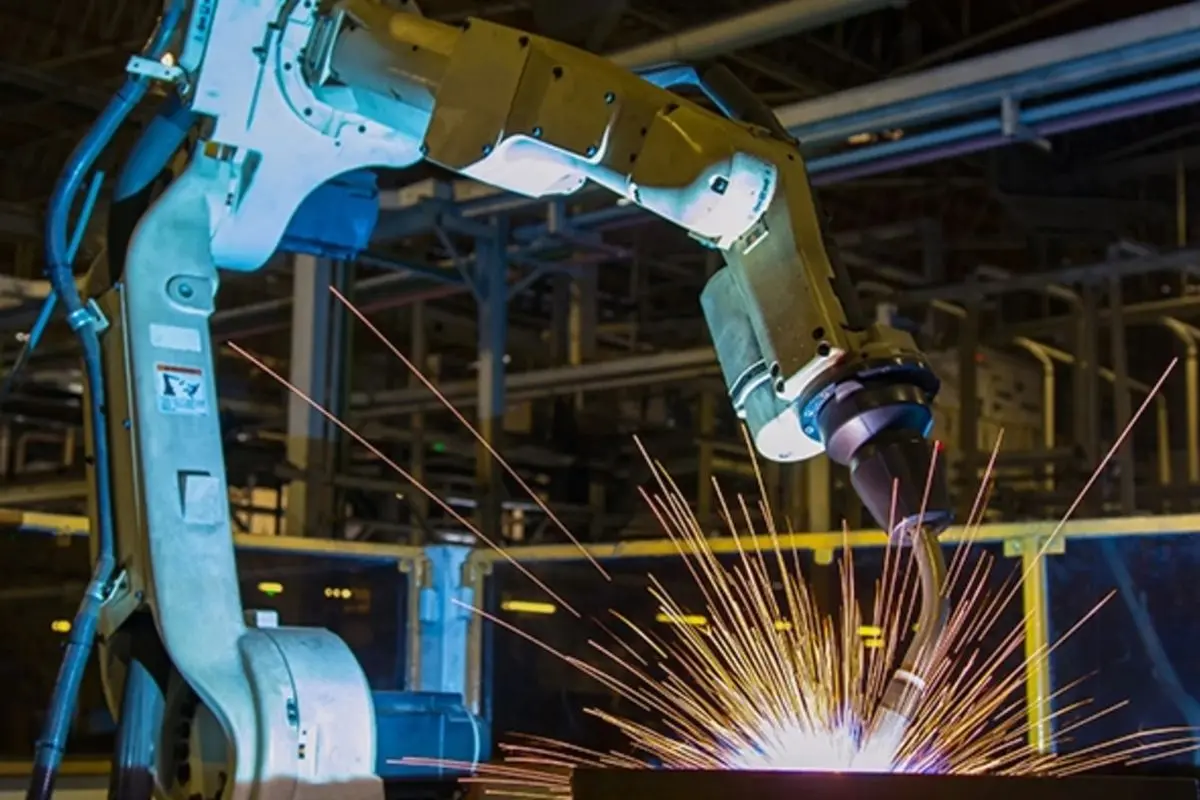
2025 was the year industrial robots quietly reclaimed the spotlight. While humanoids grabbed social-media attention with expressive faces and “viral demo energy,” the real transformation was happening on factory floors—where AI-powered machines became faster to deploy, easier to train, and stronger than ever.
As automation spending surged worldwide, even emerging markets like India stepped into the fast lane. Here are the robots and systems that defined the new era of industrial automation in 2025.
1. Apptronik Spins Off Elevate Robotics: Non-Humanoids Get Serious Muscle
Apptronik, known for its Apollo humanoid, launched Elevate Robotics, a dedicated industrial automation subsidiary. Think of it as Apptronik’s “no-nonsense” arm—focused on non-humanoid systems built for heavy lifting, precise assembly and brutal factory workloads.
The new team, led by Plus One Robotics co-founder Paul Hvass, is leveraging a decade of humanoid R&D to build industrial-grade robots with fewer theatrics and more torque.
2. SoftBank Buys ABB Robotics: A $5.3B Power Grab
Masayoshi Son made one of the boldest automation bets of the decade by acquiring ABB’s Robotics division for $5.375 billion. Suddenly, SoftBank now controls one of the world’s largest portfolios of robotic arms, manufacturing cells, and automation software. With ABB running thousands of production lines globally, this acquisition was less about hype—and more about buying the backbone of modern manufacturing.
3. Amazon’s Robot Fleet Crosses 1 Million
In July, Amazon deployed robot number 1,000,000 at a fulfillment centre in Japan. The company now uses machines—from mobile sorters to sensor-heavy humanoids—in more than 300 facilities. Amazon claims robots touch 75% of all deliveries. The future of warehouse work is no longer a question mark—it’s already here, running on wheels, arms, sensors, and fleet AI.
4. Universal Robots Drops UR18: The “Mega-Cobot”
Universal Robots debuted the UR18, an 18-kg-payload cobot with 4 m/s speeds and a surprisingly lightweight 39-kg frame. It launched with OptiMove and MotionPlus, motion-control systems that make it behave less like a cobot and more like an industrial athlete. Perfect for high-mix, high-speed factory lines in automotive, FMCG and logistics.
5. Hoxo: The Humanoid That Walked Into a Nuclear Plant
Capgemini and Orano deployed Hoxo, one of the first intelligent humanoids to operate inside an active nuclear facility. Equipped with real-time perception, autonomous pathfinding and gesture replication, Hoxo isn’t built for marketing videos—it's designed to take over dangerous, precision-dependent tasks humans shouldn’t perform.
6. AgiBot’s RW-RL Breakthrough: Robots Learn Tasks in 10 Minutes
AgiBot’s reinforcement learning system—once a lab curiosity—hit a real production line at Longcheer Technology. Robots trained with RW-RL can learn new tasks in about 10 minutes, instead of weeks.
This is potentially the most disruptive robotics tech of the year: factories can retool overnight.
7. NVIDIA’s Digital Twin Factories Go Fleet-Wide
NVIDIA expanded its Omniverse Blueprint platform to simulate entire robot fleets. Manufacturers can now prototype behaviours of hundreds of robots—traffic flow, joint wear, safety logic—before hitting “deploy” on physical machines. The digital twin is no longer a trend; it’s becoming the default manufacturing OS.
8. India Pushes In: CynLr’s Adaptable Robots Near Launch
Bengaluru-based CynLr confirmed plans to release its first deployable factory robots by late 2025 or early 2026. Their goal: vision-driven machines that don’t need endless reprogramming. India isn’t just catching up—it’s starting to build universal manipulators for global markets.
9. Addverb’s Dual-Arm Humanoid Enters the Race
Addverb, backed by Reliance, is developing a dual-arm humanoid aimed at industrial assembly lines. Expected around late 2025, this robot represents India’s leap from AMRs and warehouse automation into high-end, dexterous systems.
10. LG CNS & Skild AI: Humanoids Meet Foundational Robot Models
LG CNS teamed up with Skild AI to build humanoids powered by foundation models—robots that can generalise across tasks like humans do. The partnership targets factory monitoring, assembly, logistics, and even urban duties. Think ChatGPT, but for robotics—and with arms.
11. Dexterity AI’s “Mech”: The Industrial Super-Humanoid
Dexterity AI unveiled Mech, a machine designed specifically for industrial grunt-work. It can lift nearly 58 kg, stack loads eight feet high, and navigate complex sites autonomously. Managed by a single remote operator controlling multiple units, Mech represents a new class of humanoids built for warehouses, not entertainment.
Bonus: India’s Robotics Ecosystem Explodes
2025 also brought a wave of robotics investments:
- Apptronik secured a massive $350M to scale production.
- ANSCER Robotics raised $2M to expand mobile robots internationally.
- Delta Electronics injected $500M into India and launched its new D-Bot cobot line.
- Sweden’s RSP AB opened its first overseas factory in Chennai to build components for global robot brands.