Forgotten colours of Onam: The story of traditional flowers
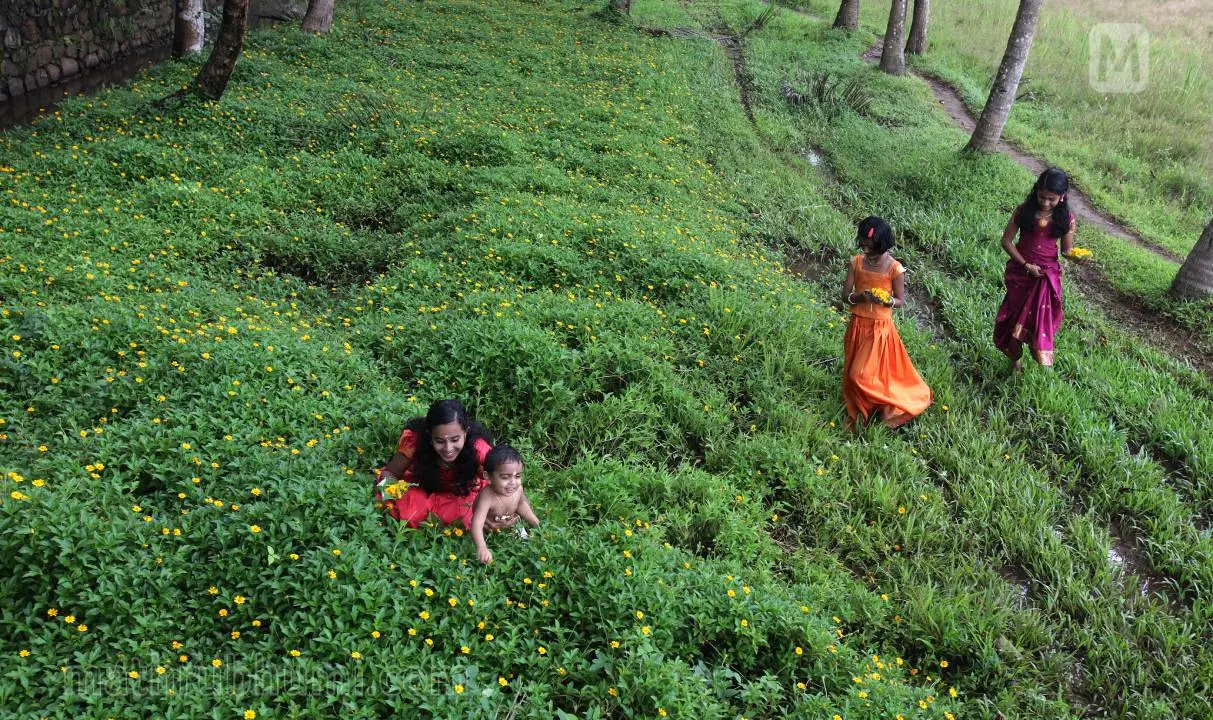
It is impossible to reminiscence 'Onam' memories without flowers. Flowers are essential to the festival, as without them, the intricate floral arrangements would lose their charm and become mere drawings on the ground.
You might come up with some innovative designs, but you need a list of flowers that you can use to fill your stunning flower arrangements that essentially bring colours to the annual festival in Kerala.
While modern times have made it easier to acquire flowers from the market, collecting them from gardens or courtyards adds a nostalgic touch to the process.
Unfortunately, we have unwittingly alienated ourselves from traditional flowers that were once a ubiquitous component of our immediate surroundings due to the constrained spaces we live in today or the introduction of fancy new trends of ornamental vegetation.
Shruti Tharayil, a herbalist and founder of the initiative "Forgotten Greens," pointed out that not only are these flowers disappearing from Pookalams, but so is our knowledge about the rich therapeutic qualities associated with these traditional flowers and plants.
"According to my knowledge, people in Kerala were aware of the significance of these flowers and their therapeutic capabilities back in the day. You tell children that this and that flowers are used for this and that, passing on a wealth of knowledge about flowers and plants from generation to generation. However, this isn't happening right now because we'd rather go to the market and buy flowers for Pookalam. As a result, their therapeutic knowledge is rapidly fading and on the verge of oblivion," Shruti Tharayil said.
Thumba (Ceylon Slitwort) or Chemparathy (Hibiscus), which are most common among flowers used in Onapookalam, are used for many medicinal purposes, like to cure coughs, colds, fever, stomach ache, loss of hair, cough, and greying of hair.
Furthermore, experts have warned that the predilection for using specific flowers through mass production could lead to monocropping and the eventual extinction of traditional plant species. In addition, the usage of pesticides and other forms of chemicals in imported flowers contributes to health risks.
"Onam, in my opinion, is about abundance. Kerala's terrain is extremely fertile. The season in Kerala is characterised by a profusion of flora. We are, however, renouncing this abundance in favour of relying on the market. As a result, we are losing touch with our own biodiversity. Many flowers and their qualities are unknown to the general public. For instance, people may be aware of popular flowers like Chethi (Flame of the woods) or Thumba (Ceylon Slitwort), but not flowers like Hanuman Kereedam (Red Pagoda Flower) or Sankhupushpam (Butterfly Pea). People are detached from their surroundings, which I believe is one of the most serious issues we should address," she said. She went on to say that people should have access to these flowers and learn to appreciate them in their natural settings.
Here are some traditional and commonly used flowers for creating stunning Pookalam designs:
Thumba or Ceylon Slitwort
The little white flowers, often found in the backyard of houses in Kerala, evoke memories of Onam in the minds of Malayalis. Thumba or commonly termed Thumbapoo is a necessary component of Pookalam. As a traditional practice, a tulsi (holy basil) leaf and thumba (Leucas aspera or Ceylon slitwort) flower are placed in the centre of the pookkalam. Previously, only Thumba flowers were used to prepare pookkalam on Atham -- the first day of Onam celebrations -- and to decorate Thrikkakarappan. However, Thumba, with its rich medicinal virtues, has long lost its allure due to the emergence of attractive flowers on the market.
Mukkutti (Little Tree Plant)
Mukkutti, the tiny yellow flowers often spotted amidst creepers in our gardens, is considered a crucial aspect of the Pookkalam and is one of the 'Dasapushpangal' flowers. Unfortunately, in modern gardens, the flower has lost its allure and is frequently discarded as a weed.
Despite so, these little flowers sprout from the earth following the monsoon season as yellow-flowering bulbs. Mukkutti is associated with the traditional life of Kerala, from Karkidakam to Onam festivities, and is also known for its antibacterial properties.
Tulsi or Holy Basil
Some may object to the inclusion of a Tulsi among flowering plants. Tulsi, however, is an inescapable element of Onapookalam and continues to be a vital part of Onapookalam in Kerala. The tiny leaves and blooms are used by many in their pookalam. Besides its antibacterial properties, Tulsi is often used for various rituals in the state. Along with flowers, this aromatic perennial plant is used to honour 'Thrikkakarappan' during Thiruvonam.
Chemparathy/ Hibiscus/ Shoe Flower
Onam cannot be described without mentioning Chemparathy, a prominent flower utilised in Pookalam. The flowers are large, noticeable, trumpet-shaped, and have five or more petals that range in colour from white to pink, red, blue, orange, peach, yellow, or purple.
Hibiscus has long been utilised for both decorative and therapeutic purposes, to make extracts, drinks, and supplements and in traditional medicine for liver disease and high blood pressure.
Thechi
Thechi (Jungle geranium) flowers are common in Kerala. These flowers are used in Hindu temples for rituals. Devotees offer Thechi garlands in numerous temples, including Guruvayur Sri Krishna temple, since it is considered highly virtuous. All components, including the flower, leaves, and root, are used in numerous therapeutic formulations for skin diseases, diabetes, and other conditions.
Sankupushpam
Butterfly pea flower is another name for this blue flower. It is used as a decorative plant and looks magnificent as little butterflies over floral carpets. It, like other native plants, has therapeutic benefits and is utilised to improve soil quality by decomposing nitrogen-rich plant matter. According to Ayurveda, it aids in the treatment of skin and urinary disorders and eye infections.
Krishnakireedam
The red-coloured small blooms in the shape of a crown, Krishnakireedam or Hanuman Kireedam, have different names in different areas. During the Onam season, this decorative plant is planted as a shrub and grows in the wilderness. It would take at least six months for the flowers to bloom. Aside from its use in Pookkalam, Krishnakireedam is used to decorate the Thrikkakrappan idol during Onam celebrations.
Kolambi (Allamandas)
The yellow flowers are widely used for Pookkalam and are commonly grown in many households. However, its use has diminished with the increased use of marigold flowers or Jamanthi. Allamandas grow in the wild near riverbanks and other open, sunny locations with adequate rainfall and a continually moist base.
Mandaram
The majestic white blooms with enormous petals formerly dominated the pookalam. Everyone loved its beauty and aroma and preferred to cultivate it in their garden. In India, the leaves and bark are used to treat asthma.
Aripoovu
Aripoovu appears as a bouquet of small flowers in various colours. Its plant is also cultivated as a shrub and is commonly found between thickets. It is frequently referred to as the Kongini flower. It was commonly utilised in Pookalams back in the day because it appeared in different colours. However, the flowering plant has lost its significance over time and has vanished from Kerala households.
Other notable flowers:
Kanakambara (Crossandra): With their bright orange and yellow hues, these flowers are used to add a pop of colour and depth to the design.
Manorama (Marigold): Marigold flowers come in various shades of yellow and orange, making them ideal for creating gradients and intricate patterns.
Poovali (Bride's Tears): These small, white flowers are used to create delicate outlines and intricate patterns within the design.
Peru (Balsam): These colourful flowers are used to create layers and add volume to the Pookalam.