Noah Lyles reignites American sprint glory at Paris Olympics, clinches 100m gold
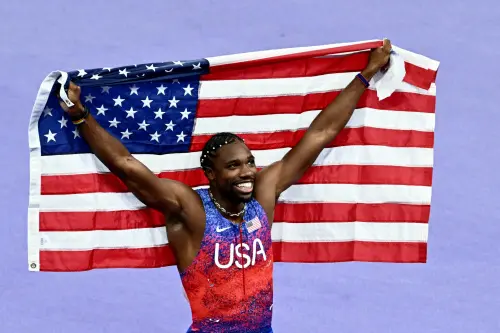
Paris: Noah Lyles conquered his Tokyo setbacks with a resounding triumph in the Olympic 100m final in Paris, solidifying his quest to step into the monumental shoes left vacant by Usain Bolt. The event at Stade de France witnessed Lyles' blazing dash across the finish line in 9.79 seconds, clinching a dramatic victory in a nail-biting photo finish. This achievement marked the end of a two-decade American drought in the premier sprint event, with Justin Gatlin being the last to claim Olympic 100m gold.
Sebastian Coe, the president of World Athletics, hailed Lyles as an "absolute rock star," underscoring his meteoric rise and influence akin to Bolt's era-defining legacy. Lyles' athletic prowess and charisma have drawn comparisons not just to Bolt but also to his broader impact on popular culture, highlighted by his recent contract renewal with Adidas, paralleling the magnitude of Bolt's association with Puma.
Netflix's docuseries "Sprint" has chronicled Lyles' journey, capturing his triumphant triple gold performance at the Budapest world championships and now turning its lens to the Paris Games. The series portrays Lyles as more than just an athlete, depicting him as a dread-locked rapper whose bold statements and self-assured demeanor resonate beyond the track. In "Sprint," Lyles articulates his mindset, stating, "You have to have the mindset of a god," reflecting his unyielding self-belief in his abilities.
However, Lyles' outspoken nature hasn't been without controversy, as his comments questioning the status of NBA champions irked basketball fans and players alike. Despite such polarizing moments, Lyles has been candid about his mental health struggles, including depression, showcasing a vulnerable side beneath his confident exterior.
The Olympic Village has presented its own challenges for Lyles, who has found managing his growing fame amidst fellow athletes demanding. Despite these distractions, his singular focus remains on his performances on the track, driven by a desire to exceed past achievements and erase the disappointment of his bronze in Tokyo.
Lyles thrives under pressure, feeding off the energy of the cameras and spectators, a trait evident in his performance in Paris. His ambition extends beyond individual events, with plans to compete in multiple disciplines including the 4x400m relay, a decision that stirred controversy yet underscored his versatility and ambition.
In the aftermath of securing gold in Paris, Lyles remains determined to build on his success, aiming for further podium finishes and broader recognition. His aspirations extend beyond the track, envisioning a future that encompasses fashion, music collaborations, and documentary features, a multifaceted approach echoing Bolt's transcendent influence.
Despite the challenges and expectations, Lyles remains steadfast, guided by the legacy of Bolt and the ambition to carve his own path in the annals of track and field history. His journey is marked not just by athletic prowess but by a desire to transcend the sport, leveraging his platform to inspire and innovate across diverse arenas of cultural influence.
As he continues to captivate audiences worldwide, Lyles embodies the spirit of a new era in track and field, where athleticism converges with cultural impact. With each stride, he marches closer to his vision of greatness, fueled by the pursuit of excellence and the desire to leave an indelible mark on the sport and beyond. AFP