Who was Mark Tully? BBC journalist who chronicled India’s most historic moments
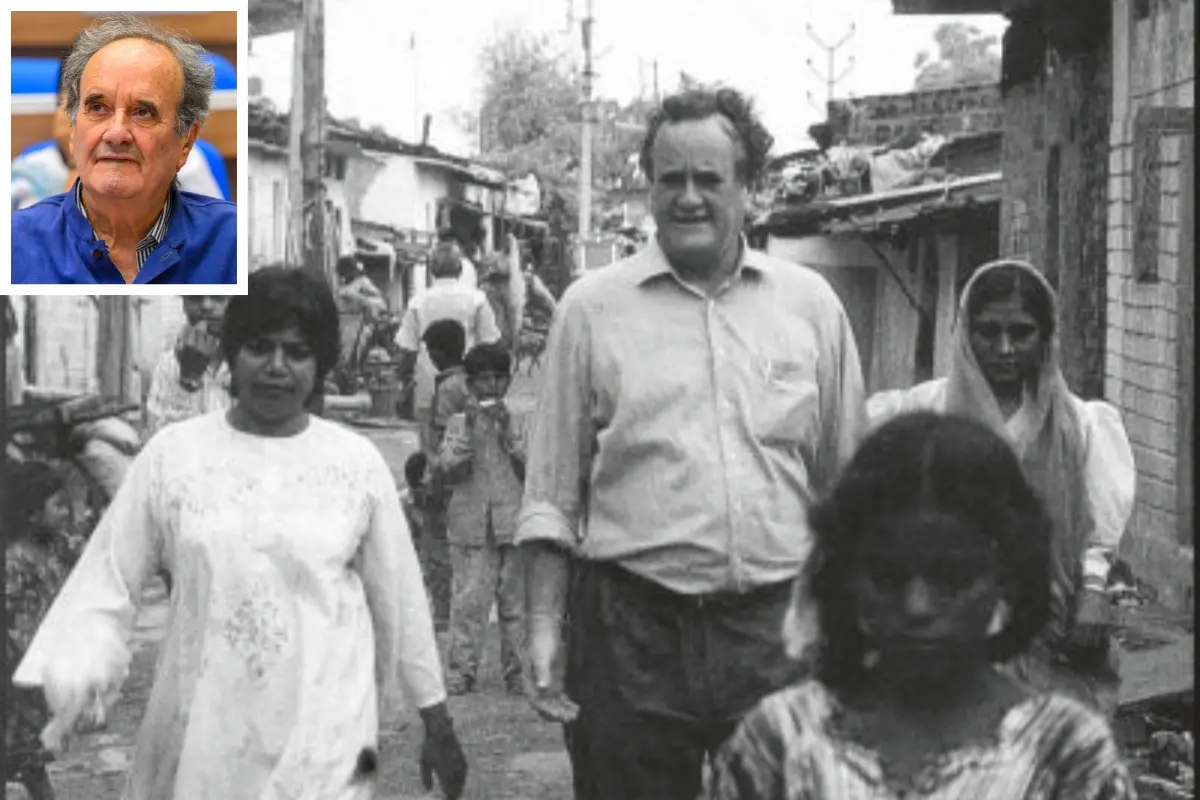
Mark Tully, the legendary BBC journalist known as the voice of India, passed away at 90. From covering the Bangladesh war to the Emergency and beyond, Tully chronicled India’s most historic moments with integrity and insight.
Early Life and Education
Born in 1935 in Tollygunge, Kolkata, Mark Tully spent the first decade of his life in India, attending boarding school in Darjeeling before being sent to England for further studies. Initially drawn to theology, he attended Trinity College, Cambridge, and briefly joined Lincoln Theological College with thoughts of becoming a priest. However, Tully’s rebellious nature and love for life diverted him toward journalism, a calling that would define his legacy.
Journey with the BBC
In 1964, the BBC sent Tully to India as a correspondent in New Delhi, beginning a 30-year career with the broadcaster. Despite challenges, including being temporarily barred from India after the controversial “Phantom India” documentary, Tully returned in 1971 to lead the South Asia bureau. Over the decades, he covered defining events such as the Bangladesh War of 1971, the Emergency (1975-77), Operation Blue Star, the assassination of Indira Gandhi, the 1984 anti-Sikh riots, the demolition of Babri Masjid, and the assassination of Rajiv Gandhi.
Books and Literary Contributions
Tully’s experiences in India were chronicled in numerous books. “Amritsar: Mrs Gandhi’s Last Battle” (1985) co-authored with Satish Jacob, examined Operation Blue Star and Punjab’s unrest. “No Full Stops in India” (1988) compiled essays on Indian society and politics, while “India in Slow Motion” (2002) explored the nation’s social and cultural complexities. His fiction works, including “The Heart of India” (1995) and “Upcountry Tales” (2017), showcased timeless Indian stories through his unique lens.
Also read: Kerala govt declares ‘Bacillus subtilis’ state microbe; A first for India
Awards and Recognition
Tully’s journalistic excellence earned him several national and international honours. He was awarded the Padma Shri in 1992, knighted in 2002, and received the Padma Bhushan in 2005. His reporting made him a trusted source for millions, with many considering him the BBC’s definitive “voice of India.”
Legacy and Influence
Mark Tully’s impact extended beyond reporting; he helped highlight the power of radio and journalism in shaping public understanding. He advocated journalistic integrity, resigning from the BBC in 1994 after a dispute over management practices, yet continued to contribute to media and educational programmes until 2019. Colleagues and admirers recall him as a rigorous observer of India who combined curiosity, empathy, and courage in his storytelling.
Life in India and Personal Touch
Tully lived in New Delhi’s Nizamuddin East with his partner, journalist Gillian Wright, fully immersing himself in Indian culture. He was fluent in Hindi and other local languages, bridging British and Indian perspectives. His home doubled as an informal BBC office for decades, reflecting his hands-on approach to journalism.
Remembering the Voice of India
Mark Tully’s passing on January 25, 2026, marks the end of an era in Indian journalism. For many, his broadcasts were a lifeline to understanding India’s complex history, conflicts, and cultural richness. He leaves behind a legacy of dedication, empathy, and an unshakable commitment to telling India’s stories with honesty and insight.