Who was Ismail Haniyeh, the Hamas leader eliminated by Israel?
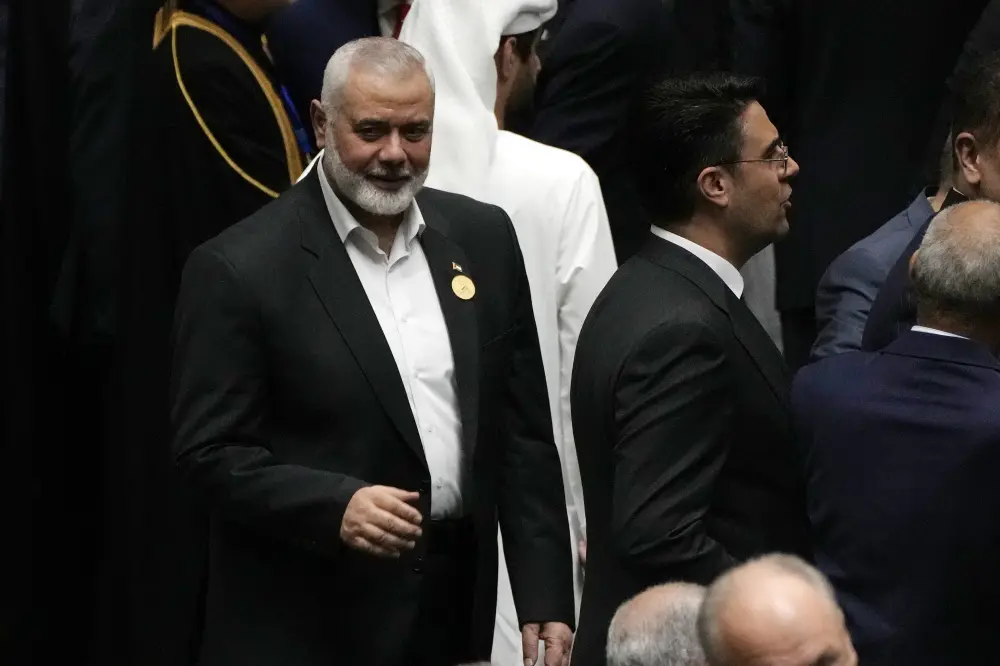
Palestinian militant outfit Hamas has announced that its political leader, Ismail Haniyeh, was killed in an Israeli strike in Tehran, Iran, where he had been attending the inauguration ceremony of the country's new president.
The killing followed an Israeli airstrike on a Hezbollah stronghold in southern Beirut on Tuesday, which resulted in the death of a senior commander of the Iran-backed group. Israel claimed the commander was responsible for a recent rocket attack on a football field in the Israel-annexed Golan Heights.
In a statement, Hamas confirmed Haniyeh's death, stating: "Brother, leader, mujahid Ismail Haniyeh, the head of the movement, died in a Zionist strike on his headquarters in Tehran after participating in the inauguration of the new Iranian president."
Who was Ismail Haniyeh?
His formative years in a refugee camp exposed him to the hardships faced by Palestinians, shaping his political views and aspirations. He attended United Nations-run schools and later graduated from the Islamic University of Gaza with a degree in Arabic literature in 1987.
During his university years, he became actively involved in student politics, leading an Islamist student association affiliated with the Muslim Brotherhood, which laid the groundwork for his future role in Hamas.
Haniyeh joined Hamas in 1987, at the time of its founding, amidst the first Palestinian intifada, or uprising, against Israeli occupation, which lasted from 1987 to 1993. His close association with Hamas's spiritual leader, Sheikh Ahmed Yassin, facilitated his rise through the ranks.
He was arrested multiple times by Israeli authorities and spent significant time in prison during the late 1980s and early 1990s. In 1992, he was deported to Lebanon but returned to Gaza in 1993 after the Oslo Accords.
By 1997, he became the head of Yassin's office, solidifying his position within Hamas.
Haniyeh's leadership during the Second Intifada and his ability to navigate the political landscape amid internal and external pressures helped him gain prominence within the organization. His continued association with Sheikh Ahmed Yassin played a significant role in his rise.
He gained prominence as the Palestinian prime minister in 2006, following Hamas' unexpected victory in the parliamentary elections. However, his tenure prompted international condemnation and a freeze on aid due to Hamas's refusal to renounce violence and recognize Israel. In June 2007, after a violent conflict with Fatah, PA President Mahmoud Abbas dismissed Haniyeh, but he continued to govern the Gaza Strip, where Hamas established a de facto administration.
Haniyeh was elected to lead the Hamas political bureau in 2017, succeeding Khaled Meshaal. His leadership has been crucial in shaping Hamas's policies and strategies, particularly in relation to Israel and the Palestinian Authority. Under his guidance, Hamas has sought to remain relevant in Palestinian politics while managing complex regional alliances with Iran and Turkey.
Recognized for his pragmatic approach, Haniyeh spent his time in exile, dividing it between Turkey and Qatar.
During the conflict, he undertook diplomatic missions to Iran and Turkey, meeting with both the Turkish and Iranian presidents. Haniyeh was known for maintaining good relations with the leaders of various Palestinian factions, including those rivaling Hamas.
(Agencies)