Who Is Tahir Ashrafi: Pakistani cleric honoured by Archbishop linked to blasphemy ‘blackmail’ gang
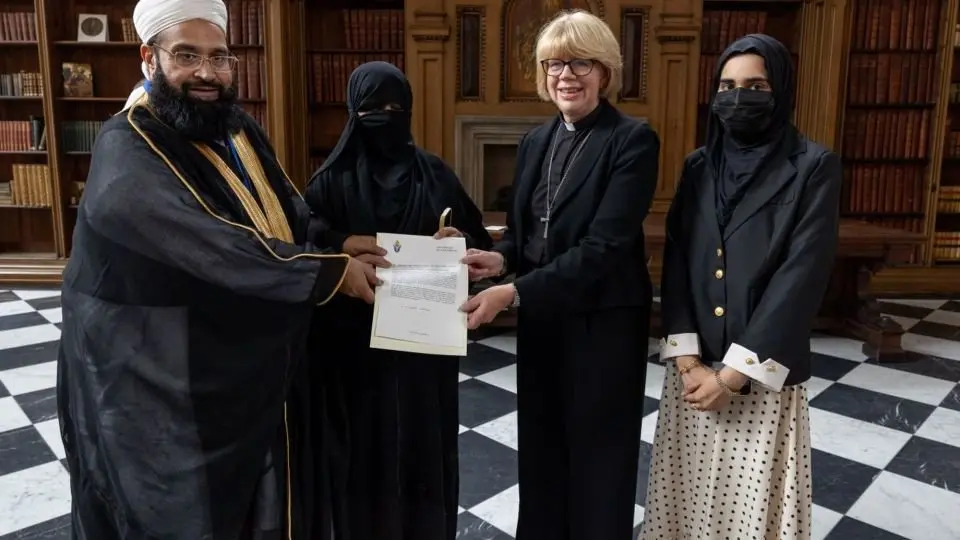
London: A Telegraph investigation has linked the brother of Pakistani cleric Tahir Ashrafi, who was recently honoured by the Archbishop of Canterbury, to a group accused of abducting, torturing and extorting men through blasphemy allegations.
Hassan Muawiya Ashrafi, Tahir Ashrafi’s brother, is alleged to be a key figure in the network, which the investigation says has used social media “honey traps” to lure men into allegedly sharing blasphemous material before they are abducted and blackmailed.
The investigation also found that Tahir Ashrafi has publicly defended his brother and criticised lawyers representing alleged victims. Ashrafi has denied that he or his brother are part of a blasphemy gang and challenged critics to prove that they extorted money.
The report comes days after the Archbishop of Canterbury, Sarah Mullally, withdrew an award given to Ashrafi after previous remarks by the Pakistani cleric came to light. Lambeth Palace said it was reviewing how the award was made and its wider nomination and vetting procedures.
What does the Telegraph investigation allege?
According to The Telegraph, Hassan Muawiya Ashrafi is the alleged leader of a network accused of working with police officials to abduct, torture and blackmail men facing blasphemy allegations.
The investigation said Muawiya had personally filed blasphemy complaints against 26 people over the past four years, based on police charge sheets reviewed by the newspaper.
A 2024 Special Branch report by Punjab police, cited by The Telegraph, attributed a rise in blasphemy cases to what it described as a “blasphemy business gang” involving corrupt Federal Investigation Agency officials. Muawiya was not named in that report, although the investigation subsequently linked him to the alleged network.
The exiled Pakistani outlet Fact Focus later described Muawiya as the manager of the alleged gang’s Lahore operations.
The Telegraph also spoke to relatives of alleged victims, who described cases in which men were reportedly lured through social media and subsequently abducted.
In one case, a family member alleged that a relative was persuaded through a Facebook relationship to share an image containing a Quran verse. The man was later abducted and his family was asked for one million Pakistani rupees before a formal blasphemy case was filed.
Fact Focus has separately reported that at least four victims of the network died from torture.
Claims of torture and extortion
The Telegraph reported allegations of severe abuse in cases involving men accused of blasphemy.
One alleged victim was sexually assaulted with a wooden baton, while a prison post-mortem in another case recorded severe bruising around the groin but listed the cause of death as “urine retention”.
The families who spoke to The Telegraph requested anonymity, citing fears of reprisals.
Blasphemy is punishable by death in Pakistan. The country’s National Commission for Human Rights recorded a sharp increase in blasphemy-related imprisonments, from around 10 a year in 2020 and 2021 to more than 200 in 2023, according to figures cited in the investigation.
Also read | 'Theft from the American people': Trump faces backlash over $1 billion spending cut
Ashrafi’s role in the controversy
The Telegraph reported that Tahir Ashrafi has defended his brother and accused lawyers representing victims of protecting people accused of blasphemy.
He also criticised Sardar Ejaz Ishaq Khan, an Islamabad High Court judge who heard petitions brought by more than 100 families alleging wrongdoing by the network.
During the court proceedings, the judge ordered the government to establish a commission of inquiry, citing what he described as missing evidence, poor police work and the repeated use of the same women in online conversations that allegedly resulted in people sharing blasphemous material.
Ashrafi has denied being part of any blasphemy gang and has said that neither he nor his brother took money from people through such cases.
Who is Tahir Ashrafi?
Hafiz Muhammad Tahir Mehmood Ashrafi is a prominent Pakistani Muslim cleric and chairman of the Pakistan Ulema Council, which brings together clerics from different Islamic sects.
Pakistan Prime Minister Shehbaz Sharif appointed Ashrafi in January 2026 as Coordinator for Religious Harmony and the Pakistani Diaspora in the Middle East and Muslim countries. The Pakistani government said he had extensive experience in religious diplomacy, interfaith engagement and international outreach.
Ashrafi has previously served in government-linked roles dealing with religious affairs and interfaith harmony. He has also been involved in initiatives promoting inter-sectarian dialogue and religious tolerance.
His public record includes statements against terrorism and extremism, while Pakistani authorities have highlighted his involvement in efforts to promote religious harmony.
The Archbishop’s recognition of Ashrafi
Ashrafi was presented with the Hubert Walter Award for Reconciliation and Interfaith Cooperation at a ceremony at Lambeth Palace on September 11.
Lambeth Palace said the award recognised his longstanding support for religious minorities in Pakistan, particularly the Christian community. The Hubert Walter Award is one of the Lambeth Awards given for work relating to reconciliation and cooperation between people of different faiths.
The original citation also highlighted Ashrafi’s intervention in the case of Rimsha Masih, a Christian girl who was falsely accused of blasphemy in Pakistan in 2012.
The cleric was nominated by the Protestant Church of Pakistan. Its leader, Dr Azad Marshall, said Ashrafi had helped release people accused of blasphemy before they could be attacked by mobs.
However, The Telegraph reported that some minority-rights activists disputed this assessment, arguing that his interventions were limited to a small number of cases.
Also read | Shehbaz Sharif at UN: Any diversion of Indus waters will be ‘act of war’
Why was the award withdrawn?
Lambeth Palace withdrew the award on September 17 after previous comments by Ashrafi came to light.
The controversy centred on remarks concerning Osama bin Laden. According to reports, Ashrafi had previously praised bin Laden and said he would confer on him the title “Saifullah”, or “Sword of God”.
The Pakistan Ulema Council said the comments had been taken out of context and maintained that Ashrafi had consistently opposed the misuse of Pakistan’s blasphemy laws, particularly false accusations against innocent people.
Lambeth Palace said it recognised the concern caused by the award and was reviewing how the specific honour came to be given, along with its broader nomination and vetting process.
Ashrafi’s public profile and positions
Ashrafi has built a public profile through his engagement with Pakistan’s religious minorities as well as with different Muslim groups.
He has supported polio vaccination campaigns, condemned the Islamic State as a terrorist organisation and backed the construction of a Hindu temple in Islamabad, according to the Telegraph investigation.
At the same time, he has faced criticism over his views concerning religious minorities, including the Ahmadiyya community.
In 2022, the US State Department noted that Ashrafi’s brother had filed blasphemy complaints against members of the Ahmadi community.
The controversy has now placed renewed scrutiny on the Pakistani cleric’s government-linked role, his record on interfaith engagement and the circumstances surrounding the Archbishop of Canterbury’s decision to honour and subsequently withdraw his award.