Complicity in genocide? Unpacking the UAE's involvement in war-torn Sudan
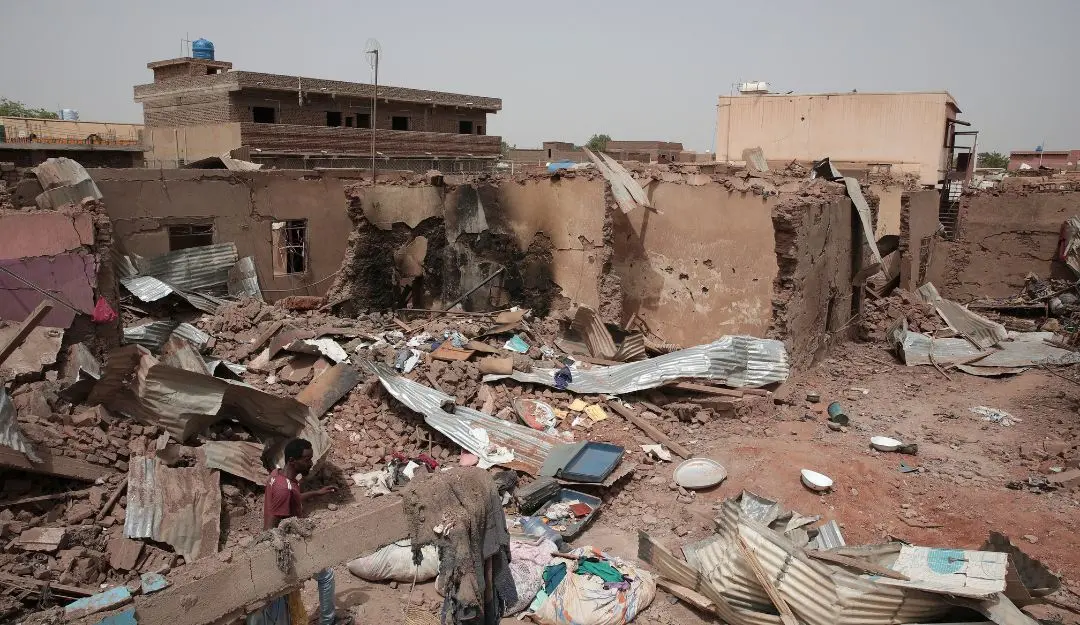
Cairo: Sudan has filed a case at the International Court of Justice (ICJ), accusing the United Arab Emirates (UAE) of complicity in genocide amid the ongoing civil war in Sudan. The filing has brought increased attention to the UAE’s alleged role in the conflict, which has devastated the African nation.
The UAE has long faced accusations, particularly from Sudan, of supporting the Rapid Support Forces (RSF) in their violent struggle against Sudan’s regular army. These accusations, however, have been denied by the UAE.
How is the UAE involved in Sudan, and what ties does it have to the RSF?
Sudan, one of Africa’s largest countries, boasts vast natural resources, including agricultural land, gas, and gold. It is the third-largest gold producer in Africa. The UAE, an oil-rich state in the Gulf, has long eyed Sudan for its resource wealth, as well as its strategic location next to Libya — where Abu Dhabi backs rebel forces — and along the Red Sea, a critical route for oil shipping.
The UAE’s involvement in Sudan deepened after Sudan’s military chief, Abdel Fattah al-Burhan, seized power in a coup in 2021 with the support of his deputy, RSF commander Mohamed Hamdan Daglo, also known as Hemeti. Two years later, fighting broke out between the two generals, with several international powers, including the UAE, accused of backing one side or the other.
"The primary goal for the UAE in Sudan has been about political influence in a strategically very important country," said Andreas Krieg, a Middle East security specialist at King's College London.
Emirati state-affiliated companies view Sudan as a hub for investment in resources, minerals, and broader trade. Sudan researcher Hamid Khalafallah noted that the UAE, with its limited natural resources, seeks access to Sudan’s minerals and fertile land.
From Libya to Somalia, Khalafallah pointed out, "we see a pattern of the UAE working with paramilitaries" to exploit the continent's resources. A 2022 report by development group Swissaid estimated that 66.5 percent of African gold exports to the UAE were smuggled out of the continent.
The UAE is also a key player in the global gold trade, with Sudan being a major supplier. The sector is largely controlled by Daglo, whose private finances are run from the UAE, according to Krieg, adding that Daglo has become "co-dependent" on Abu Dhabi.
However, Federico Donelli, a professor of international relations at Italy's University of Trieste, argued that it would be "too simplistic" to reduce the UAE’s interests to just gold. Abu Dhabi is also focused on countering Saudi influence in Sudan and preventing the spread of political Islam, which it views as a security threat.
The UAE’s support for the RSF
The UAE’s ties to Sudan’s military go back to the Yemen conflict, where Sudanese forces, including those from the RSF, were deployed as part of the Saudi-led coalition from 2015. Despite their cooperation in Yemen, rifts have emerged between Abu Dhabi and Riyadh, with the UAE's support for Daglo — denied by the Emiratis — seen as a way to challenge Saudi objectives in Sudan.
The relationship is also ideological. The RSF has been willing to contain the Muslim Brotherhood, a movement outlawed in the UAE and other Arab states, Krieg said. This sets the RSF apart from the Sudanese army, which has been linked with remnants of the Islamist regime of former dictator Omar al-Bashir.
Both sides of the conflict have faced war crimes allegations. The ongoing conflict in Sudan has claimed tens of thousands of lives and displaced over 12 million people. In January, the United States accused the RSF of committing genocide by targeting ethnic groups with mass killings and gang rapes.
In the same month, two US lawmakers claimed that the UAE had broken its promises to halt military aid to the RSF. The RSF has also reportedly received significant support from the UAE, including arms deliveries through neighbouring Chad.
Sudan’s case against the UAE
Sudan filed its case against the UAE at the ICJ in The Hague, accusing the UAE of complicity in genocide due to its support for the RSF. The UAE, however, dismissed the case as a "publicity stunt" and said it would seek to have the case thrown out.
The ICJ's rulings are legally binding, but it lacks the power to enforce them. Despite this, Donelli argued that the case could cause reputational damage to the UAE.
"Both internationally and within Africa, there is an increasing perception of the Emirates as a destabilising actor," he said. "But the financial and political prominence that the UAE has gained over the past decade will likely shield it from any serious repercussions."