World’s largest warship USS Gerald R. Ford heads to Middle East amid Trump’s Iran nuclear push
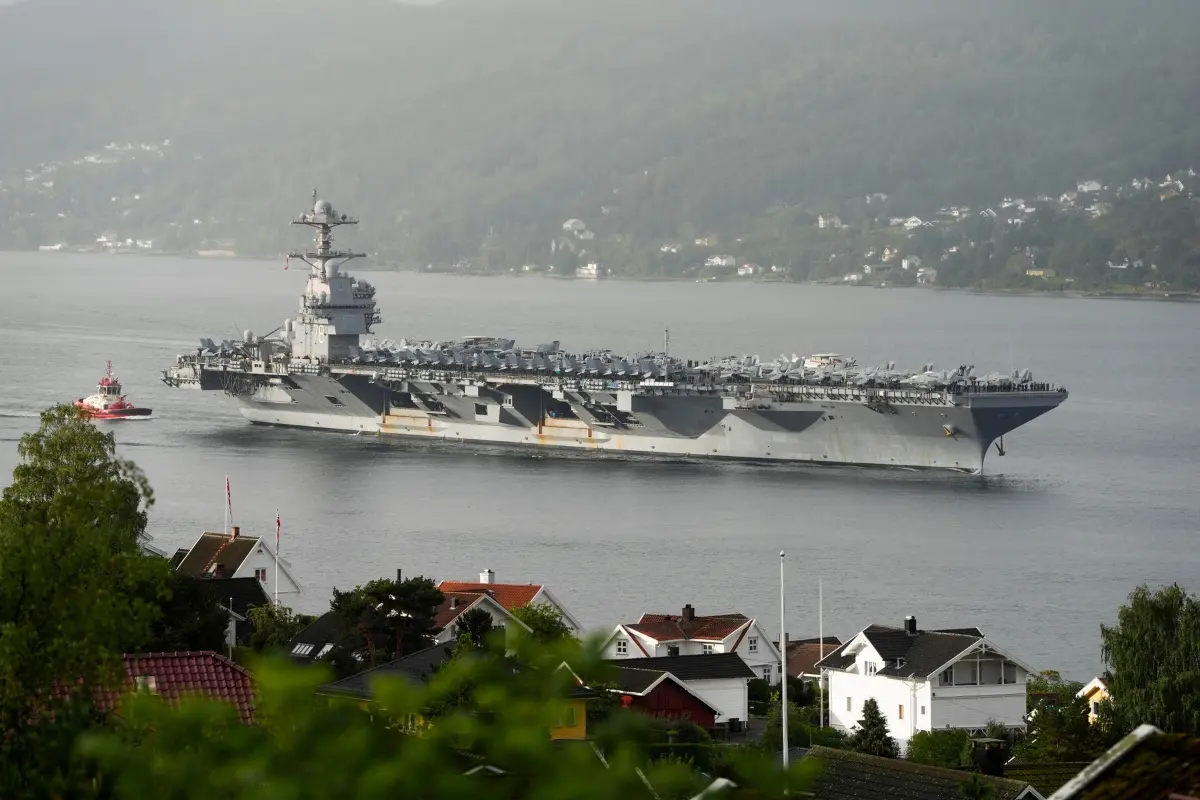
Washington: The United States will dispatch the world's largest aircraft carrier to the Middle East to reinforce a strike group already on station, a person familiar with the operation said Friday. The move significantly bolsters President Donald Trump's military posture as he attempts to pressure Iran into a new nuclear agreement.
The redeployment of the USS Gerald R. Ford comes just days after Trump hinted that diplomatic engagement with Tehran was imminent. However, those anticipated talks stalled this week as a high-ranking Iranian security official visited Oman and Qatar to exchange messages with U.S. intermediaries without producing a breakthrough.
The escalating military buildup occurs as Gulf Arab nations warn that any direct strike could ignite a wider regional war. Tensions are further inflamed within Iran, where citizens have begun 40-day mourning ceremonies for thousands of protesters reportedly killed in a violent state crackdown last month.
Naval Escalation
The Ford’s arrival, first reported by The New York Times, will provide the Pentagon with two carrier strike groups in the region. The USS Abraham Lincoln and its accompanying guided-missile destroyers have been operating in the Arabian Sea since late January.
The person who confirmed the deployment to The Associated Press spoke on the condition of anonymity to discuss sensitive troop movements.
The orders represent a rapid pivot for the Ford. The carrier had been diverted from the Mediterranean to the Caribbean last October to support the military presence that eventually led to last month's surprise raid and capture of former Venezuelan President Nicolás Maduro.
Trump's Strategy and Timeline
The deployment appears to conflict with Trump’s stated "America First" security doctrine, which previously prioritised the Western Hemisphere. However, the president has recently sharpened his rhetoric toward Tehran.
On Thursday, Trump warned that failing to reach a deal would be “very traumatic” for the Islamic Republic. When asked about a timeline for a nuclear agreement, he told reporters, “I guess over the next month, something like that. It should happen quickly. They should agree very quickly.”
The president also revealed to Axios earlier this week that he was weighing the decision to send a second carrier strike group as a deterrent.
Regional and Internal Pressure
The move follows lengthy discussions on Wednesday between Trump and Israeli Prime Minister Benjamin Netanyahu. While Trump insisted that negotiations must continue, Netanyahu is reportedly pushing the administration to demand deeper concessions, including the dismantling of Iran's ballistic missile program and its support for groups like Hamas and Hezbollah.
The USS Ford’s crew faces an exceptionally long tour; the ship originally set out in June 2025 and will hit the eight-month mark in two weeks. The White House has not yet officially commented on the extension.
Inside Iran, the government faces a simmering domestic crisis. Traditional 40-day mourning rituals for those killed in recent protests are expected to become new flashpoints for dissent.
- Symbolism of Defiance: Social media videos have surfaced showing mourners at graveyards in Razavi Khorasan province singing “Ey Iran,” a patriotic anthem from the 1940s.
- Lyrics of Resistance: Once banned after the 1979 Revolution, the song's lyrics—“Oh enemy, if you are a piece of granite, I am iron”—are being used by protesters to signal their resolve against the current theocracy.
With inputs from AP