US defends Tehran bridge strike over drone supply as Israel intercepts missile, one injured
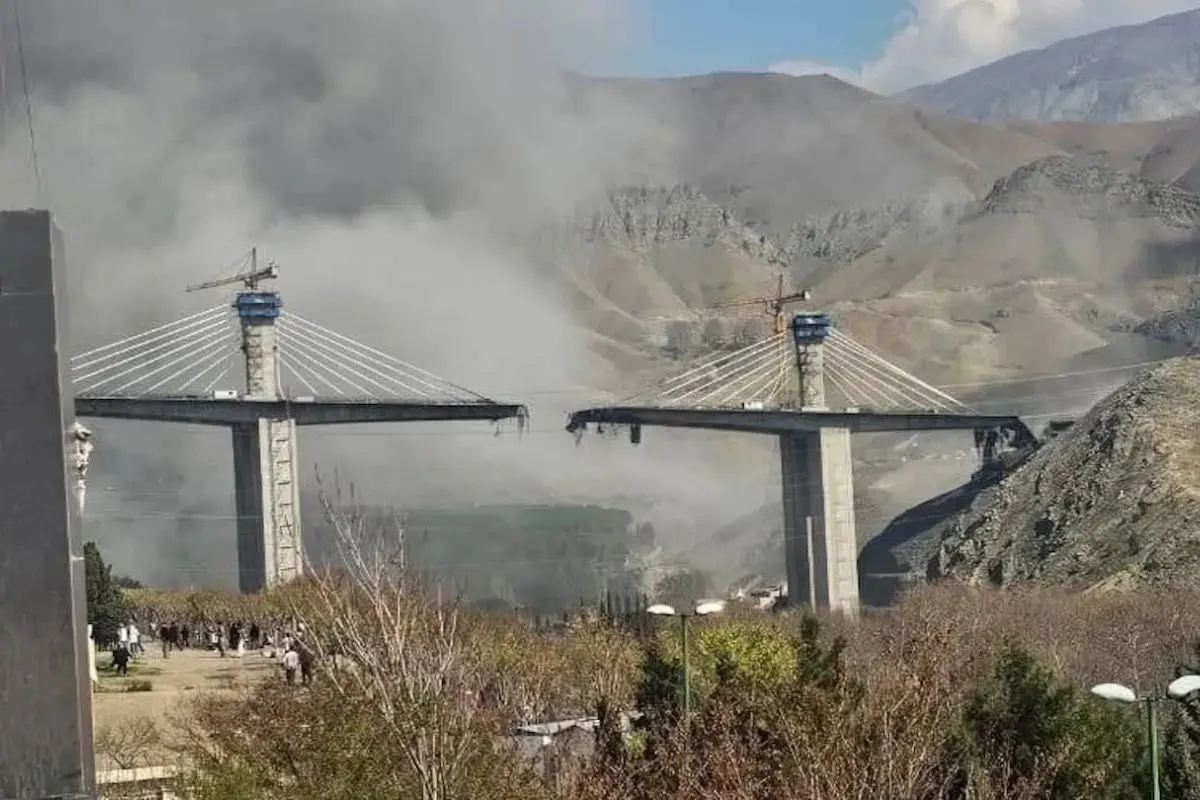
US officials have defended the bombing of a key bridge in Iran, saying the strike was aimed at disrupting the transport of materials used in the production of military drones, even as fresh hostilities unfolded with a missile launch towards Israel.
According to US authorities, the targeted bridge was allegedly being used to move components linked to Iran’s drone programme, which has been used in attacks against US, Israeli, and other regional targets.
The justification comes amid criticism from Iran, which maintains that the structure was civilian infrastructure and its destruction could amount to a war crime.
Before the strike, US President Donald Trump had issued a stark warning to Tehran, stating that if Iran did not agree to Washington’s 15-point proposal to end the conflict, the US would intensify its attacks on targets inside the country.
Meanwhile, tensions escalated further on the ground as Israel reported intercepting a missile launched from Iran within the past hour. Sirens were triggered after the projectile was detected heading towards central Israel.
The missile was intercepted by Israeli air defence systems, but it reportedly impacted areas around the city of Bnei Brak and nearby towns. Initial assessments suggest it may have been a cluster-type warhead, designed to disperse multiple smaller explosives over a wide area.
At least one person was reported injured in the incident, as emergency services responded to the affected locations.
The latest developments come amid a broader escalation of US-Israel strikes across Iran, targeting a range of sites including a century-old medical research centre in Tehran, key bridges near the capital, and major steel plants.
The widening list of targets has raised concerns about the expanding scope of the conflict.
President Trump has also sharpened his rhetoric in recent days, warning that Iran risks severe consequences if it does not comply with US demands.
He has urged Tehran to “make a deal before it’s too late,” even as military operations continue.
Iran, however, has responded with defiance. Its military has said the conflict will continue until its adversaries face “humiliation” and “surrender,” while warning that any potential US ground invasion would trigger strong retaliation.
Casualties from the sustained strikes continue to mount. Since February 28, at least 2,076 people have been killed and more than 26,500 wounded in US-Israeli attacks across Iran, according to reported figures.
The conflict is also expanding across the region. Israel said it killed more than 40 Hezbollah fighters in the past 24 hours. In response, the Lebanese group claimed multiple attacks on Israeli positions in southern Lebanon and northern Israel.
Lebanon’s Prime Minister Nawaf Salam described the situation as “very critical,” reflecting fears that the country could be drawn deeper into the conflict as cross-border exchanges intensify.
Armed groups in Iraq have also stepped up their involvement. Saraya Awliya al-Dam, part of the Islamic Resistance in Iraq, claimed responsibility for multiple attacks on US bases, saying it carried out five strikes in the past 24 hours and a total of 23 operations across Iraq and the wider region using drones.
Despite the escalating violence, the United States has maintained that diplomacy remains an option. US officials reiterated that President Trump is open to negotiations with Tehran, even as Washington continues its military campaign and pressure tactics.
However, with missile launches, retaliatory strikes, and increasingly aggressive rhetoric from all sides, the situation remains highly volatile. Multiple fronts are now active, stretching from Iran and Israel to Lebanon and Iraq.
As tensions continue to rise, there are growing concerns that the conflict could spiral into a wider regional war, with far-reaching consequences for stability in West Asia and beyond.