Will the US-Iran peace deal hold? Everything you need to know
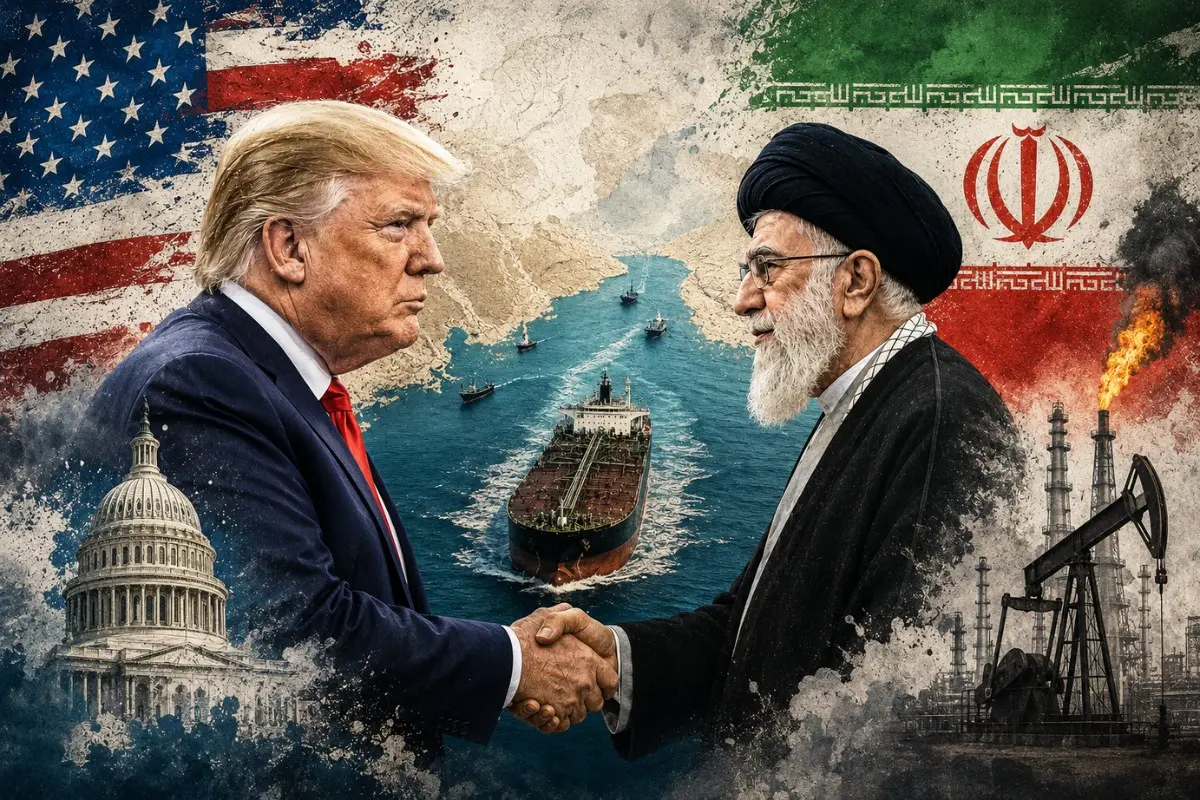
After more than three months of conflict, the United States and Iran appear to be moving closer to a peace agreement that could bring hostilities to an end. While officials from both sides have indicated that progress has been made, some details remain unresolved and Tehran has yet to officially confirm when the deal will be signed.
From Donald Trump's announcement to questions surrounding Iran's nuclear programme and the future of the Strait of Hormuz, here is everything we know so far about the proposed agreement.
Is a peace deal about to be signed?
US President Donald Trump announced on Saturday that Washington and Tehran are expected to sign a peace agreement on Sunday (local time).
The announcement came through a post on Truth Social, where Trump expressed confidence that the deal would soon be formalised.
Pakistan has also suggested that an agreement is close. Prime Minister Shehbaz Sharif said a final version of the deal could be ready within the next 24 hours, after which both countries would electronically sign the document.
According to Sharif, preparations are already underway for the signing process, with technical-level discussions expected to follow next week.
Pakistan's foreign minister also stated that the signing ceremony was planned for Sunday, although no additional details were disclosed.
Has Iran confirmed the timeline?
Iran has not officially endorsed the timeline outlined by Trump and Pakistani officials.
Before Trump's announcement, Iranian Foreign Ministry spokesperson Esmaeil Baghaei urged caution regarding reports about the timing of the agreement.
According to Iranian state media, Baghaei said the deal would not be signed "tomorrow" but could be concluded within the coming days.
His remarks suggest that negotiations may still be ongoing despite growing expectations of an imminent breakthrough.
What has Trump said about the deal?
Alongside announcing the expected signing, Trump claimed that Iran no longer wants to acquire nuclear weapons.
He described the proposed agreement as fundamentally different from the 2015 Joint Comprehensive Plan of Action (JCPOA), commonly known as the Iran nuclear deal negotiated during former President Barack Obama's administration.
Trump argued that the earlier agreement created a pathway for Iran to eventually obtain a nuclear weapon, while his proposed deal would prevent that possibility entirely.
According to the US President, Iran will neither develop, purchase nor obtain a nuclear weapon through any other means under the new arrangement.
He also claimed that the Strait of Hormuz would reopen to all shipping immediately after the agreement is signed.
Why is the Strait of Hormuz important?
The Strait of Hormuz is one of the world's most important maritime trade routes and a critical passage for global oil shipments.
Iran has kept the waterway closed during the conflict, while the US Navy has maintained a blockade on Iranian ports.
American officials say reopening the strait is a central part of the proposed agreement.
One US official described the deal as "a great and a very strong" agreement and said Iran's commitment to reopening the waterway would be matched by Washington lifting its blockade.
The official added that both measures would occur together as part of the implementation process.
What happens after the Strait reopens?
According to US officials, the next phase would involve clearing mines and ensuring safe navigation through the region.
The demining operation could potentially involve participation from G7 countries, although no formal plan has been announced.
The reopening of the strait is viewed as a key step towards restoring stability to global energy markets and regional trade.
What about sanctions and frozen Iranian assets?
Reports citing draft terms of the agreement suggest that the United States would begin releasing billions of dollars in frozen Iranian assets.
The deal could also include waivers on sanctions affecting Iranian oil exports.
Such measures would provide significant economic relief for Tehran after years of restrictions and financial pressure.
However, the exact scale and timeline of any sanctions relief have not yet been publicly confirmed.
What will happen to Iran's nuclear programme?
Iran's nuclear activities remain one of the most sensitive aspects of the negotiations.
Under the reported framework, the issue will be addressed during a 60-day period of talks following the peace agreement.
A US official said the process is expected to result in the dismantling of Iran's nuclear programme, including the destruction and removal of its stockpile of highly enriched uranium.
The official indicated that Washington ultimately wants Iran's capability to produce nuclear weapons-grade material eliminated.
Does Iran agree with that plan?
Iranian Foreign Minister Abbas Araghchi suggested that while adjustments to the agreement remain possible, the current framework reflects a stronger position for the Islamic Republic.
On the question of uranium stockpiles, Araghchi appeared to signal a different approach from the one outlined by US officials.
Rather than complete removal, he indicated that Iran would prefer to retain the material in a diluted form.
This difference highlights one of the areas where negotiations may still continue even after a broader peace agreement is reached.
Are military tensions completely over?
Despite the diplomatic progress, military activity in the region has continued.
Reuters, citing a source, reported that US forces intercepted and shot down multiple Iranian one-way attack drones that were reportedly heading towards the Strait of Hormuz.
The incident took place only hours after Araghchi's comments regarding the negotiations.
The development underscores the fragile nature of the current situation, even as both sides move closer to a potential settlement.
How does Trump compare this deal with previous US policy?
Trump has repeatedly contrasted the proposed agreement with policies pursued under previous administrations.
He criticised the Obama-era nuclear deal and pointed to the billions of dollars that were released to Iran under earlier arrangements.
According to Trump, no money will directly change hands under the new agreement.
He also stated that once conditions stabilise, the US would recover and destroy what he described as "nuclear dust" buried deep within Iranian facilities that had previously been targeted by American B-2 bombers.