US drops 5,000-pound ‘bunker buster’ bombs on Iran's missile bases near Strait of Hormuz
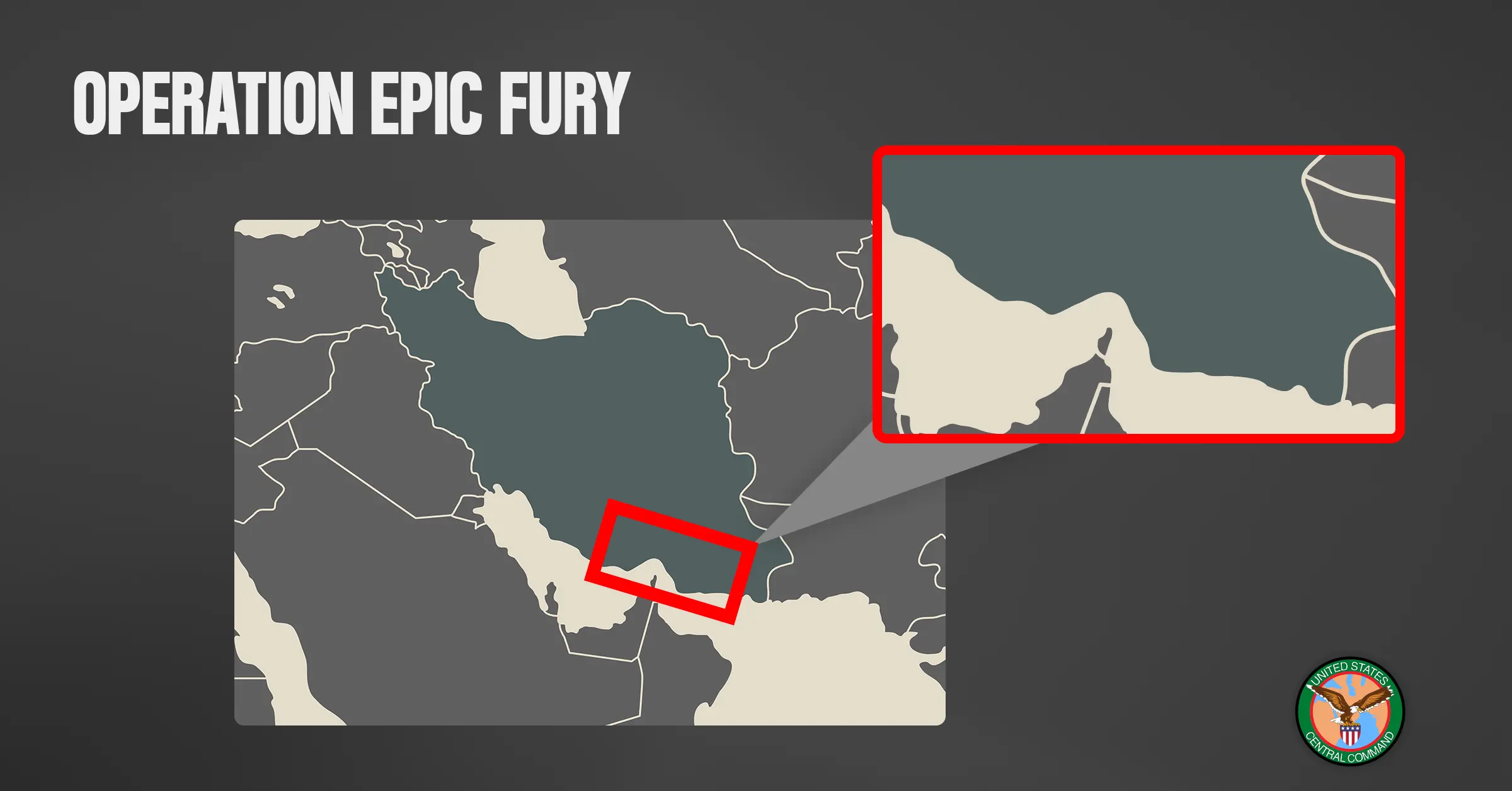
The United States has carried out a major airstrike on Iranian missile positions along the strategically vital Strait of Hormuz, deploying some of its most powerful conventional weapons in a bid to counter threats to global shipping.
US Central Command said Tuesday that American forces struck hardened missile facilities on Iran’s coastline using multiple 5,000-pound “deep penetrator munitions”, marking one of the most significant escalations in the ongoing conflict between Washington and Tehran.
"US forces successfully employed multiple 5,000-pound deep penetrator munitions on hardened Iranian missile sites along Iran's coastline near the Strait of Hormuz," Central Command said in a statement on X.
The strikes come amid heightened tensions after Iran moved to shut down the narrow waterway, through which roughly one-fifth of the world’s oil supply passes, triggering disruptions in maritime traffic and a spike in global energy prices.
Strategic waterway at the centre of conflict
The Strait of Hormuz, long considered one of the world’s most critical oil chokepoints, has emerged as a focal point in the widening confrontation. Iran’s decision to restrict passage through the corridor was widely seen as retaliation for ongoing US and Israeli military actions.
Iranian Parliament Speaker Mohammad Baqer Qalibaf signalled that conditions in the region are unlikely to stabilise soon.
"The Strait of Hormuz situation won't return to its pre-war status," he said in a post on X.
What are ‘Bunker Busters’?
Bunker busters such as the GBU-28 and GBU-72 have become increasingly important in conflicts where adversaries rely on underground infrastructure to shield key assets.
The bunker busters are designed to strike targets buried deep underground or shielded by reinforced concrete. Unlike conventional munitions, they penetrate the surface before detonating, making them effective against fortified missile storage sites and command centres.
A 2022 report by Air Force Times estimated the cost of such 5,000-pound bombs at about $288,000 each. Despite their destructive capability, they are smaller than the 30,000-pound bombs previously used by the US against Iranian nuclear-linked facilities.
Why the missile sites were targeted
The Iranian positions hit in the strike are believed to be part of a broader network of surface-to-surface and anti-ship missile systems positioned along the Hormuz coastline. These installations are central to Tehran’s strategy of deterring or disrupting shipping in the region.
US officials indicated that the strikes were aimed at reducing the threat these systems pose to commercial vessels and restoring security in the waterway. By targeting hardened and concealed facilities, Washington appears to be attempting to degrade Iran’s ability to launch attacks from protected positions.
Projectile reported near Bushehr nuclear plant
In a separate development, Iran informed the International Atomic Energy Agency that a projectile struck near the Bushehr nuclear power plant on Tuesday evening.
"The IAEA has been informed by Iran that a projectile hit the premises of the Bushehr NPP on Tuesday evening. No damage to the plant or injuries to staff reported," the agency said, as its chief Rafael Grossi urged restraint to avoid the risk of a nuclear incident.
Escalation continues across the region
The airstrikes come amid a broader surge in hostilities. Iran has launched fresh missile and drone attacks targeting Israel and several neighbouring Arab states following the killing of senior Iranian figures in recent strikes.
Among those killed was Ali Larijani, a prominent political figure closely associated with Iran’s leadership. Iranian media reported he died in an overnight raid blamed on US and Israeli forces. A senior commander of the Basij paramilitary unit was also reported killed.
In retaliation, Iran fired multiple-warhead missiles towards central Israel, with casualties reported in areas near Tel Aviv. Several Gulf countries also faced attempted strikes, though many were intercepted by air defence systems.
US allies reluctant to join operation
The latest US military action comes as President Donald Trump faces resistance from traditional allies over calls to secure the Strait of Hormuz.
Despite urging support from NATO members and others, Washington has largely acted alone. Trump expressed frustration over the lack of backing, arguing that ensuring the free flow of oil through the strait serves global interests.
Iran, meanwhile, continues to deny pursuing nuclear weapons, maintaining that its programme is intended for civilian energy purposes.