Ukraine and Russia announce Easter ceasefire for 32 hours amid ongoing war
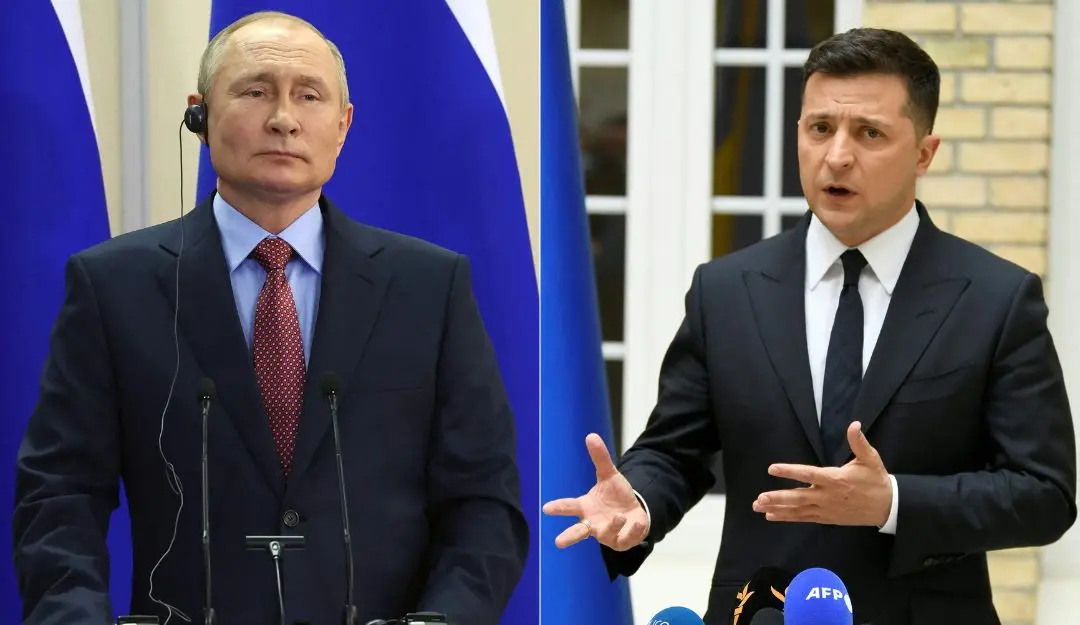
Moscow: The two sides said fighting would be suspended during the holiday period, though both governments quickly signalled caution, pointing to the risk of violations.
In a statement, the Kremlin said that “a ceasefire is declared from 16:00 (13:00 GMT) on April 11 until the end of the day on 12 April 2026” by Russian President Vladimir Putin, “in connection with the approaching Orthodox feast of Easter.”
The Kremlin did not reference Kyiv’s earlier proposal for a holiday truce.
Ukrainian President Volodymyr Zelensky responded later, saying that “Ukraine has repeatedly stated that we are prepared to take reciprocal measures. We proposed a ceasefire this year during the Easter holidays and will act accordingly.”
He added, “People need an Easter free from threats and real progress toward peace, and Russia has a chance to avoid returning to hostilities after Easter.”
According to the Kremlin, Putin has instructed the Russian General Staff “to cease combat operations in all directions for this period,” while also directing forces to remain alert to “counter any possible provocations by the enemy”.
“We assume that the Ukrainian side will follow the example of the Russian Federation,” the statement added.
The war, now in its fourth year, has killed hundreds of thousands and displaced millions, making it Europe’s deadliest conflict since World War II.
Over recent years, fighting has largely settled into a grinding war of attrition. Russia has made incremental territorial gains at high cost, while Ukraine has also mounted localised counteroffensives.
The US-based Institute for the Study of War (ISW) said Ukrainian forces have recently pushed back in parts of the southeast, while Russian advances have slowed since late 2025.
Analysts attribute the slowdown partly to restrictions on Russia’s use of SpaceX’s Starlink system and efforts to disrupt communications via the Telegram messaging app, both widely used for battlefield coordination.
However, the ISW noted that the situation remains difficult for Ukraine in the Donetsk region, particularly around Kramatorsk and Sloviansk.
Moscow has reportedly demanded that Ukrainian forces withdraw from these areas as part of any potential peace settlement, a condition Kyiv has rejected.
In recent days, Ukraine has intensified strikes on Russian energy infrastructure, including oil-exporting facilities, amid volatility in global energy markets linked to wider geopolitical tensions.
Despite several rounds of US-led diplomatic efforts, negotiations between the two sides remain stalled, with Washington’s attention increasingly focused on the Middle East.
Russia continues to hold just over 19 per cent of Ukrainian territory, much of it seized in the early stages of the invasion, while both sides maintain firm positions that have so far blocked a broader peace deal.