‘We have won’: Trump weighs ‘winding down’ Iran war but rules out ceasefire
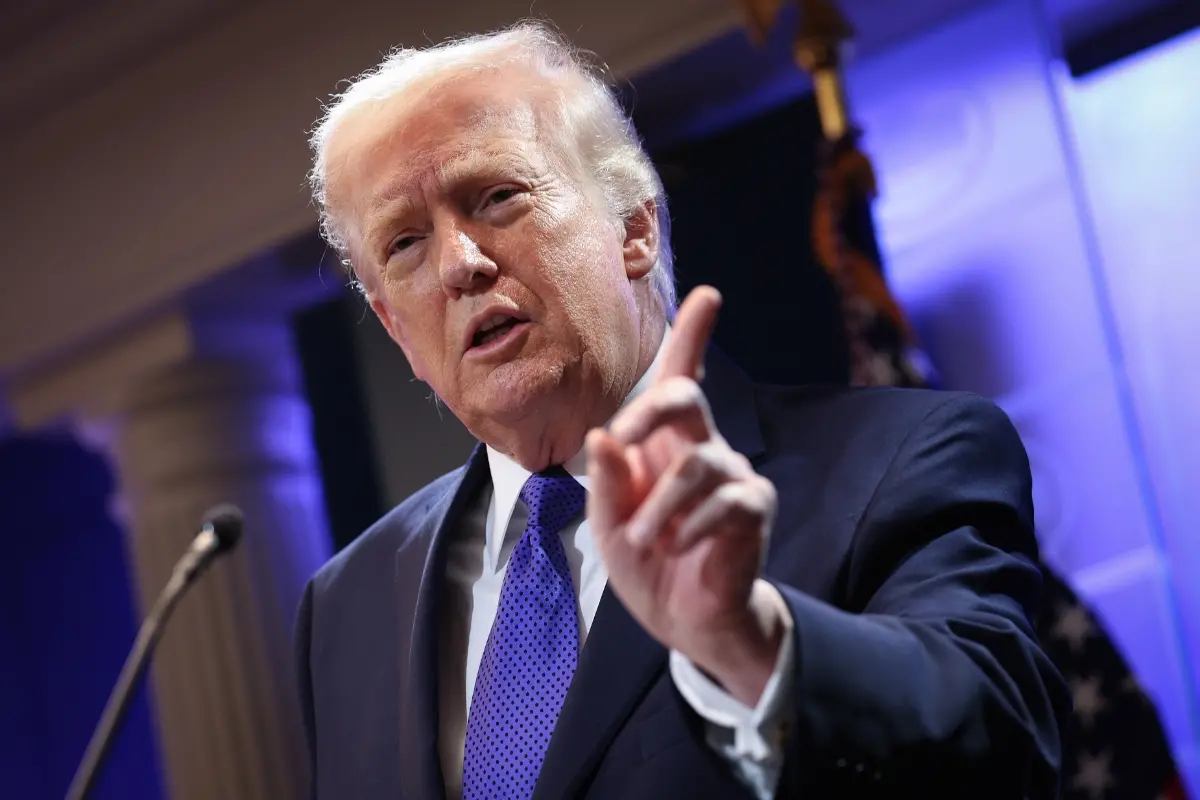
President Donald Trump said on Friday that the United States is weighing a reduction of its military campaign against Iran, even as he dismissed any possibility of agreeing to a ceasefire with the Islamic republic. His latest remarks came amid intensifying violence across the region and sharp warnings from Middle Eastern governments over escalating strikes.
Iran’s newly appointed supreme leader, Mojtaba Khamenei, meanwhile declared that Tehran had delivered a “dizzying blow” to its adversaries as Iranians marked a tense and muted Persian New Year under the sound of explosions in the capital.
Trump rejects truce as US goals advance
In a post on Truth Social, Trump signalled that Washington was nearing its military goals.
“We are getting very close to meeting our objectives as we consider winding down our great Military efforts in the Middle East,” he wrote. Yet he insisted he was not pursuing a ceasefire.
“I think we have won,” Trump told journalists. “I don't want to do a ceasefire. You know you don't do a ceasefire when you're literally obliterating the other side.”
Trump said the killing of Iran’s former supreme leader and senior Iranian officials had left the US without a viable interlocutor, claiming “there’s nobody to talk to”.
The detailed objectives include degrading Iran’s missile systems, dismantling its defence industry, neutralising its navy and air force, blocking any advance toward nuclear capability, and ensuring protection for regional allies – including Israel, Saudi Arabia, Qatar, the United Arab Emirates, Bahrain and Kuwait.
He again pressed for other nations to assume responsibility for safeguarding the Strait of Hormuz, which Iran has effectively blockaded. “The Hormuz Strait will have to be guarded and policed, as necessary, by other Nations who use it, The United States does not!” he wrote.
Fresh blasts rock Tehran as tensions rise in Jerusalem
Explosions echoed across Tehran on Friday, coinciding with Israeli accusations that Iran had targeted revered holy sites in Jerusalem. A strike in the Old City left a crater near the Al-Aqsa Mosque, the Western Wall and the Church of the Holy Sepulchre.
Turkey condemned Israel for separate strikes on Syrian army facilities in southern Syria, calling the attacks a “dangerous escalation” and urging global intervention.
Syria, which had until now avoided direct involvement in the conflict that erupted on 28 February when the United States and Israel began launching strikes on Iran, has increasingly found itself caught in the crossfire.
Israeli operations in Lebanon have also intensified, with airstrikes targeting Iranian-backed Hezbollah positions and leaving more than 1,000 people dead, according to Lebanese health officials.
New Year's message from Iran’s supreme leader
In a written Nowruz message, Mojtaba Khamenei asserted that Iran had left its enemies reeling. He credited what he called an “exceptional unity” among Iranians for the country’s resilience, saying the adversary “now starts uttering contradictory words and nonsense”.
His statement came as Tehran residents shopped for the holiday amid sporadic explosions and thinner-than-usual crowds, with many having fled north.
US deployments continue as White House weighs next steps
The Wall Street Journal reported that between 2,200 and 2,500 US Marines were being moved into the region. Trump declined to confirm an Axios report suggesting he was considering an occupation or blockade of Iran’s Kharg Island to pressure Tehran into reopening the strait.
“I may have a plan or I may not,” he told the media.
US forces have already carried out strikes on Kharg Island that Trump said “totally obliterated” military targets, though Washington has avoided hitting oil infrastructure.
Gulf energy facilities under attack
Drone attacks struck Kuwait’s Mina Al-Ahmadi Refinery on Friday, igniting a fire later brought under control. A day earlier, Qatar’s major Ras Laffan Industrial City natural gas complex suffered a direct hit.
Qatar’s state energy company reported “extensive damage” that could cost $20 billion annually and require five years to repair, potentially prolonging high global energy prices and slowing worldwide economic growth.
Market reaction as oil surges, Wall Street sinks
Oil prices continued climbing amid concerns of prolonged supply disruptions. Brent crude rose 3.3% to $112.19 a barrel. Stocks tumbled, with the S&P 500 closing 1.5% lower as fears of a global downturn rattled Wall Street.
(With AFP inputs)