Trump invites Iran to join Abraham Accords: What are the historic Middle East peace agreements?
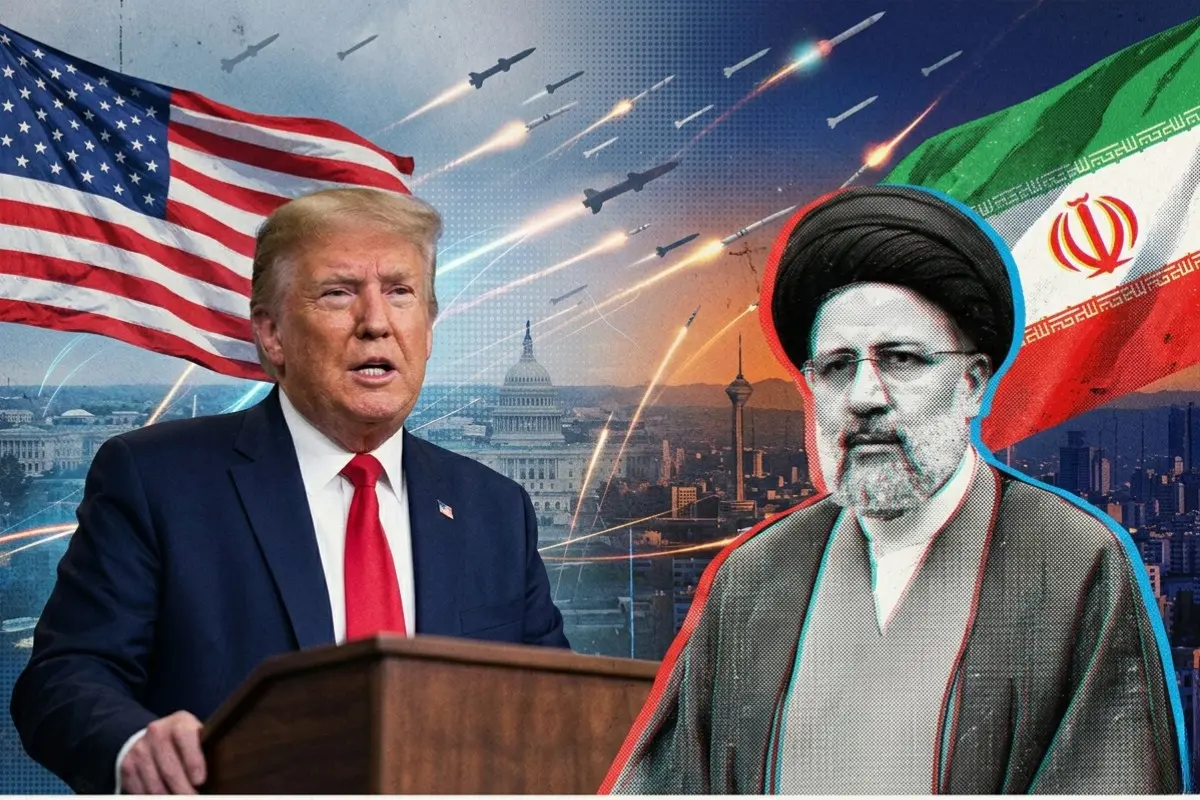
Washington DC: US President Donald Trump has suggested that Iran could, in the future, be considered for inclusion in the Abraham Accords as diplomatic discussions between Washington and Tehran continue to develop.
The remarks come at a sensitive moment in US-Iran relations, with negotiations reportedly progressing alongside wider regional peace efforts.
In a post on Truth Social, Trump thanked several Middle Eastern countries for their cooperation and said that their participation in the Abraham Accords could be further strengthened. He also added that the Islamic Republic of Iran “perhaps would like to join” the framework, signalling an expansion of the idea beyond its current signatories.
What Trump’s statement indicates
Trump’s remarks are being seen as a political signal rather than a formal diplomatic offer. By mentioning Iran in the context of the Abraham Accords, he has effectively linked ongoing US-Iran negotiations with the broader architecture of Middle East normalisation agreements.
Officials have also indicated that discussions remain ongoing, with caution being exercised due to the complexity of regional security issues and long-standing geopolitical tensions.
What are the Abraham Accords
The Abraham Accords are a set of agreements aimed at normalising diplomatic relations between Israel and several Arab and Muslim-majority countries. First signed in 2020 during Trump’s presidency, the accords marked a major shift in Middle East diplomacy after decades of limited formal engagement between Israel and much of the Arab world.
The initial signatories included the United Arab Emirates and Bahrain, followed later by Morocco and Sudan. These agreements opened formal diplomatic channels and expanded cooperation in trade, tourism, investment and security.
Objectives of the agreement framework
The Abraham Accords are designed to strengthen diplomatic relations between participating countries and promote economic and cultural cooperation. They also aim to improve regional security coordination and encourage long-term political stability in the Middle East through structured engagement rather than confrontation.
Separate from the Abraham Accords framework, US-Iran talks continue to focus on broader strategic issues, including nuclear-related concerns and regional stability. US Secretary of State Marco Rubio has indicated that discussions are still underway and that progress remains dependent on resolving key points of disagreement between the two sides.
Diplomatic sources suggest that while there is movement in talks, no final agreement has been reached, and negotiations remain delicate.
Iran’s longstanding position on Israel
Iran has historically refused to recognise Israel and has remained outside any normalisation agreements involving the country. This position has been a major obstacle to its participation in frameworks such as the Abraham Accords.
Because of this, any potential inclusion of Iran would represent a significant shift in regional diplomacy and would require major political changes on both sides.
Analysts say the suggestion to include Iran reflects an attempt to broaden the Abraham Accords into a wider regional peace structure. If expanded, the framework could potentially reshape alliances in West Asia and redefine the balance of diplomatic and security relationships involving the United States, Israel and Arab nations.
However, experts also note that deep mistrust and unresolved conflicts make such an expansion highly complex and uncertain at this stage.