Trump banned CNN from White House; then confronted its reporter at UN
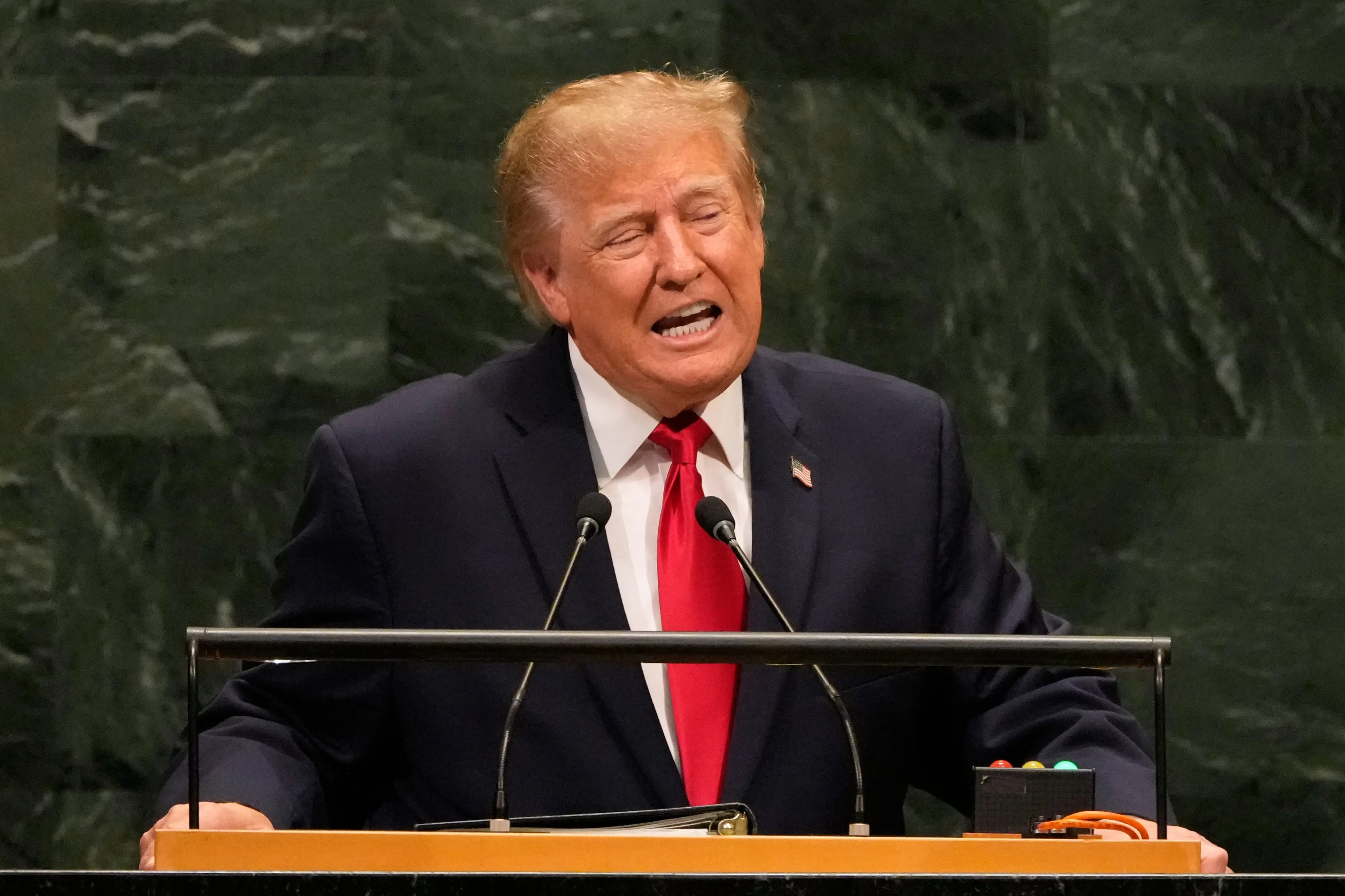
New York: US President Donald Trump confronted CNN journalist Kaitlan Collins at the United Nations on Tuesday, telling her, “You should not be here,” as a growing dispute between the White House and several major news organisations moves into court.
CNN, MS NOW and Politico have challenged their exclusion from White House grounds, while CNN continued covering Trump at the UN using UN-issued media credentials.
Trump's visit to the United Nations began with a tense exchange with CNN's Kaitlan Collins. As he entered the UN headquarters in New York, Trump said he was surprised to see CNN covering him and told Collins that the network “should not be here”.
Trump also claimed CNN had said it would not cover him. Collins later rejected that claim on air, saying CNN had never said it would stop covering the president and would continue reporting on him.
The confrontation came just days after Trump's administration barred CNN, MS NOW and Politico from the White House.
Why was CNN still at the UN?
The White House restriction and the UN accreditation system are separate.
Although CNN journalists were barred from the White House grounds, Collins was able to cover Trump at the UN because the network had media credentials issued by the United Nations. Reuters reported that CNN, MS NOW and Politico continued covering Trump's UN visit using UN-issued passes.
That distinction became particularly visible when Trump encountered Collins outside the UN.
Three news organisations have sued the Trump administration
CNN, MS NOW and Politico filed a federal lawsuit on Monday challenging their exclusion from White House grounds.
The organisations argue that the administration's decision violates First Amendment protections for freedom of speech and the press. They are seeking a temporary restraining order while the wider legal challenge proceeds.
The administration has argued that access to the White House is a privilege rather than an automatic right and has defended its decision to restrict access.
A court hearing is scheduled for Wednesday before US District Judge Timothy Kelly.
The dispute has disrupted White House media coverage
The fallout has extended beyond the three organisations directly affected.
CNN had been scheduled to provide television pool coverage of Trump's trip to New York. After the network was prevented from carrying out that role, the other major television networks declined to replace it, resulting in the suspension of the presidential television pool.
The pool normally allows selected news organisations to share footage and coverage of presidential events with other media outlets, particularly when space or access is limited.
Trump says he could restore access if court rules against him.
Trump later said he would “probably” allow CNN, MS NOW and Politico back into the White House if a court ruled against his administration's decision.
At the same time, he continued defending the restrictions and accused the affected outlets of producing what he calls “fake news”.
This leaves the dispute with two parallel tracks: a public confrontation between Trump and the news organisations, and a legal battle over the government's authority to control access for journalists.
White House launches Trump TV
The media dispute has also coincided with the White House launching a 24-hour online stream known as Trump TV.
The administration's stream provides footage and clips of the president and his activities. Its launch came after the disruption to the traditional television press pool. Reuters reported that press-freedom advocates criticised the initiative, while the White House presented it as a way to provide coverage of the administration.
Why the UN confrontation matters
The exchange at the UN is significant because it illustrates the difference between access controlled by the White House and access granted by an international organisation.
Trump's administration can restrict CNN's access to White House facilities, but CNN can still cover the president at venues where another authority controls media accreditation.
The confrontation also comes at a particularly important moment. The White House media ban is now before a federal court, while other major news organisations have taken collective action over the removal of CNN from the presidential press pool.
For now, the legal question over White House media access remains unresolved. The Wednesday hearing could provide the next significant development in the dispute.
What is the White House press pool?
The presidential press pool is a rotating arrangement in which selected news organisations cover events where it is impractical for every media organisation to be present. The participating outlets share footage and other material with the wider press corps.
CNN was part of the main television pool alongside ABC, CBS, Fox News and NBC. Its removal from Trump's New York trip led the other networks to suspend the pool rather than simply replace CNN.
The immediate focus is the federal court hearing over the White House access restrictions. The three organisations are seeking temporary relief while their broader constitutional challenge continues.
The UN confrontation has therefore become part of a much larger dispute involving journalists' access, presidential control over White House facilities, the press pool system and First Amendment protections.