Ayatollah Ali Khamenei killed: Trump claims death of Iran’s Supreme Leader in joint strike
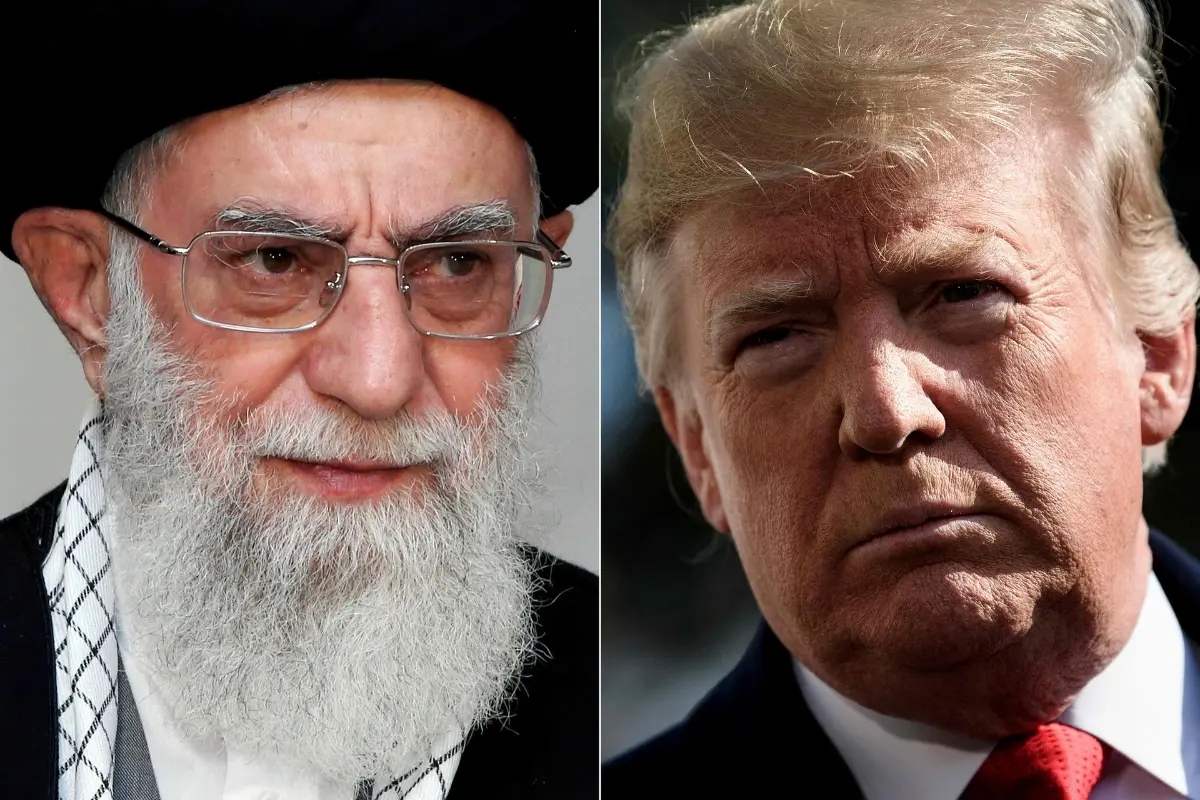
Washington: US President Donald Trump announced on Saturday that a massive joint military offensive by the United States and Israel had killed Iranian Supreme Leader Ayatollah Ali Khamenei, an extraordinary assassination that decapitated the Islamic Republic’s leadership and thrust the Middle East into a state of profound uncertainty.
In a social media post confirming the strike, Trump declared that "Khamenei, one of the most evil people in History, is dead." The president framed the operation as a liberation for the Iranian people, asserting it provided their "greatest chance" to reclaim their nation, while simultaneously warning that "heavy and pinpoint bombing" would continue for a week or longer to permanently dismantle Tehran’s nuclear infrastructure.
While Iran did not immediately confirm the 86-year-old cleric’s death, the reported assassination of a figure who held absolute authority over the theocracy’s military and political spheres for decades creates an immediate and dangerous power vacuum.
Military Objectives and Casualties
The joint operation, which officials said was months in the planning, commenced during the holy month of Ramadan. In addition to the Supreme Leader, Israel claimed to have killed several other high-ranking officials, including the commander of the Islamic Revolutionary Guard Corps (IRGC), the defence minister, and the secretary of the Iranian Security Council.
The U.S. military reported striking IRGC command centres, air defence systems, and missile launch sites. While the Pentagon reported no U.S. casualties and only minimal damage to regional bases despite "hundreds of Iranian missile and drone attacks," the human cost within Iran appeared significant.
- Civilian Toll: An Iranian diplomat informed the U.N. Security Council that hundreds were killed or wounded. In southern Iran, a local governor reported that at least 115 people died when a girls’ school was struck, an incident U.S. Central Command said it was investigating.
- Infrastructure: IRNA, Iran’s state news agency, reported fatalities in the southwest after strikes hit residential areas and a sports hall.
Tehran Vows Retribution
The Iranian establishment signalled that the conflict is far from over. Ali Larijani, secretary of Iran’s National Security Council, posted on X that the U.S. and Israel will "regret their actions," promising an "unforgettable lesson" delivered by the Iranian nation.
Retaliatory fire from Iran saturated the region's skies:
- Israel: The military reported "dozens" of incoming missiles. Emergency responders noted 89 people were "lightly injured," mostly by debris.
- Gulf States: Shrapnel from an intercepted missile killed one person in Abu Dhabi. Bahrain reported damage to buildings near the U.S. Navy’s 5th Fleet headquarters, and Kuwait reported injuries at an international airport and the Ali Al-Salem air base.
- Jordan: Authorities stated they "dealt with" 49 drones and missiles traversing their airspace.
A Policy Reversal and Political Friction
The assault marks a startling shift for Trump, who campaigned on ending "forever wars." However, the administration justified the escalation by claiming Iran was rebuilding nuclear centrifuges despite previous strikes. "Khamenei was unable to avoid our Intelligence and Highly Sophisticated Tracking Systems," Trump said, adding that the U.S. intended to "annihilate" the Iranian navy and proxy groups.
Domestically, the move drew sharp criticism from Democrats, who condemned the president for bypassing congressional authorisation. White House spokesperson Karoline Leavitt countered that select leaders in Congress had been briefed in advance of the strikes.
Global and Regional Fallout
The death of Khamenei leaves the IRGC and the clerical establishment without their ultimate arbiter. While some witnesses in Tehran reported scenes of residents quietly rejoicing, the threat of a wider war loomed over global markets.
Oil prices and shipping stability are at immediate risk, particularly in the Strait of Hormuz—a vital artery for a third of the world's maritime oil exports. As Secretary of State Marco Rubio cancelled a planned trip to the region to manage the crisis from Washington, the world remained on edge, watching for whether the Islamic Republic would collapse under the pressure or coalesce for a massive counter-strike.
With inputs from AP