Ziaur Rahman family: The dynasty behind Tarique Rahman’s return
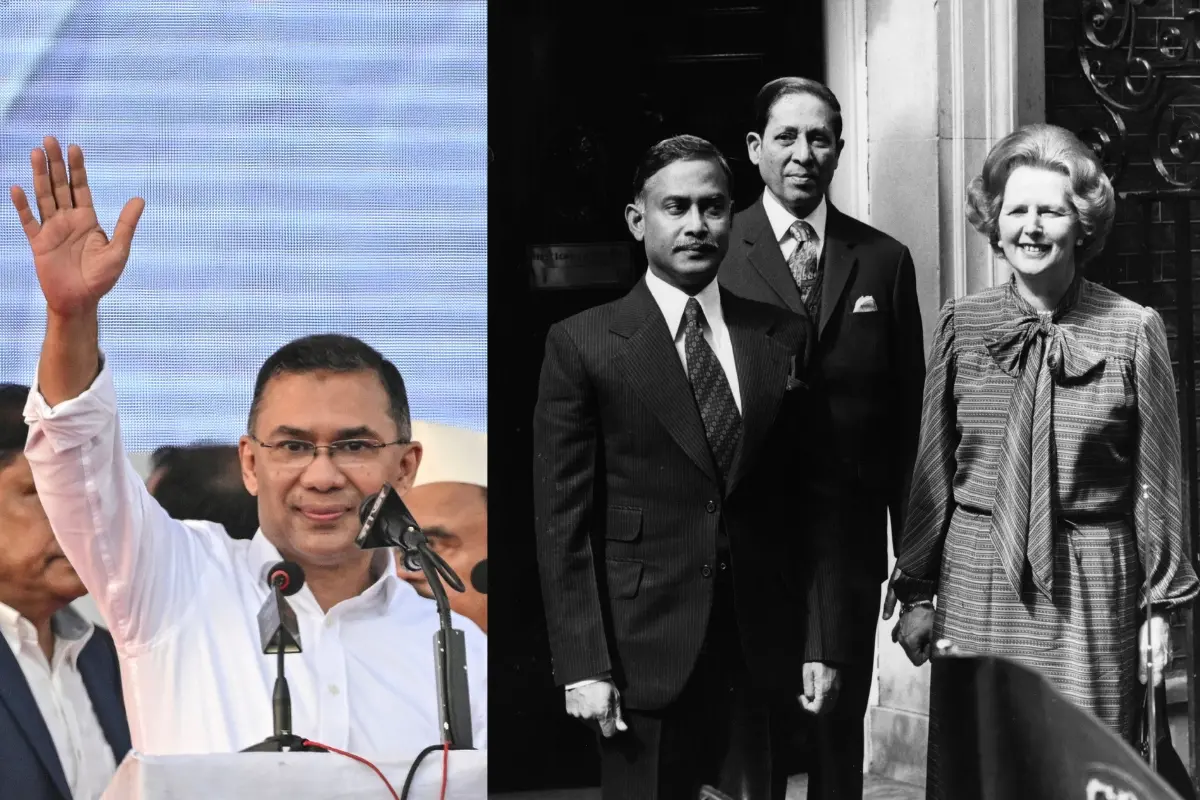
Dhaka: Tarique Rahman, the acting chairman of the BNP and son of former president Ziaur Rahman and former prime minister Khaleda Zia, returned to Dhaka on December 25 after nearly 17 years in self-imposed exile.
At 60, he is widely seen as the de facto leader of the BNP and a leading contender to become Bangladesh’s next prime minister if the party wins the upcoming polls.
His arrival marked a major political moment, ending a long absence that had shaped both his personal trajectory and the party’s leadership structure.
The legacy of Ziaur Rahman
Ziaur Rahman remains a towering figure in Bangladesh’s political history. A key leader of the 1971 Liberation War, he rose through a period marked by coups and instability to become army chief and later president. He founded the BNP and introduced multi-party politics after years of military-backed rule.
Zia was assassinated on May 30, 1981, during an official visit to Chittagong, when rebel army officers launched a pre-dawn attack on the Circuit House where he was staying. The killing plunged the country into uncertainty, led to the declaration of a state of emergency, and reshaped Bangladesh’s political trajectory for decades.
Assassination and its aftermath
The assassination triggered a failed coup attempt that was swiftly crushed by loyalist troops. Over the years, lengthy investigations and trials followed. In 1995, 12 former army officers were executed after being convicted for their roles in the killing, a case that remains controversial. A later parliamentary committee questioned whether the trial met legal standards and recommended compensation for the families of those executed.
More than four decades later, Ziaur Rahman’s death continues to influence Bangladesh’s political discourse.
Khaleda Zia and the rise of a dynasty
Following Ziaur Rahman’s death, Khaleda Zia emerged as a central political figure, eventually becoming prime minister and leading the BNP through multiple election cycles. Under her leadership, the party became one of the two dominant forces in Bangladeshi politics, cementing the Zia family’s place at the heart of national power.
Emotional return to family graves
After returning to Bangladesh, Tarique Rahman visited his father’s grave at Zia Udyan in Dhaka for the first time in nearly two decades. He later paid respects at the grave of his younger brother, Arafat Rahman Koko, who died in 2015 while Tarique was still living abroad. These visits underscored the personal dimension of his return after years of political exile.
With elections approaching, the Zia family’s legacy once again occupies centre stage in Bangladeshi politics. Tarique Rahman’s return signals a generational shift within the BNP, while also highlighting how deeply the party’s present and future remain tied to the family history shaped by Ziaur Rahman and Khaleda Zia.
As Bangladesh prepares for the polls, the re-emergence of Tarique Rahman has turned the spotlight back on a dynasty that has defined much of the country’s political story for over four decades.