Serbian Prime Minister resigns amid massive protests
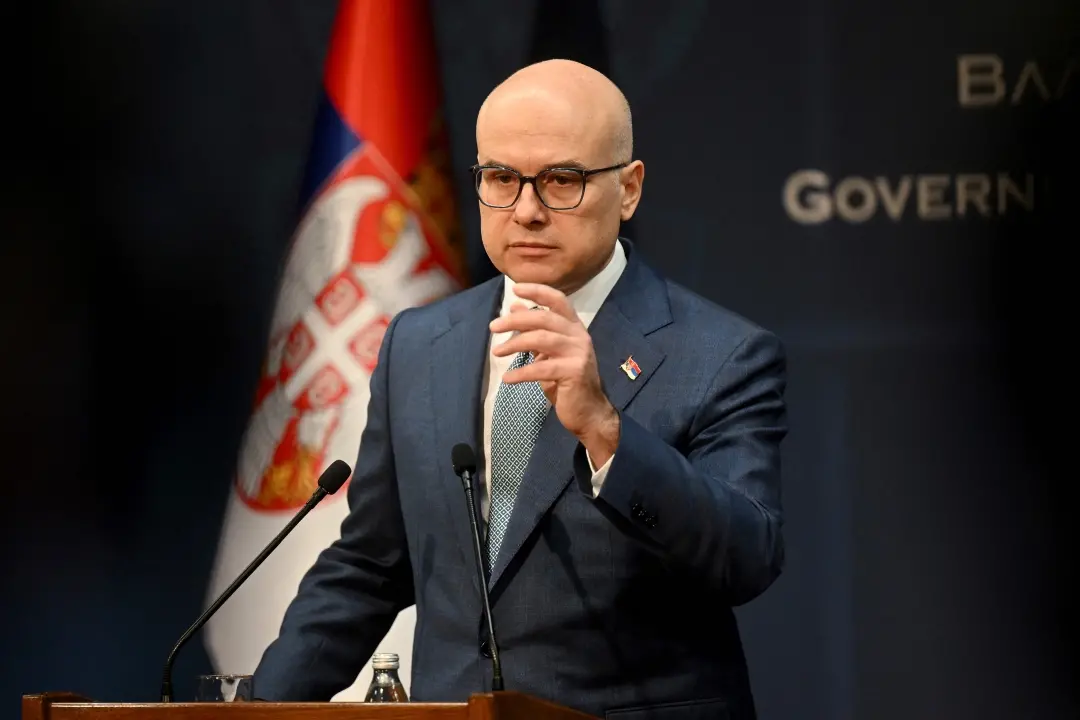
Belgrade: Serbia’s Prime Minister Milos Vucevic resigned on Tuesday in a bid to quell growing political unrest sparked by the deadly collapse of a concrete overhang at a recently renovated train station in Novi Sad.
The tragedy, which occurred in November, claimed 15 lives, including two children, just months after the station reopened. The incident has fuelled widespread accusations of corruption and unsafe construction practices, becoming a rallying point for public dissatisfaction with Serbia’s authoritarian government and lack of transparency.
During a news conference announcing his resignation, Vucevic said, “It is my appeal for everyone to calm down the passions and return to dialogue.”
Hours later, Novi Sad’s mayor also stepped down, adding to the political fallout.
Vucevic’s resignation is likely to lead to an early parliamentary election, pending confirmation by Serbia’s parliament, which has 30 days to form a new government or call a snap election.
Pro-government media reported that President Aleksandar Vucic would attend a Cabinet session to decide whether a new prime minister-designate would be appointed or an early election would be called. A news conference was expected later.
Massive protests
The resignation follows weeks of protests that have swept Serbia. Demonstrations, including a rally in Novi Sad on Tuesday evening, have drawn thousands of citizens from all walks of life, including students, farmers, actors, and lawyers. The movement has grown into a major challenge to President Vucic’s administration, with protesters demanding justice and transparency.
The student-led protests have extended beyond university campuses to streets across the country. On Monday, tens of thousands joined a 24-hour blockade of a key traffic intersection in Belgrade.
Branimir Jovancicevic, a professor at the Faculty of Chemistry in Belgrade, voiced hope for significant political change.
“If the president thinks that by replacing one, essentially, unimportant figure … will solve the problem … he is deeply mistaken," he said.
“This must lead to total political changes because autocracy and dictatorship in Serbia, in the heart of Europe, must be stopped.”
Students have rejected calls for dialogue from Vucic, Vucevic, and parliamentary speaker Ana Brnabic. Instead, they have demanded governmental institutions, including the police and judiciary, uphold the rule of law.
Prime Minister cites recent attack as trigger
Vucevic cited a violent attack on a female student in Novi Sad on Tuesday as the immediate reason for his resignation. The assailants, allegedly connected to the ruling Serbian Progressive Party, reportedly attacked groups of students with baseball bats.
“Whenever it seems there is hope to return to social dialogue, to talk … it’s like an invisible hand creates a new incident and tensions mount again,” Vucevic said.
While the outgoing prime minister echoed Vucic’s claims that the protests were “organised from abroad” to destabilise Serbia, he offered no evidence.
“I can never justify or understand many of these protests, blockades of lives, of roads, and the freedom of movement of other citizens,” Vucevic added.
Demonstrators have adopted symbolic actions to honour the victims of the Novi Sad tragedy. Daily 15-minute traffic blockades are held across the country at 11:52 a.m., marking the time of the collapse on 1 November.
During Tuesday’s rally in Novi Sad, protesters waved placards with red handprints and painted their hands red—a symbol accusing authorities of having “blood on their hands.”
A student at the rally declared, “This is not just our struggle, it’s the struggle of all (people) who want justice. The attacks on students must not be repeated.”
Ongoing investigation raises doubts
Prosecutors have filed charges against 13 people in connection with the train station collapse, including a government minister and several state officials. However, the release of former Construction Minister Goran Vesic from detention has raised concerns about the investigation’s independence.
The main railway station in Novi Sad had been renovated and inaugurated twice as part of a major infrastructure deal with Chinese state companies and a fast railway link to Hungary.
AP