Ukraine says Russia launched ICBM at Dnipro city
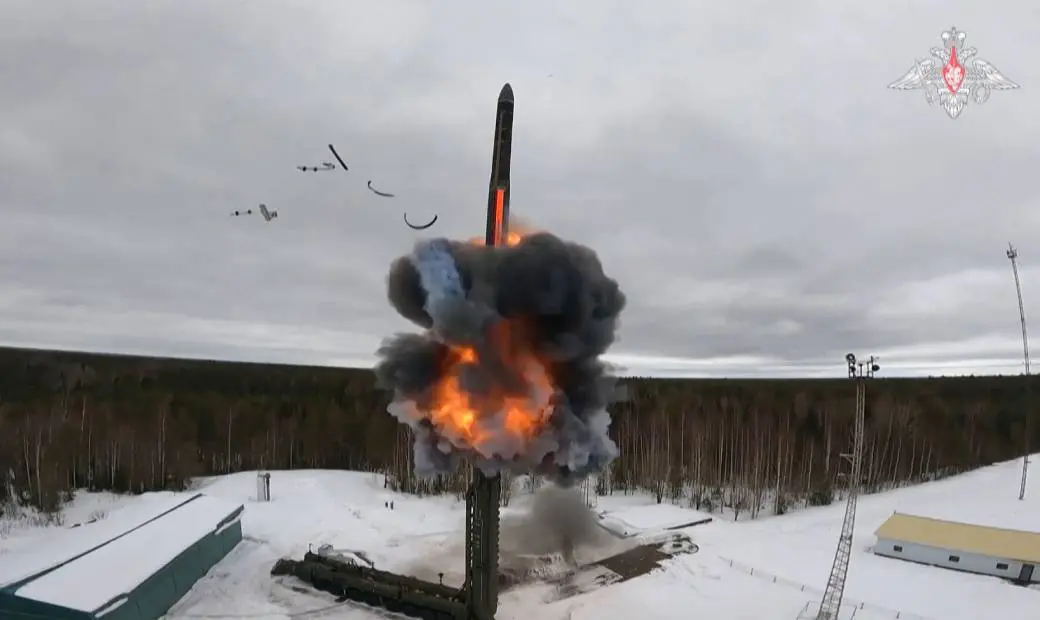
Ukraine claimed that Russia launched intercontinental ballistic missile overnight at Dnipro city in central-east of the country.
Russia launched an intercontinental ballistic missile from its southern Astrakhan region during a morning attack on Ukraine on Thursday, marking the first use of such a powerful, long-range weapon in the war, according to Kyiv's air force.
It said an intercontinental ballistic missile was fired at Dnipro city along with eight other missiles, and that the Ukrainian military shot down six of them.
Two people were wounded as a result of the attack, and an industrial facility and a rehabilitation center for people with disabilities were damaged, according to local officials.
While the range of an ICBM would seem excessive for use against Ukraine, such missiles are designed to carry nuclear warheads, and the use of one would serve as a chilling reminder of Russia’s nuclear capability and a powerful message of potential escalation.
The strike follows Ukraine’s use of U.S. and British missiles to hit targets within Russia earlier this week, actions Moscow had repeatedly warned would be considered a significant escalation.
Meanwhile, CNN reported that the Kremlin declined to comment on accusations of launching an ICBM strike on Ukraine. Meanwhile, Russia said Thursday its air defences had shot down two British-made Storm Shadow missiles, a day after British media reported Ukraine had fired the weapons into Russia for the first time.
Interestingly, the development came hours after United States confirmed that it will provide Ukraine with non-persistent anti-personnel landmines to aid in the country's defence against Russian attacks. The US State Department spokesperson Matthew Miller said that the decision to provide anti-personnel landmines is a response to Russia's military advances in eastern Ukraine.
An ICBM (Intercontinental Ballistic Missile) is a long-range missile designed to carry nuclear or conventional warheads over distances exceeding 5,500 kilometers (3,400 miles). ICBMs are launched into the atmosphere and follow a ballistic trajectory to strike targets across continents, making them a critical component of nuclear deterrence strategies.
Russia's ICBMs
Russia possesses one of the largest and most advanced ICBM arsenals in the world. As part of its nuclear triad (land, sea, and air-based delivery systems), Russian ICBMs are maintained under the control of the Strategic Rocket Forces.
Modern systems like the RS-28 Sarmat (dubbed "Satan II") and RS-24 Yars are equipped with multiple independently targetable reentry vehicles (MIRVs), allowing a single missile to strike multiple targets. Russia also deploys advanced technologies like the Avangard hypersonic glide vehicle, designed to evade missile defense systems. Older systems, such as the Topol-M and RS-20 Satan, remain in service, though they are gradually being replaced.