Rising tensions: Is Cuba emerging as Washington’s next strategic target after Iran?
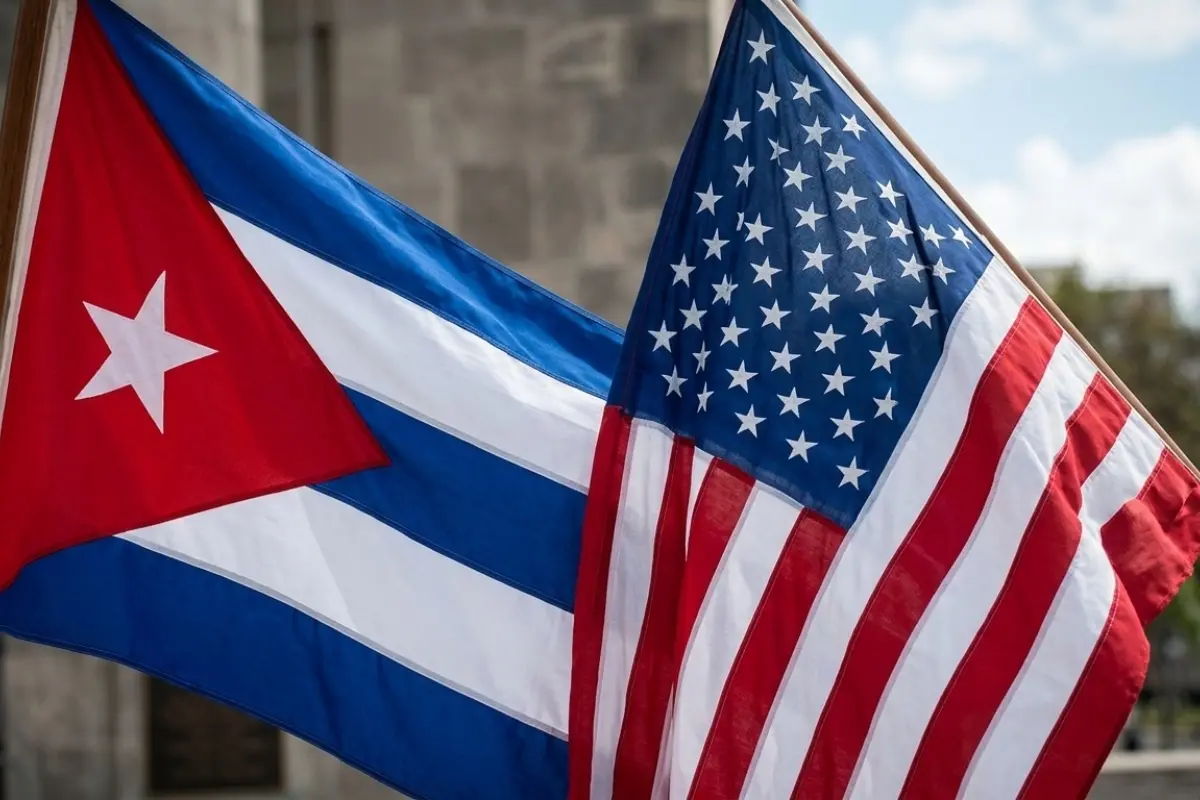
Washington/Havana: As geopolitical tensions reshape global alignments, Cuba is once again emerging as a potential focal point in US foreign policy. Recent developments, ranging from heightened rhetoric by US leadership to deepening economic distress within Cuba, suggest that the island nation could become the next major arena of strategic pressure.
US Secretary of State Marco Rubio on Tuesday dismissed reports that Washington had asked Cuba to remove President Miguel Diaz-Canel, calling such claims “fake” and based on “charlatans and liars claiming to be in the know.” However, the denial has done little to quell speculation about growing US intent to push for change in Havana.
A report had suggested that US officials viewed Diaz-Canel as resistant to reforms and had quietly explored the idea of leadership change, though without calling for a full regime overthrow. Rubio did not clarify whether his denial applied to the entire report or specific claims.
Also read | Trump signals post-Iran move on Cuba: ‘Just a question of time’
The current US approach appears to mirror its evolving strategy in other regions, applying maximum pressure without explicitly pursuing outright regime change. President Donald Trump has signalled a willingness to force compliance rather than directly topple governments, a tactic seen in recent actions involving Venezuela and Iran.
Trump’s rhetoric on Cuba, however, has been unusually direct. “We'll be doing something with Cuba very soon,” he said, adding more starkly: “I do believe I'll be... having the honour of taking Cuba. Whether I free it, take it -- think I could do anything I want with it, you want to know the truth. They're a very weakened nation right now.”
Such statements, combined with tightening economic restrictions, indicate a shift toward more aggressive posturing.
Economic crisis
A severe economic crisis is amplifying Cuba’s vulnerability. A nationwide blackout earlier this week highlighted the fragility of its infrastructure. The country’s energy sector has been particularly hard hit following the loss of Venezuelan oil supplies after the reported ousting of Nicolas Maduro earlier this year.
With no oil imports since January 9, Cuba faces prolonged power outages, with some regions experiencing up to 20 hours without electricity daily. The crisis has also impacted tourism and aviation, further straining the economy.
“What we fear all the time is that the blackout will drag on and we will lose the little bit that we have in the fridge, because everything is so expensive,” said Olga Suarez, a 64-year-old retiree. “Otherwise we are used to it because here almost all the time you go to bed and wake up without electricity.”
Also read | With Venezuelan oil cut off, how vulnerable is Cuba now?
Cuba’s defiance and red lines
Despite mounting pressure, Cuba’s leadership has struck a defiant tone. President Miguel Diaz-Canel warned that any attempt at external intervention would be met firmly.
“Faced with the worst-case scenario, Cuba has one guarantee: any external aggressor will encounter an unbreakable resistance,” he said.
Cuban officials have also made it clear that while they are open to dialogue, their political system is non-negotiable. Deputy chief of mission in Washington, Tanieris Dieguez, emphasised, “Nothing related with our political system, nothing with our political model -- our constitutional model -- is part of the negotiations, and never will it be part of that.”
“The only thing that Cuba asks for any conversation is respect to our sovereignty and to our right to self-determination,” she added.
A long, contentious history
The current tensions are rooted in a long and troubled history between the two nations. From the Cold War-era rupture in 1961 to the trade embargo imposed in 1960, US-Cuba relations have been marked by ideological conflict and intermittent attempts at engagement.
Although diplomatic ties were briefly restored in 2015, the broader relationship remains strained. Decades of sanctions and political hostility have left deep scars, shaping both policy and perception on either side.
Unlike Venezuela or Iran, Cuba lacks significant oil wealth. Yet, its strategic and symbolic importance remains high, particularly in US domestic politics, where Cuban-American lawmakers have consistently advocated a hardline stance against Havana.
The Trump administration’s increasing pressure, coupled with Cuba’s internal economic fragility, creates a convergence of opportunity and risk. While Washington may not be openly pursuing regime change, its actions suggest an effort to force structural concessions.
At the same time, Cuba’s firm stance on sovereignty and governance limits the scope for compromise, raising the likelihood of prolonged confrontation.