Rafale or Su-57: How Vietnam’s fighter jet decision could reshape Indo-Pacific power balance?
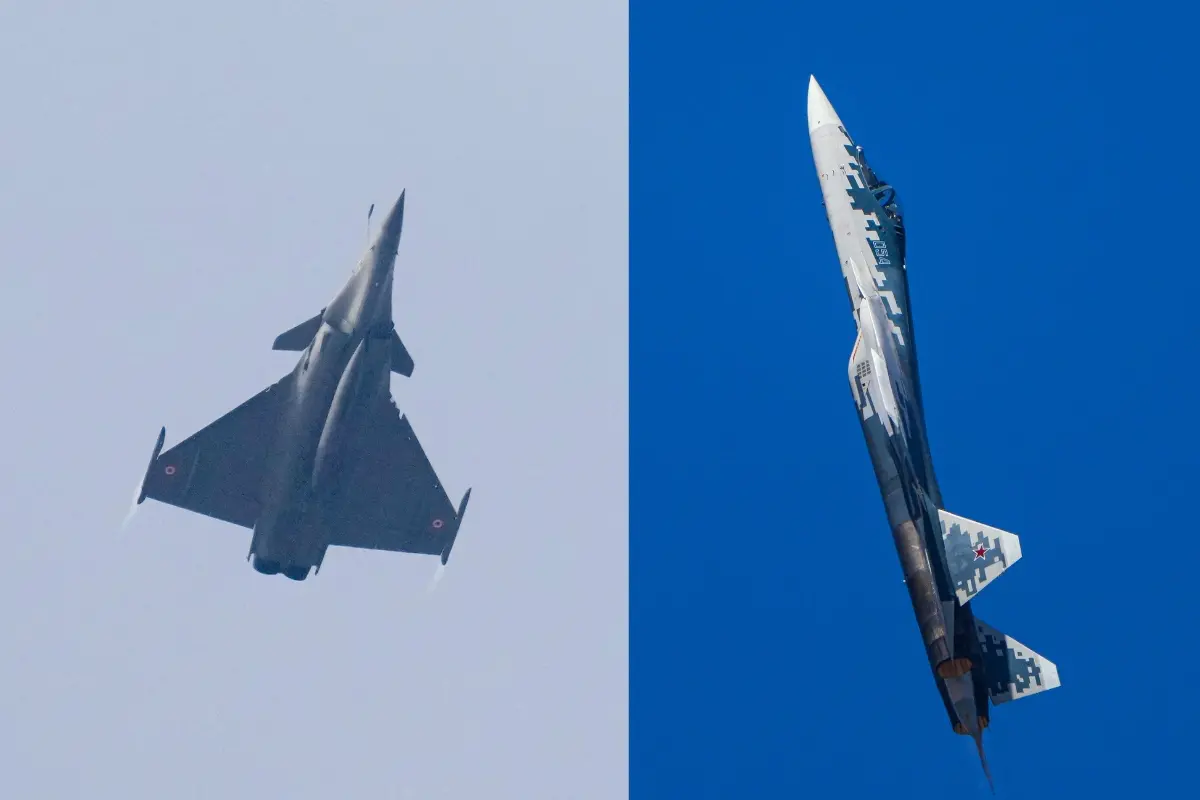
Vietnam is evaluating two advanced fighter jet options, France’s Rafale and Russia’s Su-57, as it moves to modernise its ageing air force in response to growing regional security challenges, particularly in the South China Sea.
The discussion comes at a time when China is rapidly expanding and upgrading its air power capabilities.
At present, Vietnam’s air force is largely built around legacy Soviet and Russian-origin aircraft, including Su-22 strike aircraft and Su-27 and Su-30MK2 fighter jets. Many of these platforms are ageing, with some approaching retirement, prompting Hanoi to consider next-generation replacements.
Reports suggest that discussions with France regarding the Rafale have progressed significantly, with Vietnamese pilots reportedly given opportunities to test-fly the aircraft. This is typically seen as a sign of advanced-stage evaluation in defence procurement processes. France has been attempting to expand its defence footprint in Southeast Asia, and Indonesia’s Rafale deal has already strengthened Dassault Aviation’s presence in the region.
Also read | HAL Tejas Mk2's final push: Fighter on the cusp of first flight
On the Russian side, the Su-57 has been presented as a fifth-generation alternative that could align more easily with Vietnam’s existing Russian-based infrastructure, potentially lowering integration and maintenance challenges. Russia has also positioned the aircraft as combat-tested and is seeking export customers despite production and delivery constraints linked to ongoing sanctions and wartime demand.
The Rafale, meanwhile, is being marketed as a multi-role platform capable of air superiority, ground strike, and maritime operations, supported by advanced electronic warfare systems and long-range operational capability. However, transitioning to Western systems would require significant investment in new infrastructure, training, and logistics, increasing overall lifecycle costs.
A key factor influencing Vietnam’s decision is China’s rapid military expansion, including the deployment of advanced fighter jets and stealth aircraft. This has increased pressure on Vietnam to strengthen its deterrence and air defence capabilities.
Both aircraft present distinct advantages. The Rafale offers interoperability with Western systems and proven multi-role flexibility, while the Su-57 offers continuity with existing Russian systems and potentially easier integration for Vietnam’s current fleet structure.
However, both options come with challenges. The Rafale faces delivery timelines affected by high global demand and production backlogs, while the Su-57’s export reliability and production scale remain uncertain due to sanctions and domestic Russian requirements.
Analysts suggest Vietnam’s final decision will likely depend on a combination of cost, delivery timelines, geopolitical alignment, and long-term strategic autonomy. There is also speculation that Vietnam could eventually opt for a mixed procurement strategy, although this would further complicate logistics and training frameworks.
The decision is expected to have wider implications for defence balance in the Indo-Pacific region, where air power modernisation is increasingly shaping strategic competition.