Two powerful earthquakes measuring 7.7 and 6.6 strike Panama; buildings collapse
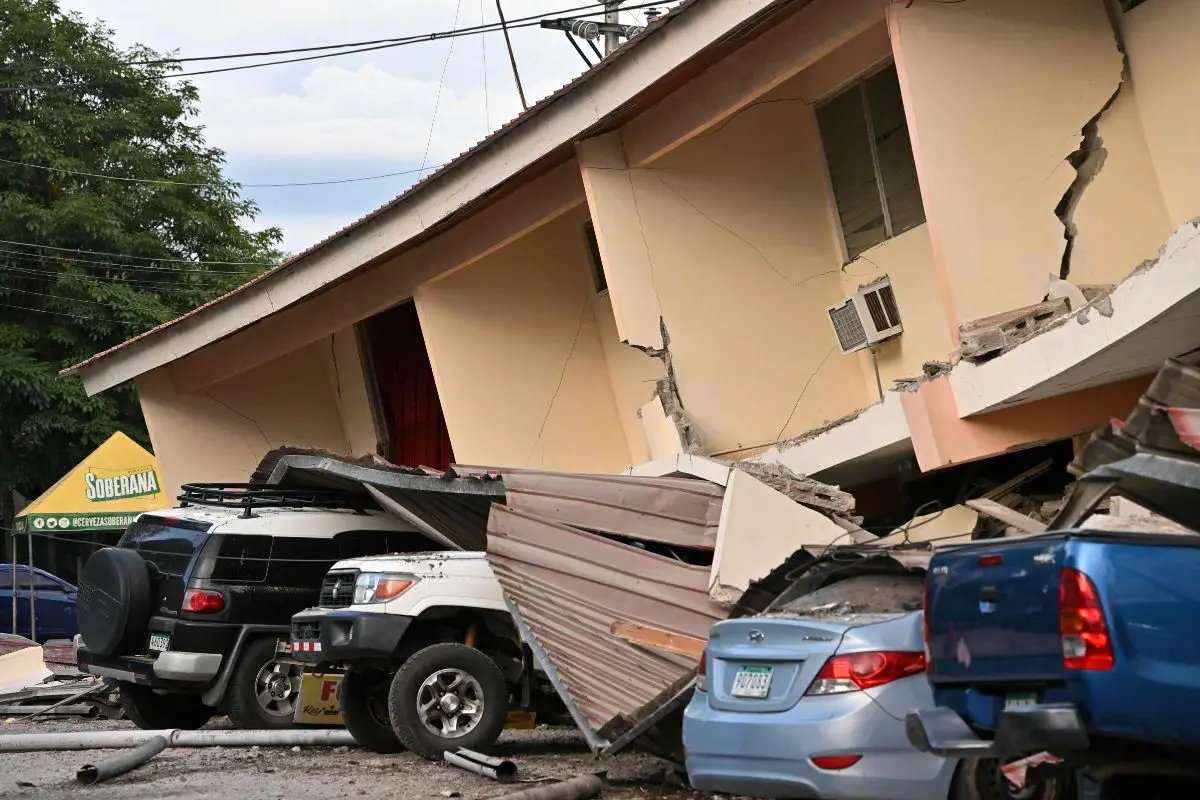
Panama City: Two powerful earthquakes measuring 7.7 and 6.6 in magnitude struck southern Panama on Friday, triggering a series of aftershocks, damaging buildings and prompting evacuations across the country.
Despite the scale of the tremors, authorities had not recorded any deaths as of Friday evening, although officials warned that the situation could change as assessments continued.
The first earthquake was centred about 10 km (6 miles) south-west of Pitaloza Arriba, a remote community in Herrera province, according to the US Geological Survey (USGS). It struck at a depth of 10 km (6 miles).
The USGS initially estimated the magnitude of the first quake at 8 before revising it to 7.6 and subsequently to 7.7. The tremors were felt as far away as neighbouring Colombia.
Residents in Panama City, the capital, rushed outdoors as buildings shook and people waited for information about the extent of the damage.
“We felt it very strongly. It knocked things over in the kitchen, but we’re okay, though we’re very scared,” Rosendo Domínguez, 60, a resident of Herrera province, told The Associated Press over the phone.
“Everyone is outside, scared,” he added.
Several aftershocks followed the main earthquakes, including tremors measuring 5.8, 5.5 and 5.2 in magnitude. Seismologists at the University of Panama recorded more than 45 aftershocks, although many were too weak to be felt.
President José Raúl Mulino urged residents to remain calm, acknowledging the uncertainty surrounding the disaster.
“Nobody was ready, and no one is ever ready for this type of disaster,” he said.
Buildings damaged, injuries reported
The worst damage was reported in the central provinces of Veraguas, Herrera and Los Santos, according to Omar Smith of Panama's National Civil Protection Service. No damage had been reported in Panama City, he said.
Several injuries were reported, including one person struck by debris from a partially collapsed structure in Penonomé, about 150 km (93 miles) from the capital.
Authorities also confirmed a partial collapse and cracks at a cathedral in the district's main square, along with damage to the governor's office building and the Dos Continentes hotel.
Local media reported that the Church of San Atanasio, a colonial-style Catholic church in Los Santos province, had collapsed. The building was designated a National Historic Heritage Site in 1938.
Large fissures were also reported along roads in Veraguas province, while images of damaged buildings and cracked road surfaces raised concerns about the impact of the successive tremors.
The relatively low death toll, despite the strength of the earthquakes, could be partly attributed to Panama's strict building regulations, particularly those governing skyscraper construction in the capital, said Carlos Valdés, head of the Seismology Department at Mexico's National Autonomous University.
Airport operations resume, Panama Canal unaffected
Tocumen International Airport in Panama City temporarily suspended operations following the first earthquake. The airport, which handled more than 20 million passengers in 2025, said it was reopening on Friday afternoon.
The Panama Canal Authority said operations along the crucial global trade route continued normally after the earthquakes.
It added that the safety of employees, vessels and crews remained its priority, with specialised technical teams inspecting facilities for potential damage.
Meanwhile, the National Weather Service lifted a tsunami warning issued after the earthquakes for the coasts of Panama, Colombia, Ecuador, Nicaragua and Guatemala. Alerts issued by El Salvador and Chile for Easter Island were also withdrawn.
Néstor Luque, director of the Geosciences Institute at the University of Panama, said waves measuring between 1 and 3 metres were expected around Isla Cañas and the southern coast of Los Santos province. Larger waves were not anticipated beyond those areas, he said.
Seawater had already reached homes near the coast on Isla Cañas, according to Luque.
International support pours in
Governments across Latin America and the United States offered support to Panama following the earthquakes.
Mulino thanked regional leaders for their solidarity, saying he had spoken with the presidents of Chile, Uruguay and Guatemala, among others.
US Secretary of State Marco Rubio said Washington was closely monitoring the situation and was “rapidly mobilizing resources and personnel to assist” at the request of the Panamanian government.
“The United States stands with the people of Panama,” Rubio wrote on X.
Colombian President Abelardo de la Espriella also expressed solidarity with Panama and offered assistance.
“Panama is not alone! You can count on Colombia’s support and our full willingness to provide whatever assistance is needed,” he wrote on X.
Acting Venezuelan President Delcy Rodríguez, Costa Rican President Laura Fernández Delgado, Ecuadorian President Daniel Noboa and the Peruvian government also offered support.
Earthquakes common along the Pacific Ring of Fire
Panama's last major earthquake to cause widespread damage occurred in 1991. A magnitude 7.4 earthquake centred in neighbouring Costa Rica killed 23 people, injured 559 and left thousands homeless in Panama's border region of Bocas del Toro.
Earthquakes are common in Panama, particularly near its border with Costa Rica and along its Pacific coast, because of the interaction of several tectonic plates, including the Cocos, Nazca and Caribbean plates.
The country lies along the Pacific Ring of Fire, a roughly 40,000 km (25,000-mile) arc of volcanoes and fault lines surrounding the Pacific Basin. The region accounts for a large proportion of the world's earthquakes.
AP