Pakistan ‘perturbed’; Saudi warns of ‘red line’: Here’s how Muslim nations reacted to Mecca attack claim
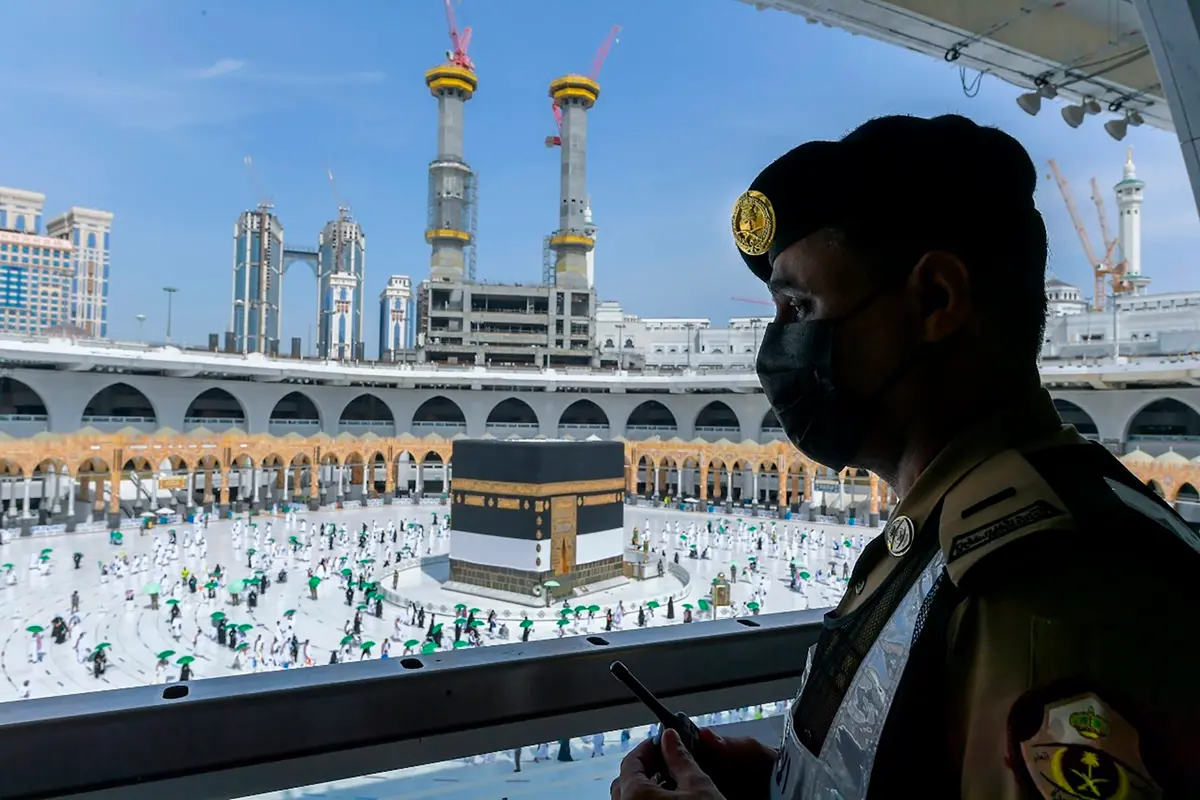
A reported attempt by Yemen's Houthi rebels to target the holy city of Mecca has drawn fierce international condemnation, while threatening to drag the region into a broader economic and military crisis.
On Wednesday, the Saudi-led coalition fighting in Yemen accused the Iran-backed Houthi group of launching a drone towards Mecca, Islam's holiest site which welcomes millions of pilgrims every year. Saudi forces stated they successfully shot down the incoming drone before it could reach the city.
The Houthi movement reacted swiftly, rejecting the allegations. Hazem al-Assad, a member of the Houthi politburo, wrote on social media platform X that "the claims about targeting Mecca are a worn-out lie that has been used before and no longer fools anyone".
Condemnation pours in after holy city threat
Despite the Houthi denial, the accusation provoked immediate anger across the Islamic world. Pakistan Prime Minister Shehbaz Sharif condemned "in the strongest possible terms the dastardly and heinous" incident. Writing on X, Mr Sharif added: "The people of Pakistan are saddened and perturbed by this outrageous act".
The Organisation of Islamic Cooperation (OIC), a political bloc representing 57 Muslim nations, also issued a strong statement. "The General Secretariat of the Organization of Islamic Cooperation (OIC) condemns the heinous attacks carried out by the Houthi group against the city of Makkah and the Madinah region, as well as its ongoing aggression against the Kingdom of Saudi Arabia," the group posted on X.
Meanwhile, the United States embassy responded on by urging its citizens to "reconsider travel" to Saudi Arabia following security alerts in Mecca and surrounding southern areas. The advisory highlighted the "risk of Iranian drone and missle targeting of American interests, armed conflict, terrorism, exit bans and local laws regarding social media activity", adding explicitly: "Do Not Travel to the Yemen border due to threat of terrorism".
Saudi coalition vows firm retaliation as fighting flares
The military alliance led by Riyadh warned that any threat to holy places would bring severe consequences. Joint Forces Command spokesman Turki al-Maliki shared a statement on X declaring: "The security of the Two Holy Mosques and the pilgrims is a red line, and the Joint Forces Command of the Coalition will not hesitate to take the necessary and deterrent measures against the Terrorist Houthi Militia". The coalition further pledged to deal "firmly to protect the sovereignty of the Kingdom" using "all necessary operational measures to deter this... hostile and extremist approach".
Tensions inside Saudi Arabia had already spiked on Tuesday when authorities issued brief security alerts for Mecca and southern parts of the country bordering Yemen. It marked the first emergency warning issued in Mecca since wider Middle East hostilities broke out in February. The alerts came shortly after a series of ballistic missile and drone strikes from Yemen injured 13 people in southern Saudi Arabia on Monday.
On the ground in Yemen, military operations have escalated dramatically since July, when Houthi forces launched a massive offensive against the Yemeni government. During a rapid drive last week, Houthi fighters captured the entirety of Yemen's Red Sea coastline along with the strategic Bab al-Mandab Strait. In response, Houthi military spokesman Yahya Saree claimed on Tuesday that Saudi Arabia carried out 52 airstrikes over 24 hours, hitting civilian infrastructure including schools and bridges. However, these airstrikes have failed to turn back Houthi gains.
Escalating conflict hits global oil and shipping routes
The revival of Yemen's civil war, which had remained largely quiet since 2022, is now causing major waves across international markets and supply chains. Following their coastal gains, the Houthis declared a sea blockade against Saudi Arabia and began targeting Saudi vessels passing through the Red Sea.
The blockade directly threatens the Bab al-Mandab Strait, a crucial sea path for Saudi petroleum exports. This choke point has become even more vital because the broader war in the Middle East has already severely restricted traffic through the Strait of Hormuz. Houthi officials insist that non-Saudi commercial ships can pass safely through Bab al-Mandab. Nevertheless, international shipping firms are growing increasingly hesitant to navigate the dangerous waterway.
This maritime turmoil is severely hurting Egypt, whose economy relies heavily on tolls from the Suez Canal. Current Suez Canal earnings have dropped to nearly half of what they were before the Houthis started hitting Red Sea shipping in 2023 — attacks the group initially launched in solidarity with Palestinians during the Gaza conflict.
On Tuesday, Qatari officials expressed grave concern, warning that a complete closure of the Bab al-Mandab Strait would prove "catastrophic for the entire world". At the same time, Houthi attacks on oil facilities inside Saudi Arabia, the top exporter of crude oil globally, have pushed international oil prices past $100 per barrel.
Regional leaders seek solutions as civilian toll rises
Faced with mounting economic and security threats, regional leaders are scrambling for answers. On Tuesday, Saudi Arabia's de facto leader, Crown Prince Mohammed bin Salman, conferred with Egyptian President Abdel Fattah al-Sisi. According to the Egyptian presidency, both leaders stressed the urgent need for "ensuring the freedom and security of maritime navigation" through both the Bab al-Mandab Strait and the Strait of Hormuz.
Riyadh has also sought help beyond the region. US media reported last week that Crown Prince Mohammed personally asked US President Donald Trump for military intervention, though Mr Trump turned down the request. Despite declining direct military intervention, a US military official confirmed on Tuesday that an American military task force is assisting Saudi forces with intelligence-sharing and strategic planning.
The human cost of the renewed fighting is mounting rapidly. Data from the United Nations shows that more than 82,000 people have been forced from their homes in Yemen since the beginning of September.
Speaking at the United Nations, Yemen's permanent representative Abdullah al-Saadi declared that Yemeni forces were fighting to recover "national institutions across every inch of their land". He appealed directly to the international community to take decisive action to curb Houthi aggression.