Pakistan seeks ‘constructive’ dialogue on Indus Treaty; India refuses to budge
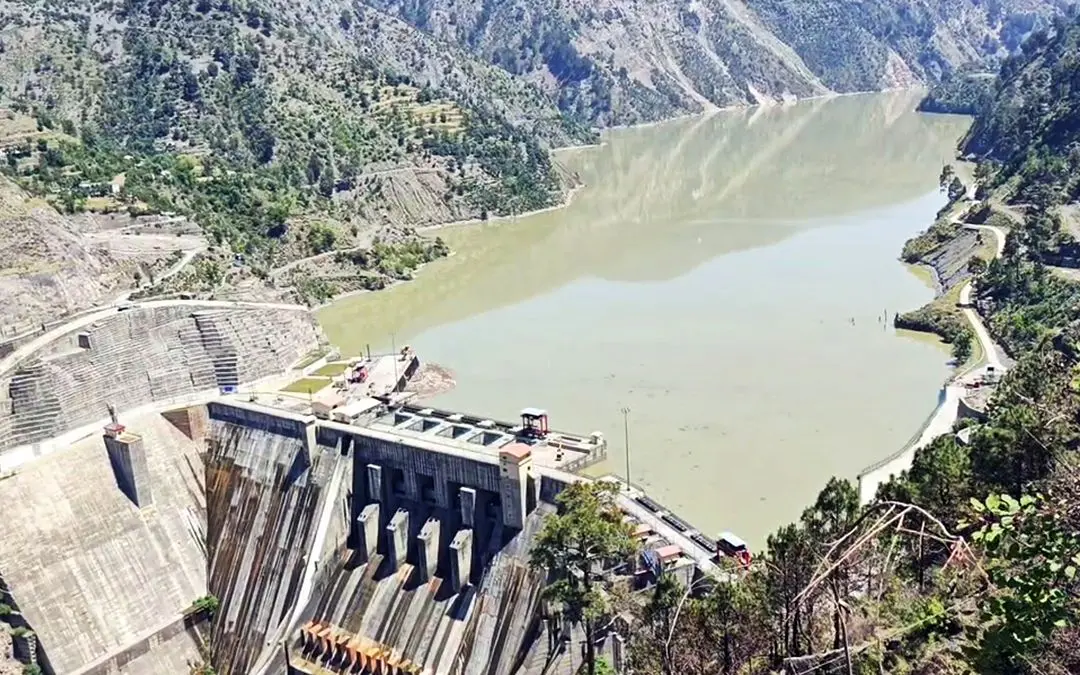
Pakistan has urged India to engage “constructively” within the framework of the Indus Water Treaty, days after New Delhi rejected a ruling by the Permanent Court of Arbitration and reiterated that its decision to keep the treaty in abeyance remains in force.
Pakistan Foreign Office spokesperson Tahir Andrabi on Wednesday urged India to engage with Islamabad constructively within the framework of the Indus Water Treaty (IWT), which was signed by the two countries in 1960.
Andrabi said Pakistan remained committed to implementing the treaty “in letter and spirit” and would take “all possible measures” to ensure that the Permanent Court of Arbitration's decision was implemented.
He also called on India to reciprocate and uphold the treaty according to its provisions.
Pakistan's position comes after it approached the Permanent Court of Arbitration in The Hague in March 2026, seeking a determination on the status of the treaty after India placed it in abeyance.
India rejects the arbitration process
India has rejected the tribunal's proceedings and does not recognise the arbitration body involved in the case.
The Ministry of External Affairs has described the body as “illegally constituted” and rejected what it called its “so-called award”. New Delhi has maintained that the tribunal's establishment itself violates the provisions of the Indus Water Treaty.
India has also reiterated that its decision to keep the treaty in abeyance remains in force.
According to the Indian government, the tribunal issued an award on May 15, 2026, concerning maximum pondage and related issues following an earlier award dealing with broader questions of treaty interpretation.
The central disagreement is therefore not only over the substance of the tribunal's ruling but also over whether the arbitration mechanism has jurisdiction in the first place.
What Pakistan says about the Hague ruling
Pakistan says the Permanent Court of Arbitration reaffirmed that the Indus Water Treaty remains fully binding and in force.
Andrabi said Islamabad would pursue “all possible measures” to ensure implementation of the court's decision.
Pakistan has consistently argued that the treaty is an international agreement that cannot be unilaterally suspended and has urged India to return to its framework.
India, however, disputes the legal basis of the arbitration proceedings and maintains that its decision to place the treaty in abeyance is separate from the tribunal's authority.
Water dispute surfaces amid wider India-Pakistan tensions
The latest exchange comes against the backdrop of worsening relations between India and Pakistan following the April 22, 2025 Pahalgam terror attack, in which 26 people were killed.
India announced the decision to place the Indus Water Treaty in abeyance as part of a series of measures following the attack. New Delhi has said the treaty will remain in abeyance until Pakistan “credibly and irrevocably abjures its support for cross-border terrorism”.
Pakistan has rejected India's position and continued to insist that the treaty remains binding.
The dispute has also acquired a wider diplomatic dimension, with water becoming increasingly linked to the two countries' broader security relationship.
Different positions at the SCO
The disagreement was also reflected in contrasting remarks by Indian Prime Minister Narendra Modi and Pakistan Prime Minister Shehbaz Sharif at the Shanghai Cooperation Organisation summit in Bishkek.
Modi called for stronger action against countries that use terrorism as an instrument of state policy and urged the dismantling of terrorist ecosystems, including funding networks, recruitment pipelines and territorial sanctuaries.
Sharif, meanwhile, described water as the region's “lifeblood” and argued that agreements governing shared waters should be respected in both letter and spirit.
Although the two leaders' remarks addressed broader regional concerns, their positions highlighted the different priorities shaping India-Pakistan relations: New Delhi's focus on terrorism and security, and Islamabad's emphasis on the continued operation of the water-sharing treaty.
What happens next?
The latest development does not indicate that India and Pakistan have reached an understanding over the Indus Water Treaty.
Instead, the two sides remain divided on three fundamental questions: whether the treaty can remain in abeyance, whether the arbitration process has jurisdiction, and whether the Hague ruling has any binding effect on India.
Pakistan's call for “constructive” engagement signals its continued preference for resolving the water dispute through the treaty's established framework. India, meanwhile, has tied the future of the treaty to its position on cross-border terrorism and continues to reject the arbitration process involved in the case.
The dispute is significant because the IWT governs the use of the Indus river system, which is vital to both countries. Any prolonged deterioration in the treaty framework could therefore have implications beyond the immediate legal dispute, particularly for water management, bilateral diplomacy and regional stability.
For now, Pakistan is pressing for the treaty to be implemented in full, while India maintains that its decision to keep the agreement in abeyance remains in force.