Why an earthquake in Russia triggered tsunami alerts from Japan to US
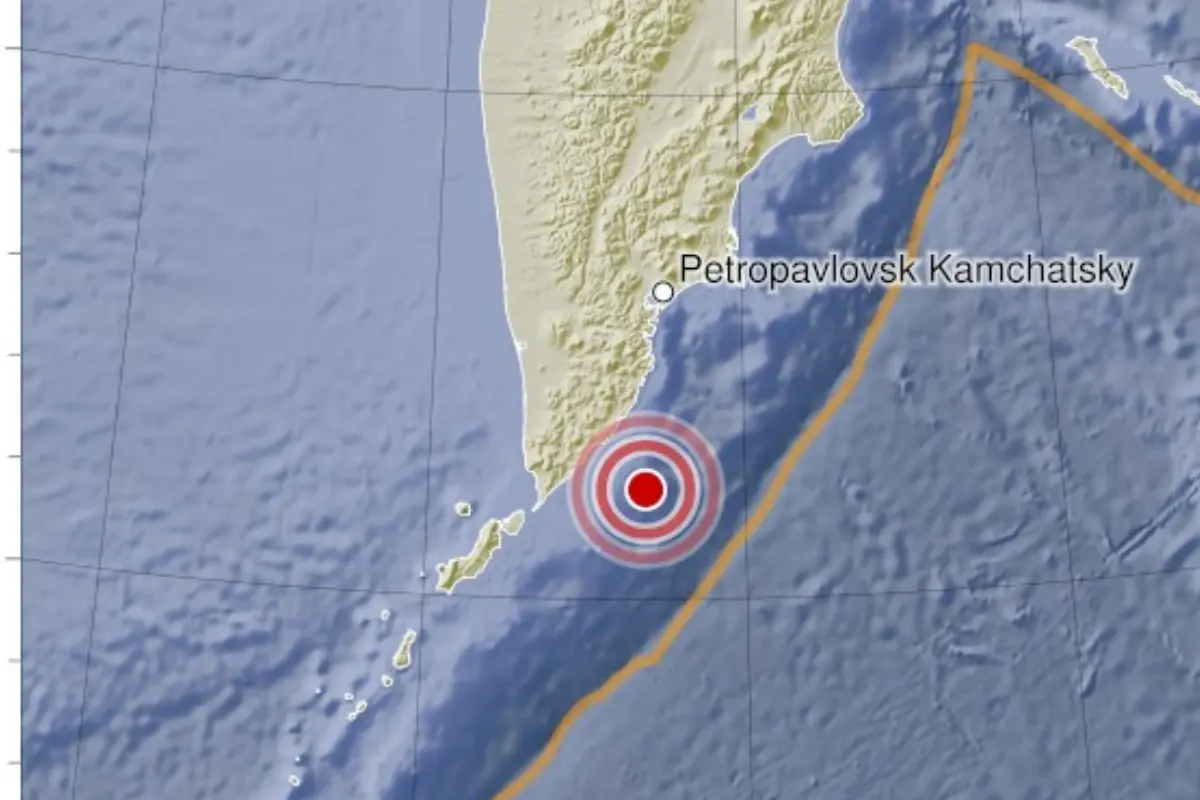
A magnitude 8.8 earthquake off Russia’s Kamchatka Peninsula has triggered widespread tsunami warnings across the Pacific.
The earthquake struck on Wednesday, with a magnitude of 8.8 and a shallow depth of 19 km — ideal conditions for triggering a tsunami. Shallow quakes displace more water, generating waves that can travel thousands of kilometres. This one occurred off Russia’s Kamchatka Peninsula, part of the seismically active Pacific Ring of Fire, making neighbouring and distant regions vulnerable.
As reported by The Guardian Russia, Japan, Hawaii, the US West Coast, and several Pacific islands are at risk of waves ranging from 0.3 to 4 metres. Authorities stress that the shallow depth of the quake, just 19 km, makes the event especially dangerous. Multiple waves are expected, and some may be larger than the first. Evacuation orders have been issued in high-risk coastal zones.
How high could the waves be in Russia?
Russia's Kamchatka Peninsula was the closest landmass to the earthquake’s epicentre, and it has already been hit. Severo-Kurilsk and surrounding areas have reported waves of 3 to 4 metres (10–13 feet). According to local emergency authorities, evacuations were issued following the impact. Footage shows water inundating streets and structures near the coastline.
What is Japan expecting?
The Japan Meteorological Agency has warned of tsunami waves between 1 and 3 metres along the Pacific coast. This alert level was upgraded after initial predictions. Coastal areas are on high alert, and residents have been ordered to evacuate in some regions. The agency also warned that “tsunamis will strike repeatedly,” meaning danger persists even after the first wave.
Also read: Tsunami hits Japan's Hokkaido, Russia's Kuril islands after 8.8 quake; injuries reported
What about Hawaii?
Hawaii is under a tsunami watch, and waves could reach 1 to 3 metres, according to the US Tsunami Warning Center. The first wave was expected at 7:17 p.m. local time on Tuesday. Officials are warning residents to stay off beaches and prepare for multiple waves, which may last for hours. Damage to coastal infrastructure is possible.
What is the outlook for California and the US West Coast?
California, Oregon, Washington, and Alaska are under tsunami watches. Wave arrival times vary from 11:50 p.m. Tuesday (in Northern California) to 1 a.m. Wednesday (in Southern California). Alaska could see waves up to 3 metres, while California’s potential wave heights remain uncertain but concerning. Emergency services are monitoring the situation closely and advising people in low-lying coastal zones to remain alert.
How could other Pacific Islands be affected?
Several islands are under active tsunami watches or advisories:
- Midway Island, Johnston Atoll, Palmyra Island – waves of 1 to 3 metres
- Guam, Micronesia – waves between 0.3 and 3 metres
- Palau, the Marshall Islands, the Philippines – waves up to 1 metre
These regions are being monitored by Pacific Tsunami Warning Centers, and residents are urged to stay informed through official channels.
Why is this alert so dangerous?
This earthquake struck at a shallow depth of just 19 km, significantly increasing the likelihood of large, fast-moving tsunamis. Shallow quakes (0–70 km) displace more water, making them ideal triggers for widespread tsunami activity. According to seismologist Shinichi Sakai of the University of Tokyo, distant but shallow quakes like this one can cause widespread tsunamis affecting far-off coastlines.
Why multiple waves can be deadlier
Authorities are warning that tsunamis rarely consist of a single wave. Often, the second or third wave is larger, causing people to return to unsafe areas too soon. Emergency broadcasts stress the importance of staying inland until an official “all-clear” is issued, even if the first wave appears small.
Coastal residents in all affected regions should immediately move to higher ground and avoid beaches and harbors. It is crucial to listen to local emergency alerts and not return to coastal areas until authorities confirm it is safe to do so.