Atleast 400 killed as Israel launches heaviest airstrike on Gaza
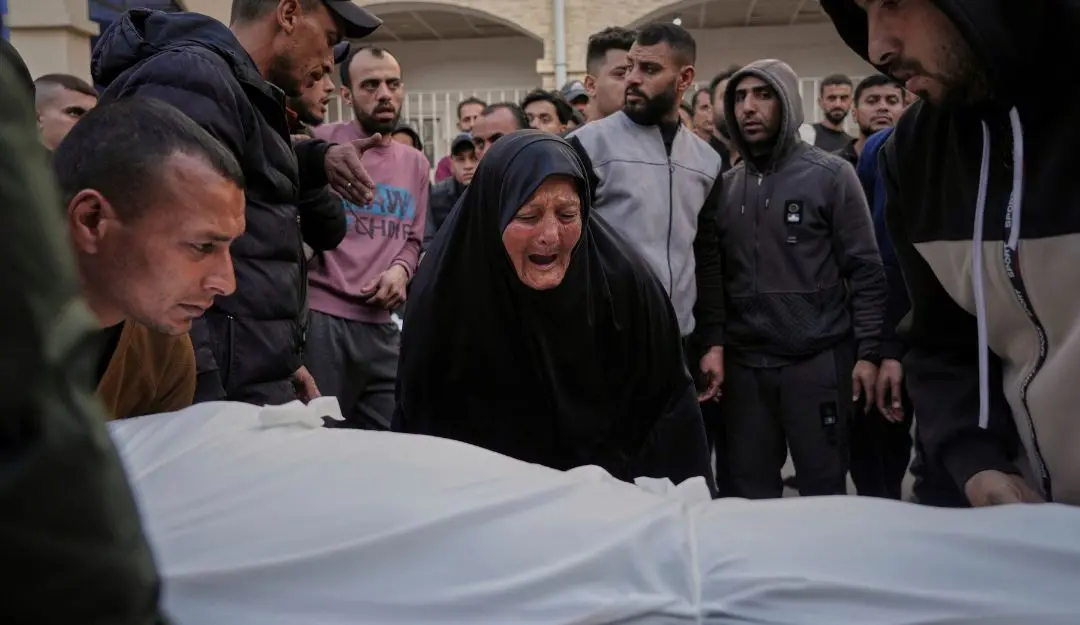
Gaza: Israel conducted a massive wave of airstrikes across the Gaza Strip early Tuesday, killing at least 400 Palestinians, mostly women and children, according to local health officials. The surprise bombardment shattered a ceasefire in place since January, marking the deadliest attack in Gaza since the 17-month conflict began.
Prime Minister Benjamin Netanyahu ordered the strikes after Hamas refused Israeli demands to alter the ceasefire agreement. Israeli officials described the operation as open-ended, with expectations of expansion. The White House stated it had been consulted and expressed support for Israel’s actions.
The Israeli military instructed residents of eastern Gaza, including much of the northern town of Beit Hanoun and surrounding areas, to evacuate towards the territory's centre, signalling a potential resumption of ground operations.
“Israel will, from now on, act against Hamas with increasing military strength,” Netanyahu’s office declared.
The airstrikes during the Muslim holy month of Ramadan have raised fears of a full return to conflict in a war that has already claimed tens of thousands of Palestinian lives and caused widespread devastation across Gaza. Concerns have also mounted over the fate of approximately two dozen Israeli hostages believed to be alive in Hamas captivity.
As part of a broader regional escalation, the U.S. launched strikes against Iran-allied rebels in Yemen, while Israel targeted Iran-backed militants in Lebanon and Syria.
A senior Hamas official, Izzat al-Risheq, condemned Netanyahu's decision, describing it as a “death sentence” for the hostages. Al-Risheq accused Netanyahu of reigniting conflict to bolster his far-right governing coalition and urged mediators to “reveal facts” regarding who broke the truce. Hamas reported that at least four senior officials were killed in Tuesday's strikes.
Despite the bombardment, Hamas had not launched retaliatory attacks in the hours following the strikes, suggesting hopes of restoring the ceasefire remained.
Netanyahu faces growing domestic pressure, with mass protests planned over his handling of the hostage crisis and his decision to dismiss the head of Israel's internal security agency, Shin Bet. Netanyahu’s planned testimony in a corruption trial was also cancelled following the strikes.
The renewed military campaign appeared to strengthen Netanyahu's political standing. Far-right party leader Itamar Ben-Gvir announced his party’s return to Netanyahu’s government following the ceasefire’s collapse.
The Hostages and Missing Families Forum, representing families of the captives, condemned the Israeli government’s decision to abandon the ceasefire, stating, “We are shocked, angry and terrified by the deliberate dismantling of the process to return our loved ones from the terrible captivity of Hamas.”
A strike on a home in Rafah killed 17 members of one family, including five children, their parents, and another father with his three children, according to the European Hospital. In Khan Younis, reporters witnessed explosions and plumes of smoke. Ambulances rushed the injured to Nasser Hospital, where patients lay on the floor amid chaos.
Many Palestinians anticipated a resumption of conflict when talks over the ceasefire’s second phase did not proceed as scheduled in early February. The second phase aimed to secure the release of the remaining 24 hostages and end the war, but Israel halted all aid shipments to Gaza in an effort to pressure Hamas.
“Nobody wants to fight,” Palestinian resident Nidal Alzaanin told the Associated Press from Gaza City. “Everyone is still suffering from the previous months.”
Gaza’s Health Ministry reported at least 404 deaths and over 560 injuries due to the airstrikes, with rescuers continuing to search through rubble as the attacks persisted. Zaher al-Waheidi, head of the ministry’s records department, described Tuesday as Gaza’s deadliest day since the war began.
Over 48,000 Palestinians have been killed, with an estimated 90% of Gaza’s population displaced, according to local health officials. The ministry noted that over half of the casualties were women and children.
The conflict erupted on 7 October 2023, when Hamas militants attacked southern Israel, killing around 1,200 civilians and taking 251 hostages. Ceasefire agreements had allowed the release of some hostages and displaced Palestinians' partial return home.
The White House blamed Hamas for the renewed violence. National Security Council spokesman Brian Hughes stated, “Hamas could have released hostages to extend the ceasefire but instead chose refusal and war.”
An anonymous Israeli official indicated that the military planned to expand its strikes beyond air assaults to target Hamas's military infrastructure and leadership. Hamas had resumed its activities in Gaza following the ceasefire, raising Israeli concerns over new attack planning.
The first phase of the ceasefire resulted in Hamas releasing 25 Israeli hostages and the bodies of eight others, in exchange for over 1,700 Palestinian prisoners. However, talks for the second phase stalled, with Hamas demanding an end to the conflict and Israel seeking to dismantle Hamas's governance and military capabilities.
Netanyahu’s government has demanded Hamas release half of the remaining hostages in exchange for negotiations on a lasting truce, but Hamas insists on the original ceasefire terms.
Renewed conflict could allow Netanyahu to avoid difficult political decisions regarding Gaza’s governance and bolster his coalition, supported by far-right lawmakers advocating for Gaza’s depopulation and the expansion of Jewish settlements.
Despite released hostages pleading for a ceasefire, protests continue, with tens of thousands of Israelis demanding peace and the return of all captives. Mass demonstrations were planned following Netanyahu’s announcement to remove Shin Bet’s head, a move critics view as an attempt to deflect blame for the October attack and the ongoing conflict.