Online grocery shopping: Is convenience killing fight against single-use plastic bags?
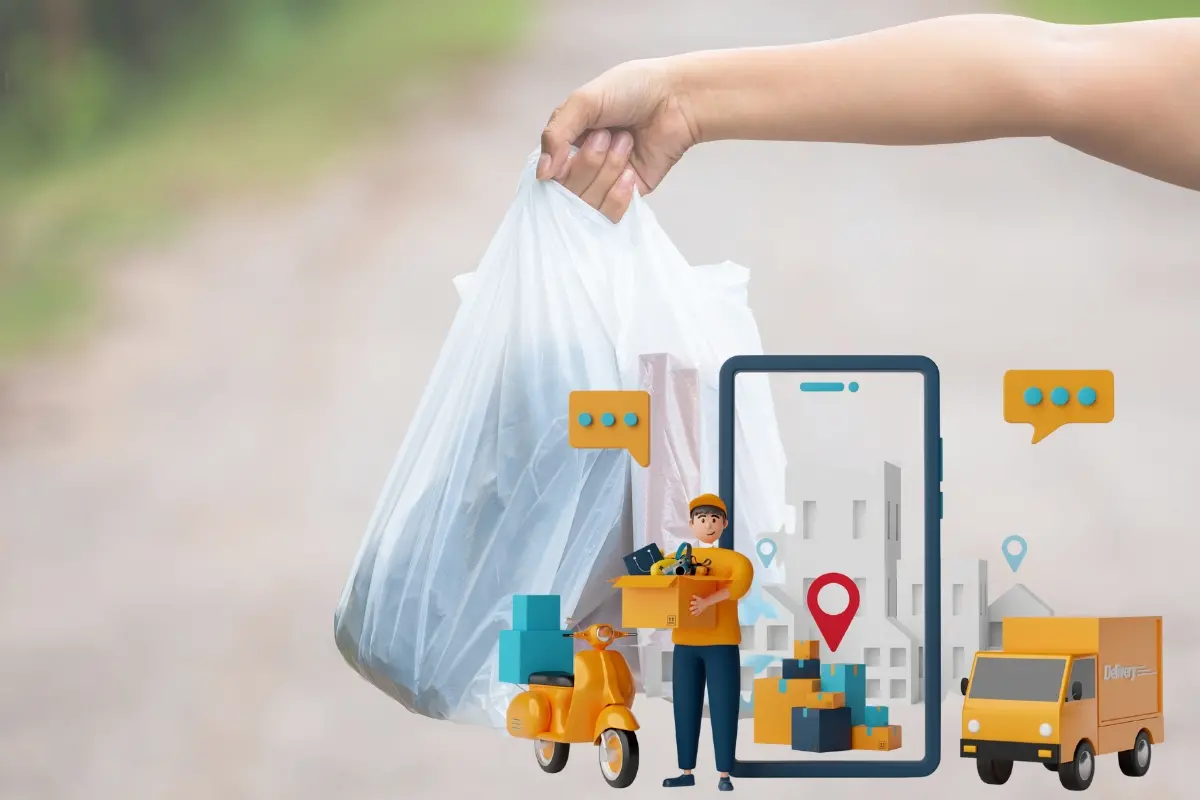
Sales of single-use plastic carrier bags in England have risen for the first time in ten years, largely driven by the surge in online grocery shopping, according to data from the Department for Environment, Food and Rural Affairs (Defra). Shoppers bought 437 million bags last year, up 7% from 407 million the year before, reports The Guardian.
The increase marks a reversal from the sharp decline seen after a 5p levy on plastic bags was introduced in 2015. The charge was briefly waived during the pandemic and later increased to 10p in 2021.
The Ocado effect
Experts have attributed the rise to what has been dubbed the “Ocado effect,” where ultra-fast home deliveries replace traditional supermarket trips, according to The Times. Ocado alone sold 221 million plastic bags last year, more than half of all bags sold in the country, driven by a growing customer base and rapid delivery services such as Ocado Zoom.
Other supermarkets, including Co-op, Morrisons and Sainsbury’s, also recorded increased sales. Many retailers have encouraged recycling by allowing customers to return bags to delivery drivers, with return rates at Ocado and Morrisons exceeding 88%.
Environmental concerns
The surge in plastic use coincides with broader worries about pollution. The Marine Conservation Society reported a 9.5% rise in plastic waste collected on UK beaches in 2024, according to The Guardian. Household litter entering rivers and coastlines accounted for nearly half of this waste.
The trend also links to rising emissions. A report by the Centre for Cities found that home deliveries produced 100 million kg of CO₂ in London between 2020 and 2021, equivalent to 125,000 flights from London to New York.
Lessons for global plastic reduction
The “Ocado effect” highlights the unintended environmental costs of convenience-driven shopping. As rapid home deliveries expand globally, experts warn that reducing plastic consumption and emissions requires rethinking packaging practices and consumer behaviour, alongside regulatory measures such as deposit return schemes planned for the UK in 2027.