Oil prices tumble and stocks rebound after Trump says Iran war could end ‘very soon’
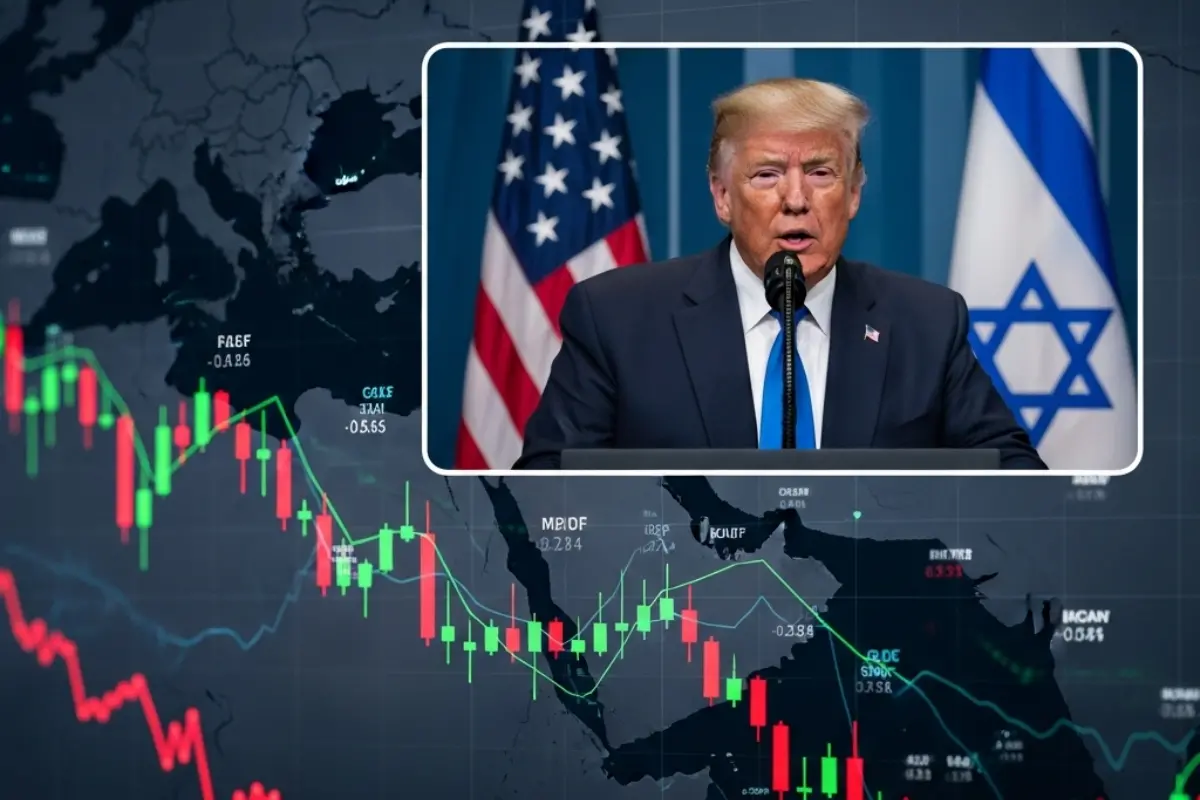
Washington DC: Oil prices tumbled from recent four-year highs after President Donald Trump indicated that the US-Israel conflict in Iran could conclude shortly. Brent crude, which reached $119.50 per barrel amid rising tensions, fell to about $91.70 per barrel following Trump’s remarks describing the war as “very complete, pretty much.”
Global stock markets responded positively. The FTSE 100 opened higher by around 1.4%, while the Stoxx Europe 600 rose 1.5%, reflecting easing investor concerns over prolonged disruption in the Middle East. Asian markets also rallied, with Japan’s Nikkei 225 up 2.5%, South Korea’s Kospi gaining 6%, and Hong Kong’s Hang Seng increasing by 2%.
Trump sought to reassure markets, claiming that oil prices had risen “probably less than I thought they’d go up.” He also warned that any disruption of oil flow through the Strait of Hormuz would be met with severe retaliation, stating it would be “twenty times harder than they have been hit thus far.” About one-fifth of global oil and seaborne gas shipments pass through this strait, which had effectively been closed for a week, triggering initial supply concerns.
Iran responded by asserting it would not allow exports if attacks continued, while France indicated that naval escorts for commercial shipping could be deployed once the most intense phase of the conflict subsides. Trump additionally mentioned that the US may waive some oil-related sanctions to ease supply shortages, signalling efforts to stabilise global markets.
The volatility in energy prices has prompted governments worldwide to take precautionary measures. European and Asian countries, including Croatia, Hungary, South Korea, Thailand, the Philippines, and Bangladesh, imposed fuel price caps, restricted energy usage, or adjusted public schedules to conserve resources amid uncertainty.
Despite the decline from the previous highs, oil prices remain approximately 25% higher than pre-conflict levels. Analysts caution that until a lasting resolution is reached, markets and consumers will continue facing elevated costs, and energy supply concerns will persist.
The conflict in Iran triggered a surge in energy costs last week, with Brent crude reaching $119.50 per barrel, marking a four-year high. Global markets were initially hit by fears of supply disruption, especially as the Strait of Hormuz remained effectively closed.
Trump’s intervention played a pivotal role in calming markets. By suggesting that the war could end “very soon” and that US forces would respond decisively to any disruption in oil flow, investor sentiment improved. European equities, led by the FTSE 100 and Stoxx Europe 600, showed gains of over 1%, reflecting the easing of geopolitical risk. Asian markets experienced similar rebounds, particularly in energy-sensitive economies like Japan, South Korea, and Hong Kong.
Despite easing, analysts note that underlying risks remain. Global oil supply is still vulnerable to further escalation, while sanctions, both existing and potential, continue to complicate trading flows. In response, multiple governments implemented short-term measures such as fuel price caps, restrictions on energy use, and emergency adjustments to academic calendars or public services to conserve energy and limit economic disruption.
The situation underscores the broader economic impact of Middle East conflicts on global energy markets. While Trump’s remarks have temporarily stabilised prices and improved market sentiment, long-term resolution depends on diplomatic progress and the resumption of secure, uninterrupted oil trade. Analysts warn that until a clear path to stability is established, energy prices, inflationary pressures, and market volatility may remain elevated.