Mamdani wants to arrest Netanyahu during his UN visit to New York: Is it legally possible?
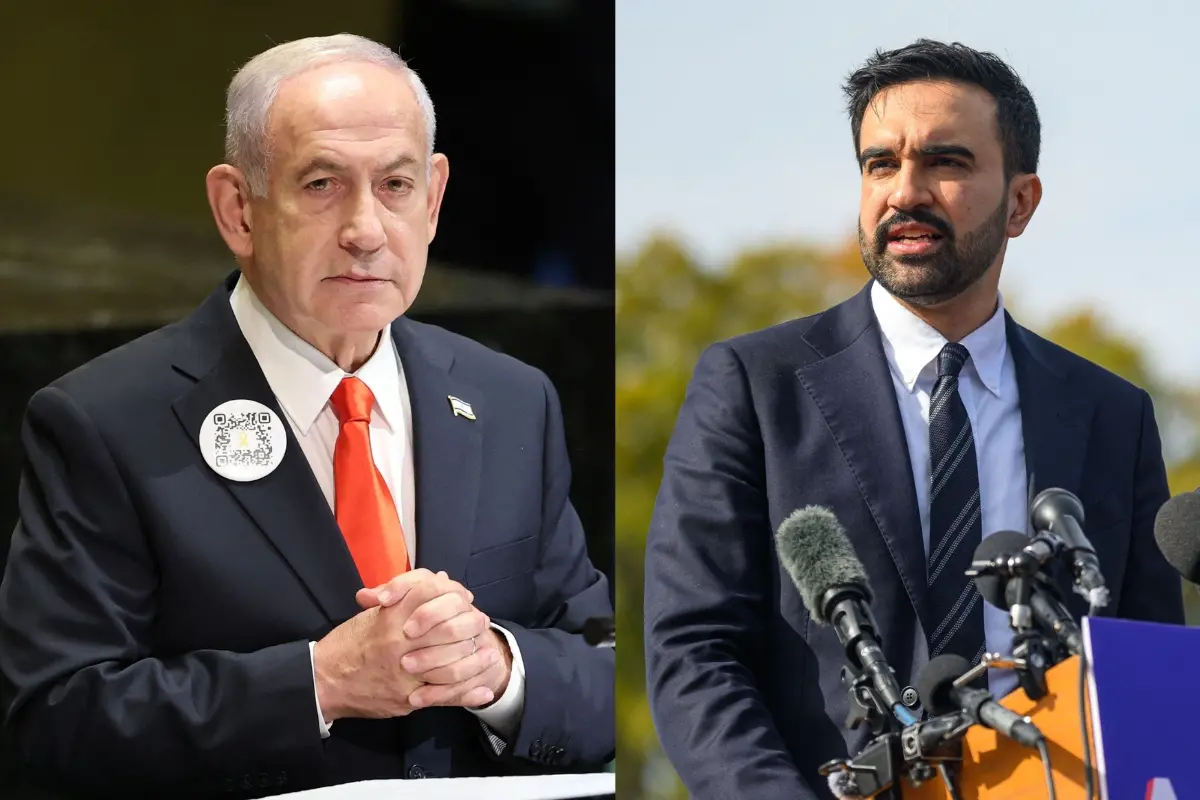
Washington DC: New York City Mayor Zohran Mamdani has said he is consulting legal advisers over whether he can order the arrest of Israeli Prime Minister Benjamin Netanyahu when he visits New York for the United Nations General Assembly in September.
The issue follows Mamdani’s earlier campaign promise to seek action against Netanyahu over an International Criminal Court (ICC) arrest warrant issued in 2024. However, the mayor has acknowledged that the legal powers available to the city remain unclear.
Speaking to The New York Times, Mamdani said, "I believe that Prime Minister Netanyahu belongs in The Hague. He's a war criminal who has been charged by the International Criminal Court."
He added, "Whatever the law allows me to do in New York City, that's what we will do."
Why does the mayor want Netanyahu arrested?
Mamdani has argued that Netanyahu should face proceedings at the ICC over allegations linked to Israel’s military actions in Gaza. The ICC issued an arrest warrant in 2024, stating that it had reasonable grounds to believe Netanyahu was responsible for alleged war crimes and crimes against humanity.
The United States does not recognise the ICC’s jurisdiction, creating further questions over whether any local authority in New York could enforce such a warrant against a visiting foreign leader.
Can a New York mayor actually arrest a foreign leader?
The biggest question surrounding Mamdani’s statement is whether the New York City government has the legal authority to detain a foreign head of government.
Mamdani himself admitted uncertainty and said discussions with the city’s legal team are focused on understanding the limits of his power.
Foreign leaders visiting New York for the UN General Assembly traditionally receive diplomatic protections, and any attempt to arrest a sitting prime minister would raise complex issues involving US foreign policy, international law and diplomatic immunity.
Mamdani has said the city would not create new laws to make an arrest possible and would only act within existing legal boundaries.
Israel strongly reacts to Mamdani's comments
Mamdani’s remarks triggered a sharp response from Israeli officials.
Israel’s Ambassador to the United Nations Danny Danon accused the mayor of focusing on criticism of Israel instead of addressing problems within New York City.
"Instead of focusing on his responsibilities as mayor and confronting the rising wave of antisemitism in his city, he has chosen to incite hostility and generate headlines by attacking the State of Israel," Danon said.
Danon also insisted that Netanyahu would still travel to New York and address the UN General Assembly despite Mamdani’s comments.
"It will not change a thing. Israeli Prime Minister @netanyahu will come to New York, address the United Nations General Assembly with pride, and stand before the world to state Israel's truth and its unwavering right to defend its citizens," he wrote.
He added, "And if anyone should be arrested, it is @NYCMayor Zohran Mamdani."
Netanyahu accuses Mamdani of supporting Hamas
Israeli Prime Minister Benjamin Netanyahu has also criticised Mamdani’s views on Israel and the Gaza conflict.
During a recent radio interview, Netanyahu accused the mayor of being hostile towards Israel and questioned his political position.
"I think, secretly, he hates America," Netanyahu said.
He also accused Mamdani of supporting Hamas, while Mamdani has continued to criticise Israel’s actions in Gaza and has previously described Israel as an "apartheid regime".
Diplomatic tensions likely to continue
The controversy comes ahead of the UN General Assembly, where leaders from around the world are expected to gather in New York in September.
While Mamdani’s comments have created a political storm, the legal question remains unresolved: whether a city mayor can take action against a foreign leader protected by diplomatic norms and whether US authorities would allow such a move.
The dispute has added another layer of tension to the wider debate over the Israel-Gaza war, international justice and the role of local governments in enforcing global legal decisions.