Ukraine conflict: North Korea sent 10,000 troops to train in Russia, says US
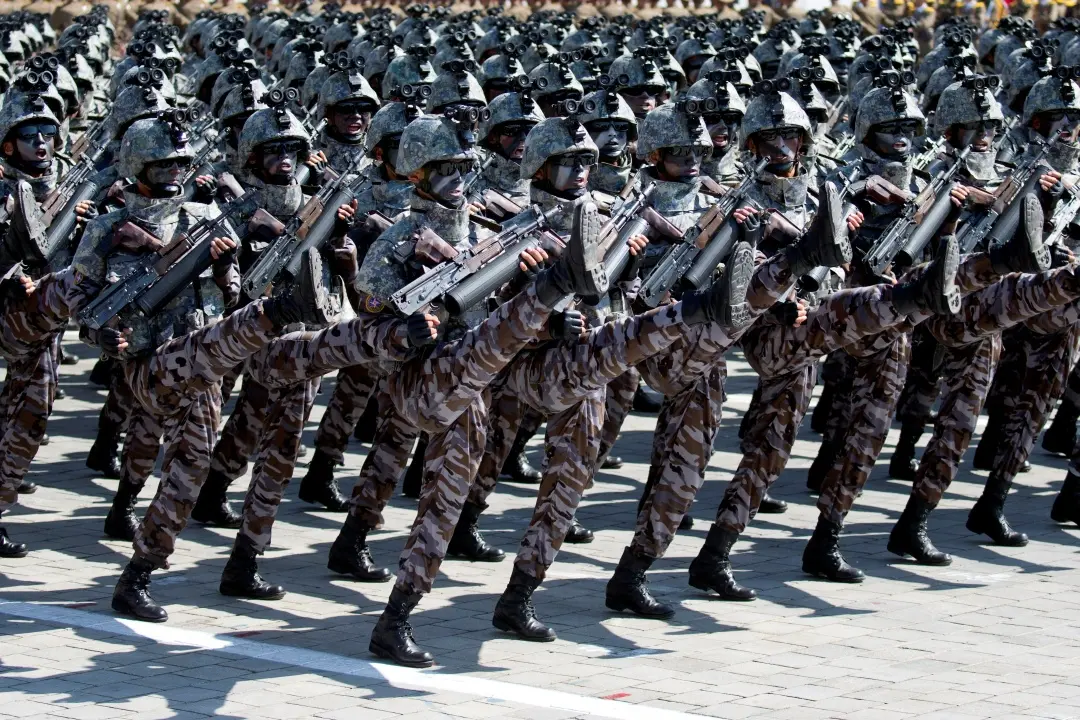
Washington: The United States announced on Monday that North Korea has sent around 10,000 troops to Russia for training, tripling previous estimates and raising alarms from NATO and the EU about a potential escalation in the Ukraine war.
Increased military cooperation between North Korea and Russia
North Korea, which has a mutual defense agreement with Russia, is believed to be supplying arms to support Moscow's invasion. The deployment of troops could significantly escalate the conflict.
Ukrainian President Volodymyr Zelensky warned that North Korea might “soon” have as many as 12,000 soldiers in Russia. U.S. President Joe Biden condemned the troop movement, calling it "very dangerous." "We believe that the DPRK has sent around 10,000 soldiers in total to train in eastern Russia that will probably augment Russian forces near Ukraine over the next several weeks," Deputy Pentagon Press Secretary Sabrina Singh told journalists, using an abbreviation for North Korea's official name.
Concerns over escalation of the Ukraine war
Previously, Washington had estimated the number of North Korean troops in Russia to be over 3,000.
NATO Chief Mark Rutte described the troop deployment as "a dangerous expansion of Russia's war" and "a sign of Putin's growing desperation." Rutte noted that more than 6,00,000 Russian soldiers have been killed or injured since the war began in 2022, indicating that the Kremlin is struggling to sustain its invasion without foreign help.
Despite these losses, Russian forces have continued to make territorial gains in Ukraine. Since early October, they have advanced 478 square kilometers (about 184 square miles) into Ukrainian territory, the most significant progress since the early days of the conflict, according to an analysis by the Institute for the Study of War. This follows advances of 477 square kilometers in August and 459 square kilometers in September, particularly in eastern Ukraine near Pokrovsk.
Implications for regional and global security
Rutte confirmed that North Korean military units have been deployed in Russia's western Kursk region. Ukrainian troops have been conducting ground operations in Kursk, controlling several hundred square kilometers of Russian territory. "The deepening military cooperation between Russia and North Korea is a threat to both the Indo-Pacific and Euro-Atlantic security," Rutte told reporters in Brussels.
Experts suggest that North Korea's troop deployment may be part of a deal to acquire military technology from Russia, including surveillance satellites and submarines, as well as possible security assurances.
EU Chief Ursula von der Leyen warned that North Korea sending troops for the first time represents "a significant escalation of the war against Ukraine and threatens global peace." She made the comments after a phone call with South Korean President Yoon Suk Yeol, during which she assured the leader that "the EU's response to this development will center on cooperation with the Republic of Korea and other like-minded partners."
The United States likewise told China -- an ally of both Moscow and Pyongyang -- it should be "concerned about this destabilizing action by two of its neighbors, Russia and North Korea," State Department spokesman Matthew Miller told reporters.
Rutte urged both Moscow and Pyongyang to "cease these actions immediately."
Additionally, reports indicate that the North Korean foreign minister is traveling to Moscow, although the purpose of the talks remains unclear.
At a press conference in Iceland, President Zelensky reiterated that approximately 3,000 North Korean soldiers are already in Russia, with four times that number expected soon. "We think that they will have 12,000 soon," the Ukrainian leader added.
"This is an escalation. Sanctions alone are not enough. We need weapons and a clear plan to prevent North Korea's expanded involvement in the war in Europe," Zelensky's chief of staff Andriy Yermak said on social media Monday after Rutte's comments.
"Today, Russia brings in North Korea; next, it could broaden their engagement, and then other autocratic regimes may see that they can get away with this and come to fight against NATO," he warned. "The enemy understands strength. Our allies have this strength."
Agency