Clarke, Devoret, and Martinis: Trio wins Nobel Prize in Physics 2025 for unlocking quantum secrets in electric circuits
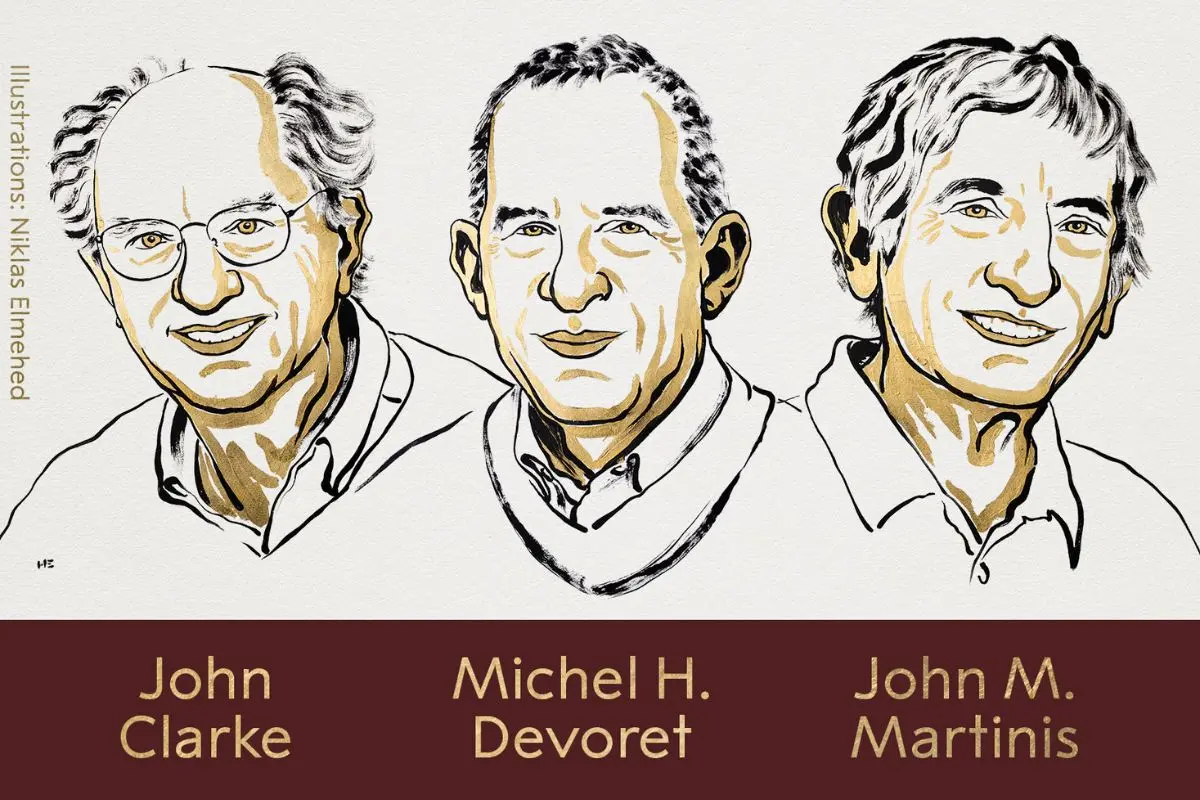
The Nobel Prize in Physics for 2025 was awarded to John Clarke, Michel H. Devoret, and John M. Martinis for their groundbreaking research into quantum mechanical tunnelling. The prize recognises their discovery of macroscopic quantum mechanical tunnelling and energy quantisation in an electric circuit — a discovery that opens new doors for quantum technologies, such as quantum computers and sensors.
The prestigious award will be formally presented at the ceremony on December 10, the anniversary of Alfred Nobel’s death, the Swedish industrialist who founded the Nobel Prizes. The Physics Prize has been awarded 118 times to 226 laureates from 1901 to 2024.
Last year, the Physics Prize went to AI pioneers John Hopfield and Geoffrey Hinton for foundational work in machine learning. This year’s announcement continues the tradition of recognising transformative contributions to science.
In other recent Nobel announcements, Mary E. Brunkow, Fred Ramsdell, and Dr Shimon Sakaguchi received the Nobel Prize in Medicine for discoveries explaining how the immune system distinguishes between germs and the body’s own cells.
The Nobel awards will continue with Chemistry on Wednesday, Literature on Thursday, the Peace Prize on Friday, and the Nobel Memorial Prize in Economics on October 13. Each award carries a prize of 11 million Swedish kronor (about USD 1.2 million) alongside global prestige.