'Last person to preach morality': Netanyahu's explosive attack on Turkey's Erdoğan
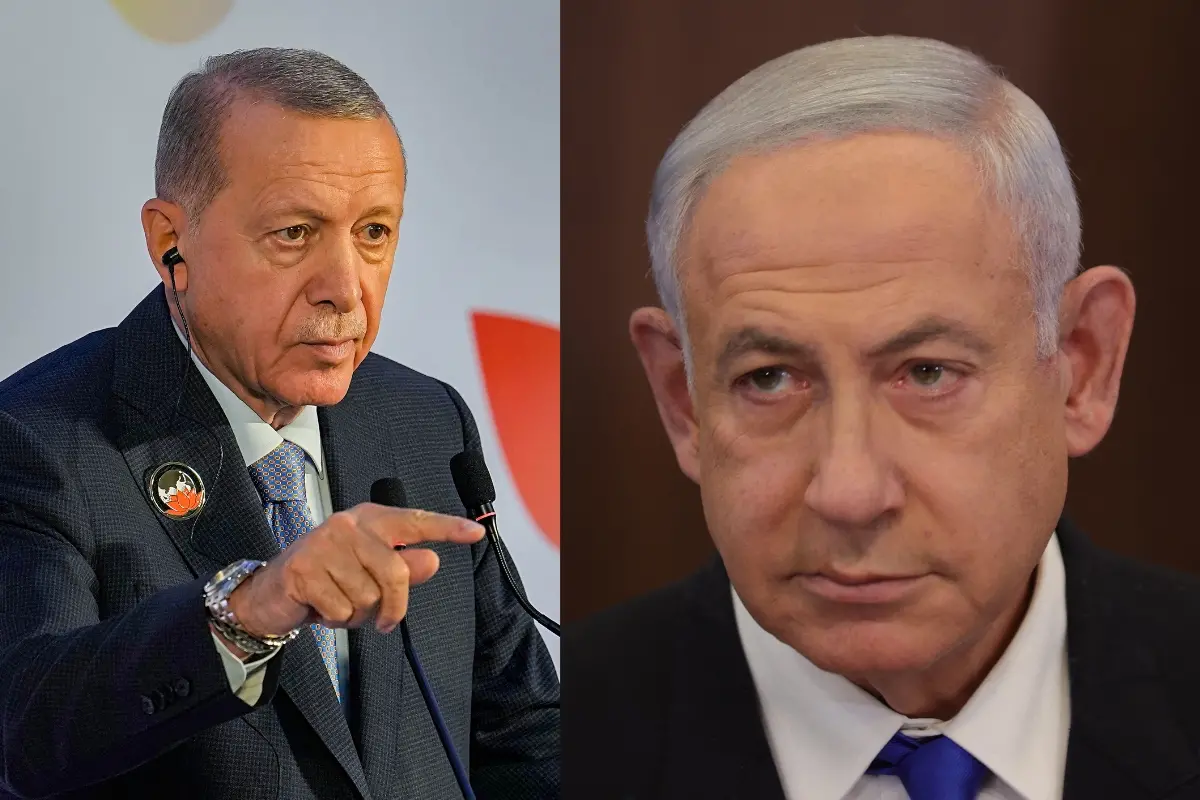
Jerusalem: The increasingly bitter relationship between Israel and Turkey took another sharp turn this week after Israeli Prime Minister Benjamin Netanyahu publicly labelled Turkish President Recep Tayyip Erdoğan an "antisemitic dictator" in response to Erdoğan's criticism of Israel's military actions across the Middle East.
The exchange followed comments by Erdoğan, who warned that Israel's military operations in Syria and Lebanon had reached a point where they could also threaten Turkey. He argued that Israeli "aggression" was destabilising the region and posed a wider threat beyond its immediate neighbours.
Netanyahu responded with a strongly worded statement, accusing Erdoğan of supporting Hamas, suppressing political opponents and imprisoning critics. The Israeli leader said Turkey's president was in no position to lecture Israel on morality and insisted that Israel would continue military operations against Iran and groups aligned with Tehran.
He posted on X: “The antisemitic dictator Erdoğan – who is committing genocide against the Kurds, supports the Hamas terrorist organization, oppresses his own people and imprisons political rivals – is the last person who can lecture the State of Israel on morality.
The State of Israel and the IDF, the most moral army in the world, will continue to take forceful action against Iran and its proxies, which threaten the Middle East and the entire world.”
The clash reflects a broader deterioration in relations between the two regional powers since the outbreak of the Gaza war. Once strategic partners with close military and economic ties, Israel and Turkey have found themselves on increasingly opposite sides of regional conflicts. Erdoğan has emerged as one of Israel's most vocal critics, repeatedly condemning Israeli military operations in Gaza and expressing support for the Palestinian cause.
Turkey has also hosted several Hamas figures over the years, a point frequently cited by Israeli officials. Erdoğan has described Hamas members as resistance fighters rather than terrorists, while Israel, the United States and several other countries classify the group as a terrorist organisation. These opposing views have become a major source of friction between Ankara and Jerusalem.
The latest confrontation also comes against the backdrop of wider regional tensions involving Iran, Syria and Lebanon. Israel has intensified military operations against Iranian-linked targets and armed groups across the region, arguing that such actions are necessary to counter security threats. Critics, including Turkey, have accused Israel of escalating instability and increasing the risk of a broader regional conflict.
Human rights groups and Western governments have for years raised concerns about political freedoms in Turkey, citing arrests of journalists, opposition figures and activists. At the same time, Ankara has faced international criticism over military campaigns against Kurdish armed groups in Turkey, Syria and Iraq. The Turkish government rejects allegations that its actions amount to systematic persecution or genocide and argues that its operations are aimed at combating terrorism and protecting national security.
The personal nature of Netanyahu's remarks highlights how relations between the two leaders have become increasingly confrontational. As conflicts across Gaza, Lebanon, Syria and Iran continue to reshape the Middle East, the verbal battle between Ankara and Jerusalem is adding another layer of tension to an already volatile region.