Nepal floods: Death toll rises to 1,050 as rescue teams search for nearly 4,000 missing
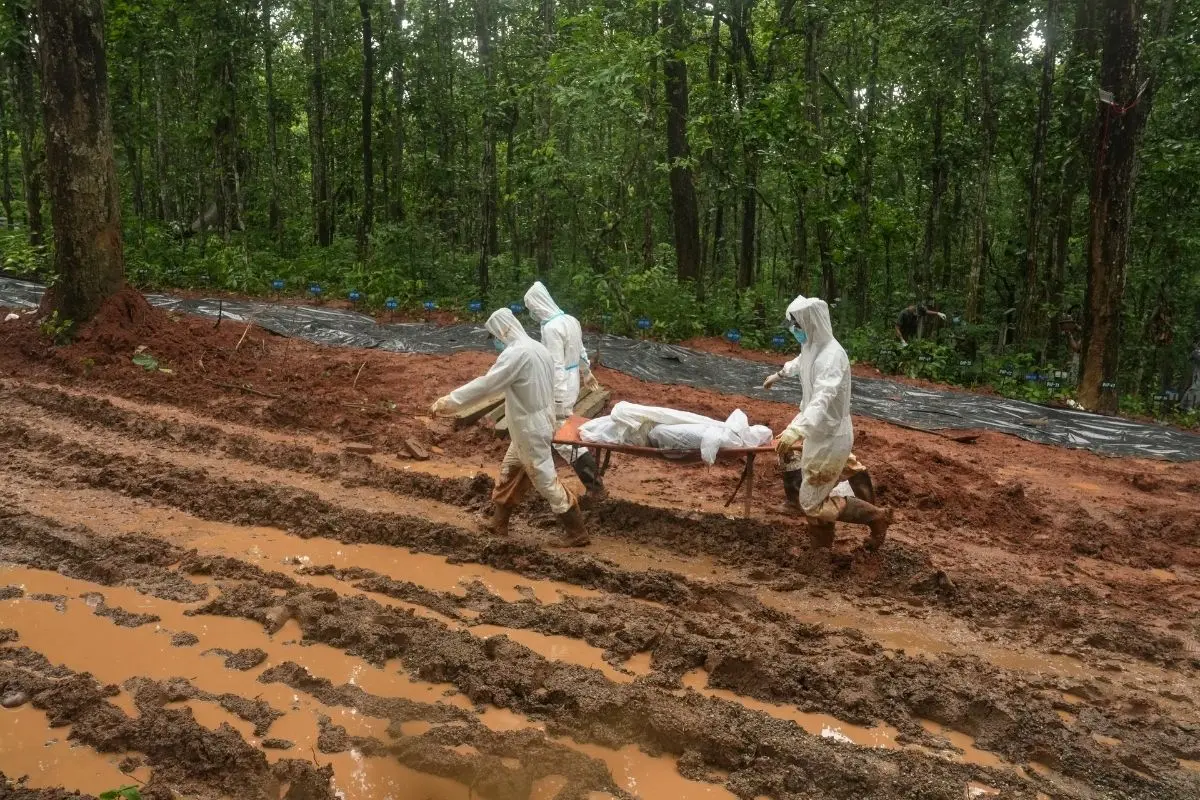
Kathmandu: The death toll from the devastating flash floods in Nepal has risen to 1,050, with security forces continuing to recover bodies from several districts as rescue operations remain underway amid fresh flood warnings.
Nearly 4,000 people are still unaccounted for, including 583 foreign nationals and 83 security personnel, according to Nepal's National Disaster Risk Reduction and Management Authority (NDRRMA). As many as 11,993 people have been rescued so far.
The flash floods, triggered by the collapse or avalanche of ice and rock near the Nepal-Tibet border on August 26, caused widespread destruction across northern and central Nepal. The Bhotekoshi River carried the floodwaters downstream, washing away homes, vehicles, roads and bridges and damaging hydropower projects.
The disaster also claimed 16 lives on the Chinese side, while nearly 550 people remain missing in Tibet, according to Chinese media reports.
Chitwan records highest number of recovered bodies
NDRRMA said 321 bodies had been recovered in Chitwan, the highest number among the affected districts. This was followed by Nawalparasi East with 216, Nawalparasi West with 170, Nuwakot with 142, Gorkha with 65, Dhading with 57, Rasuwa with 41 and Tanahun with 38.
The scale of the disaster has overwhelmed Nepal's mortuary facilities, with hospitals struggling to store and identify the recovered remains.
Families of missing people have gathered at medical facilities carrying photographs of relatives and checking images of unidentified bodies displayed on walls.
Unidentified remains are being kept at 21 hospitals across the country. Identification has proved particularly difficult as many bodies were badly decomposed or recovered only as partial remains after being swept downstream.
Officials said only around 60 of the recovered bodies had been identified and handed over to relatives. Nearly 700 bodies have been buried after being documented, with identification records and DNA samples preserved to facilitate future identification.
Mass burials begin as morgues run out of space
Mass burial operations have also begun in Kathmandu after morgues ran out of storage capacity.
Security personnel wearing personal protective equipment carried body bags into the Gorkarna forest area on the outskirts of the capital, where unidentified victims were buried with markers.
Authorities have retained identification tags and DNA samples from the buried remains so that bodies can be exhumed and handed over to families once identities are established.
Nepal's morgues have a combined capacity of only around 350 bodies, creating a severe shortage of space as remains continue to be recovered from areas downstream of the Bhotekoshi River.
The government has amended its Unidentified and Unclaimed Body Management Guidelines, 2021, to help manage the growing number of unidentified remains.
Rescue teams search hydropower tunnels
Rescue operations remain particularly challenging at hydropower project sites, where 683 workers and employees are still being traced. Many are believed to be trapped inside tunnels.
A 24-member Indian specialised tunnel rescue team is working with the Nepal Army at the Chilime and Langtang hydropower sites. A nine-member Chinese team has been deployed at the Upper Trishuli 3A project, while a specialised team from South Korea has also been mobilised.
Indian Ambassador to Nepal Naveen Srivastava said the Indian team had established a foothold inside a tunnel at Chilime and explored up to 185 metres at Langtang.
The teams are operating in extremely difficult conditions, with restricted access, muddy and marsh-like tunnel floors, water and debris blocking entrances, damaged roads and limited access to heavy rescue equipment.
The Indian team has used improvised floats to move deeper into the tunnels in its search for survivors.
India expands rescue and forensic assistance
The number of Indian nationals rescued from the disaster-hit areas has risen to 163, the Ministry of External Affairs said on Tuesday. Another 151 Indian nationals also left China on the same day, MEA spokesperson Randhir Jaiswal said.
India has also deployed a 19-member forensic team to assist Nepal with victim identification. The team is working with Nepalese authorities on DNA examination and analysis to speed up the identification of recovered remains.
A four-member Chinese forensic team has also arrived, while arrangements are being made for a Disaster Victim Identification team from Singapore.
Nepal's Foreign Ministry said international technical assistance was being deployed to support the country's search and rescue efforts. It thanked India, China, Japan, the US, the UAE, South Korea and other countries for providing relief supplies and financial assistance.
Fresh flood warnings issued
The rescue effort has been complicated by intermittent rain and renewed warnings of flooding across eastern, central and western Nepal.
NDRRMA warned of a high possibility of flash floods in Nuwakot and Rasuwa, where water levels in smaller rivers and streams could rise. Several other districts, including Taplejung, Sankhuwasabha, Solukhumbu, Khotang, Okhaldhunga, Ramechhap, Dolakha, Sindhupalchowk, Kathmandu and Dhading, are also under varying levels of flood risk.
In western Nepal, alerts cover districts including Gorkha, Lamjung, Dolpa, Rukum East, Rukum West, Jajarkot, Darchula, Baitadi, Dadeldhura, Doti, Kailali and Kanchanpur.
Authorities are closely monitoring the Koshi, Narayani, Bagmati, Karnali and Mahakali rivers and their tributaries, along with the Kankai, Kamala, Babai, Eastern Rapti and Western Rapti rivers.
A real-time CCTV camera has been installed at Timure in Rasuwa to monitor river and flood conditions and strengthen the early-warning system. Officials said footage from the camera would be integrated with the 24-hour flood forecasting service.
More than 21,000 security personnel deployed
Nepal has deployed 21,314 security personnel from the Nepal Army, Nepal Police and Armed Police Force for search, rescue and relief operations.
The Nepal Army has conducted 610 aerial sorties, including 84 flights on September 1, evacuating 4,091 Nepali citizens and 273 foreign nationals. Private-sector aircraft operating from Kathmandu have carried out a further 29 flights.
Relief operations have also been scaled up, with 37 trucks and 37 Bolero vehicles transporting food and other essential supplies to affected areas. The Armed Police Force has conducted 77 relief flights to Rasuwa and Nuwakot, along with nine helicopter supply drops.
The Nepal government has allocated NPR 10 million each to Rasuwa and Nuwakot and NPR 5 million to Dhading, with another NPR 67.5 million distributed among 15 affected local governments.
Infrastructure and communications slowly restored
The floods destroyed 19 motorable bridges and damaged several highways and major roads, including Nepal's main land trade route with China and the Rasuwagadhi border crossing.
Traffic restrictions have been introduced on the Prithvi and Tribhuvan highways because of increased pressure following damage in Rasuwa, Nuwakot and Dhading.
Authorities have also introduced one-way traffic arrangements on routes connecting Kathmandu with Hetauda after floods washed away parts of the highway at Krishnabhir in Dhading.
Meanwhile, 3,453 displaced people are staying in holding centres across Nuwakot, Rasuwa, Kathmandu and Dhading.
Nepal Telecom has restored all 110 damaged communication towers, while Ncell has restored 75 of its 78 affected towers.