‘Go to Congress’: Neal Katyal challenges Trump’s 15% global tariff
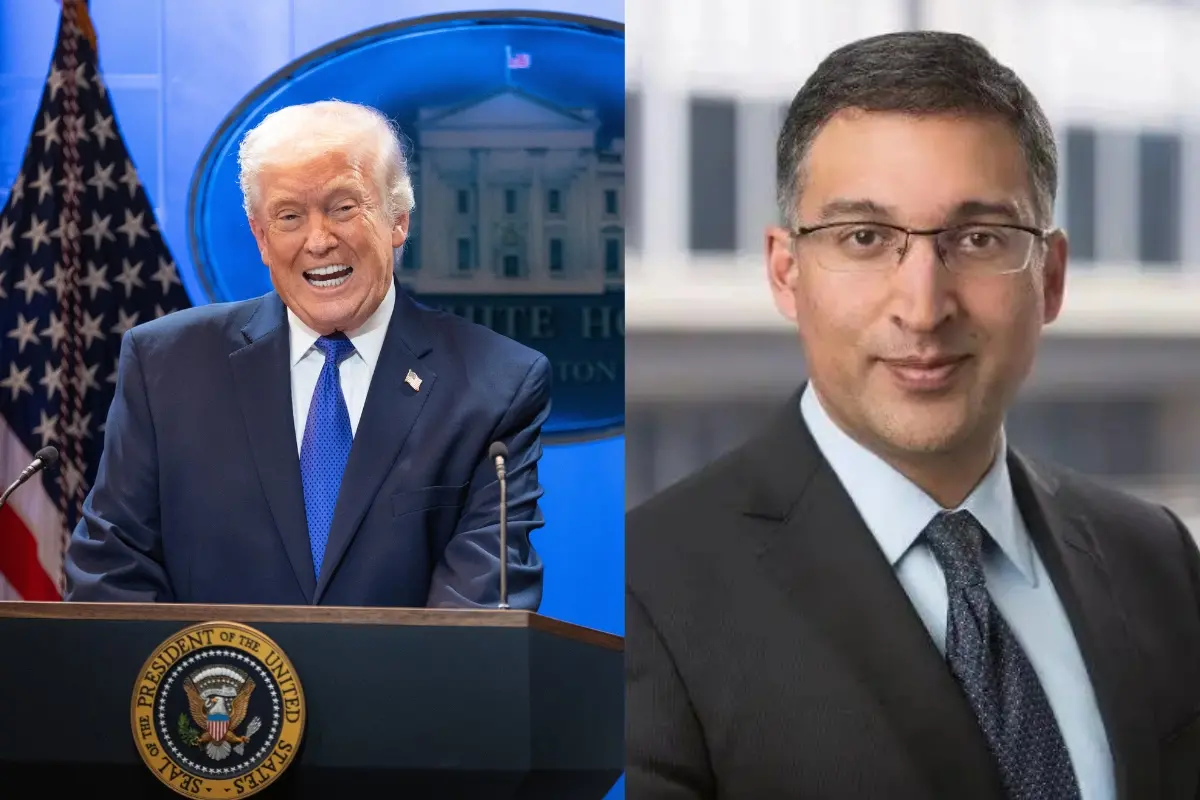
Washington DC: Senior litigator Neal Katyal has raised fresh legal concerns over Donald Trump’s newly announced 15% global tariff, calling the move constitutionally questionable in the wake of a recent Supreme Court ruling.
In a post on X, Katyal pointed to what he described as a direct contradiction in the administration’s legal position. He argued that the White House is now invoking Section 122 of the Trade Act of 1974 — despite the Department of Justice previously suggesting that the statute had no “obvious application” in cases involving trade deficits.
The legal scrutiny follows a landmark 6–3 decision by the Supreme Court of the United States, which struck down most of Trump’s earlier sweeping tariffs. The Court ruled that the administration exceeded its authority by using the International Emergency Economic Powers Act (IEEPA) of 1977 to impose broad import levies, reinforcing that taxation powers primarily rest with Congress.
Section 122 Under Question
After the ruling, Trump announced a 10% global tariff under Section 122, describing it as a temporary import surcharge permitted for up to 150 days to address balance-of-payments deficits. He later increased it to the maximum allowable 15%, stating it was “fully allowed and legally tested.”
Katyal countered that the administration’s own prior legal arguments undermine this justification. He highlighted that trade deficits and balance-of-payments deficits are conceptually distinct — a key distinction under international economics and trade law.
“If he wants sweeping tariffs, he should go to Congress,” Katyal argued, maintaining that the Constitution clearly vests tax authority in the legislative branch.
Economic Backing
Adding weight to the critique, noted economist and former IMF First Deputy Managing Director Gita Gopinath endorsed Katyal’s analysis on social media, remarking that he was “speaking International Economics 101.” Her comment reinforced the argument that conflating trade deficits with balance-of-payments deficits may not meet the legal threshold required under Section 122.
Impact on Global Trade and India
The tariff decision comes amid ongoing US–India trade negotiations. Earlier this month, Washington and New Delhi announced a framework for an interim reciprocal trade agreement, aiming to advance broader Bilateral Trade Agreement talks.
A White House official confirmed that countries including India would be subject to the new tariff structure until alternative legal authority is invoked. India’s Ministry of Commerce and Industry has stated it is examining the Supreme Court ruling and the latest tariff developments to assess their potential impact.
The Core Constitutional Debate
At the heart of the dispute is a fundamental constitutional question: Can the executive branch impose broad global tariffs without explicit congressional approval?
The Supreme Court’s recent ruling suggests limits to presidential authority in trade matters. Katyal’s challenge indicates that legal battles over tariff powers may continue, potentially shaping the future of US trade policy and executive authority.
With global markets watching and key allies recalibrating trade strategies, the coming weeks could determine whether Trump’s revised tariff approach withstands further judicial scrutiny — or heads back to the courts once again.
(With ANI inputs)