Iran’s new Supreme Leader says Strait of Hormuz must remain closed in first public statement
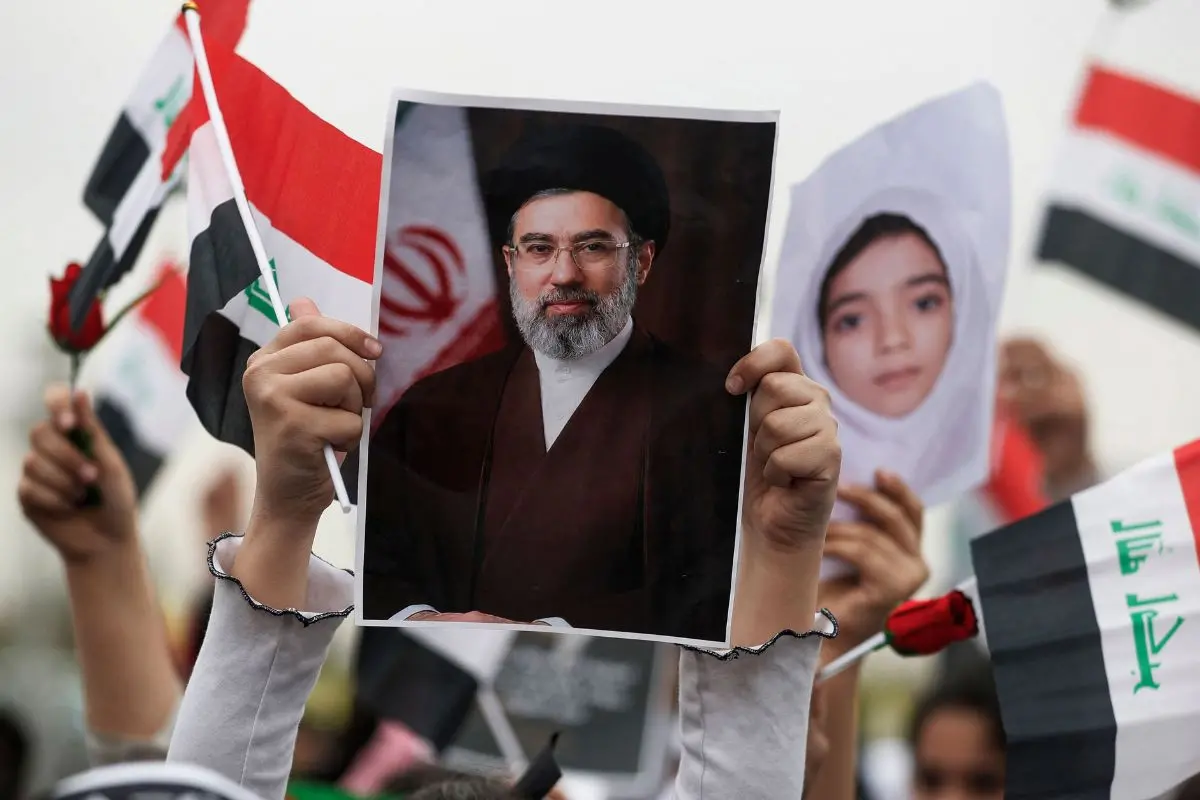
Tehran: Iran’s newly appointed Supreme Leader, Mojtaba Khamenei, used his first public statement to adopt a hardline stance, declaring that the Strait of Hormuz should remain closed as leverage against the United States and warning that attacks on neighbouring states would continue.
The statement was broadcast on Iranian state television on Thursday and read by a news anchor, as Khamenei did not appear on camera. Reports suggest he may have been injured in an airstrike. His message signals a confrontational posture from Tehran at a time of rapidly escalating regional tensions, with the closure of the strategic waterway raising alarm about global energy supplies and regional stability.
The strait is one of the world’s most important energy corridors, carrying roughly a quarter of global oil and liquefied natural gas exports. Any disruption there has immediate global consequences. Following the latest developments, oil prices briefly surged above $100 per barrel amid warnings that the conflict could trigger the largest supply disruption in modern history.
The conflict has already imposed a steep cost. The United States Department of Defense estimates that the first week of fighting alone cost the United States $11.3 billion. Meanwhile, Israel has intensified strikes on Iranian positions and is mobilising troops to confront Hezbollah in Lebanon. The escalation has displaced more than 800,000 people in southern Lebanon over the past ten days.
According to the United Nations High Commissioner for Refugees, up to 3.2 million people inside Iran have also been displaced as the conflict expands.
Amid the fighting, Israeli military spokesperson Avichay Adraee issued a warning in Arabic urging residents of southern Lebanon to move north of the Zahrani River, about 35 miles (56 km) from the Israeli border, citing security concerns.
In his statement, Khamenei warned that Iran would seek compensation from its enemies. “If it refuses, we will take from its assets to the extent we deem appropriate,” he said, adding that if this proved impossible, “we will destroy its assets to the same extent.” His remarks also referenced past militant operations attributed to Iran, including the 1983 Beirut barracks bombings that targeted U.S. Marines in Beirut, suggesting Tehran could revive similar tactics.
Khamenei also confirmed that several of his relatives were killed in recent airstrikes, including his wife, two sisters, a niece, and the husband of another sister. He also spoke about seeing the body of his father, the late Supreme Leader Ali Khamenei, after his death in the initial wave of U.S.–Israeli attacks at the start of the war.
Analysts note that unlike his father—who waited 40 days after assuming power before delivering his first address—Mojtaba Khamenei spoke almost immediately after taking leadership. The rapid response reflects what many observers describe as Iran’s most severe confrontation since the Iranian Revolution of 1979.
Khamenei also called on Gulf states to close U.S. military bases on their territory and insisted that blocking the Strait of Hormuz remain central to Iran’s strategy.
“The lever of blocking the Strait of Hormuz must definitely be used,” he said, adding that Iran’s retaliation against U.S. and Israeli strikes had already “taken concrete form,” but that further action remained a priority until its objectives were achieved.
In response, Donald Trump downplayed concerns over rising oil prices, stating that preventing Iran from obtaining nuclear weapons was the United States’ primary objective. Writing on social media, the U.S. president said stopping Iran’s “evil empire” from acquiring nuclear weapons was “far more important” than crude prices.
Significance of Strait of Hormuz
The Strait of Hormuz stands as one of the most critical maritime chokepoints in the world, acting as the only direct outlet for oil from the Persian Gulf to international waters. At its narrowest, the strait spans just 21 miles, with Iran on the northern shore and Oman and the United Arab Emirates to the south. Despite its modest size, its strategic importance is enormous: around one-fifth of global oil consumption—more than 20 million barrels of crude and refined products—flows through this narrow corridor each day. For energy-hungry nations in Asia, including Japan, China, India, and South Korea, the strait is a lifeline, essential to their energy security.
The waterway also serves as the main route for nearly 20% of the world’s liquefied natural gas, predominantly from Qatar. With few pipeline alternatives, any disruption—whether physical or political, can instantly send shockwaves through the global economy. This reality gives Iran significant strategic leverage, as the mere threat of closing the strait has historically been used to counter sanctions or military pressure. Even the perception of instability drives up shipping insurance rates and spikes energy prices worldwide.