'Your lives are in danger', Israel issues urgent evacuation warning for Iran residents ahead of possible strike
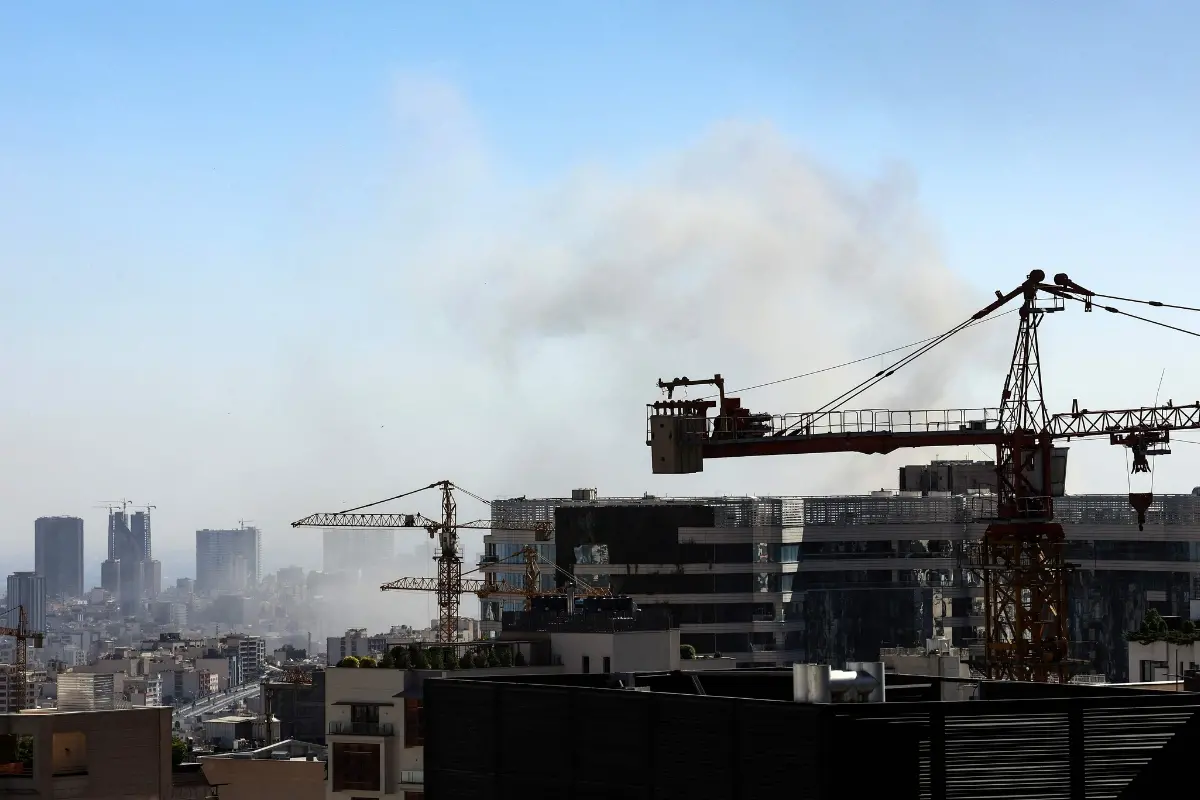
Tehran: Israel’s military on Thursday issued an urgent warning advising civilians to evacuate the area around Iran’s Arak heavy water reactor, raising fears of a potential imminent strike on a nuclear-linked site.
The message, posted on X (formerly Twitter), included a satellite image of the Arak facility, circled in red—a tactic previously used in Israeli warnings ahead of confirmed airstrikes.
Located around 250 kilometres southwest of Tehran, the Arak heavy water reactor has been a focal point of nuclear proliferation concerns. Heavy water reactors, while used for civilian energy production, generate plutonium as a byproduct, which could provide an alternate route for Iran to develop nuclear weapons, bypassing the enriched uranium path.
Under the 2015 nuclear deal, Iran agreed to redesign the Arak reactor to limit its plutonium output. The UK had stepped in to support this redesign effort after the United States withdrew from the accord in 2018 during President Donald Trump’s administration.
Although Iran activated the reactor’s secondary circuit in 2019, the move did not technically breach the nuclear agreement. However, mounting restrictions imposed by Iran on the International Atomic Energy Agency (IAEA) have led to significant monitoring gaps. The IAEA has stated that it lost “continuity of knowledge” regarding Iran’s heavy water stockpile, meaning it cannot confidently verify Iran’s production levels or intentions.
The IAEA last inspected Arak on May 14, 2025. Since then, rising regional hostilities and Iran’s curbs on international oversight have increased tensions. Israel’s threat of a strike follows weeks of drone and missile exchanges between the two countries, and comes amid Israeli attempts to destroy what it deems nuclear threats inside Iranian territory.
Global concern has mounted, with the IAEA urging Israel not to target nuclear infrastructure. However, Israeli leadership has signalled a zero-tolerance stance on Iran’s potential to acquire weapons-grade materials, especially under wartime conditions.
If carried out, a strike on Arak would represent a significant escalation in the conflict, crossing a red line long avoided in Middle Eastern military confrontations.
Meanwhile, US President Donald Trump, speaking from the White House, urged both sides to reach a deal and bring the fighting to an end. “Iran and Israel should make a deal, and will make a deal,” he wrote on Truth Social, hinting at behind-the-scenes negotiations. However, Trump refused to confirm whether the US would engage militarily, adding, “it’s late to be talking” and calling Iran “totally defenceless.” He warned that unless Iran surrendered unconditionally, the US would “blow up all the nuclear stuff.”
Iran’s Supreme Leader Ayatollah Ali Khamenei rejected Trump’s calls for surrender outright, saying the Iranian nation would not yield to pressure or threats. “Any US military intervention will bring irreparable damage,” Khamenei declared in a televised speech.
In Geneva, Iran’s ambassador to the UN warned that any formal US involvement would be seen as complicity in Israeli actions and would provoke direct retaliation. Iran has also restricted internet access across the country as airstrikes continue and civilian casualties rise.
Russia has issued its own warning, with Foreign Ministry spokesperson Maria Zakharova saying the situation was “millimetres away from catastrophe,” referencing Israel’s repeated strikes on nuclear infrastructure.
The ongoing exchanges have raised alarm across the Middle East and beyond, as regional powers and international organisations scramble to de-escalate a situation that now threatens to spiral into a wider conflict.