Israel and Iran trade strikes for third day as civilian toll mounts, over 230 dead
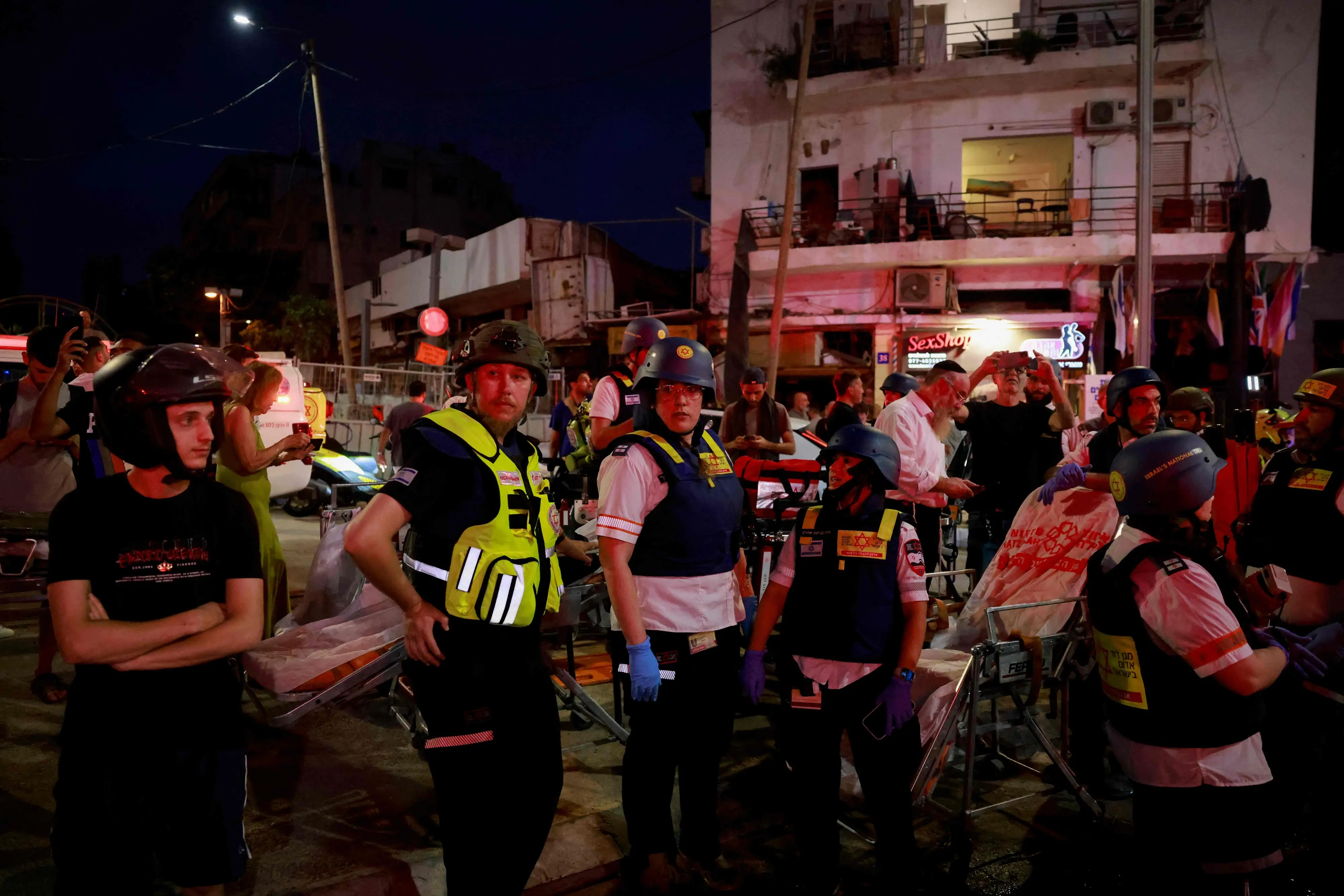
Dubai: Israel and Iran exchanged intensified missile fire for a third consecutive day on Sunday, ignoring international pleas for de-escalation as the death toll climbed and critical infrastructure was struck across both nations.
Iranian authorities reported 224 deaths and 1,277 injuries, blaming Israel for targeting oil refineries, residential zones, and even the Foreign Ministry. Israel confirmed it aimed its offensive at Iran’s nuclear programme and military leadership, stating that Iran has launched over 270 missiles since Friday, with 22 hitting Israeli cities and killing 14 people, injuring 390.
Major sites targeted, high casualties reported
Israel’s strikes have expanded beyond military targets to include government buildings, energy facilities, and residential areas, most notably Shahran oil depot, South Pars gas field, and the Foreign Ministry in Tehran. Iran acknowledged that the intelligence chief of the Revolutionary Guard, Gen. Mohammad Kazemi, was among those killed, along with two other generals.
Iran’s state television broadcast harrowing images of civilians caught in the devastation — a man carrying a dust-covered baby, a woman bleeding and crying from the rubble, and lines of panicked civilians fleeing Tehran. Metro stations and mosques have been repurposed as bomb shelters, and long queues formed at petrol stations despite officials denying fuel shortages.
The Washington-based Human Rights Activists group put the Iranian death toll far higher, at 406 dead and 654 wounded, contradicting official figures.
Israeli cities hit, children among the dead
Missiles fired by Iran struck deep into Israeli territory, including Bat Yam, Rehovot, and Tamra:
Six people, including a 10-year-old boy and 9-year-old girl, were killed in Bat Yam when a missile struck a high-rise.
In Tamra, four more, including a 13-year-old, were killed.
42 people were injured in Rehovot, with Israel’s Weizmann Institute of Science sustaining damage.
Haifa’s oil refinery was also hit, and Ben Gurion Airport remained closed for the third day.
Trump nixed Israeli assassination plan
In a stunning revelation, a US official told AP that President Donald Trump had vetoed an Israeli plan to assassinate Iran’s Supreme Leader Ayatollah Ali Khamenei, who commands both spiritual and military power in Iran. This signals how far Israel might have been prepared to go.
Nuclear facilities damaged
Israeli strikes have also severely damaged Iran’s nuclear infrastructure:
- Satellite imagery confirmed significant damage to Natanz, Iran’s main enrichment facility, including its power supply buildings.
- The IAEA reported destruction of four critical buildings at the Isfahan uranium conversion facility, though no radiation leakage was detected.
- An Israeli official stated that it could take “months, maybe longer” to restore operations at Natanz and Isfahan.
As a result, nuclear talks scheduled in Oman on Sunday were cancelled.
Netanyahu threatens regime change, Iran vows retaliation
In an interview with Fox News, Prime Minister Benjamin Netanyahu suggested that regime change in Iran “could certainly be the result” of the conflict. He also alleged, without evidence, that Iran planned to supply nuclear weapons to Houthi rebels in Yemen.
Iran’s Foreign Minister Abbas Araghchi said retaliation would cease if Israeli attacks stop, a conditional ceasefire proposal that Tel Aviv has so far ignored.
Regional tensions and humanitarian fears rise
The conflict is rapidly evolving into a broader regional crisis, already layered atop Israel’s continuing war with Hamas in Gaza. The dual front has led to concerns over military overreach and humanitarian fallout.
In Israel, air raid sirens rang out across Jerusalem, Tel Aviv, and Haifa, sending civilians racing to shelters. In Iran, entire neighbourhoods have been reduced to rubble, and fears are growing over the targeting of critical energy infrastructure, which could have global market implications.
With the death toll rising, diplomatic talks halted, and nuclear facilities compromised, the Israel-Iran war appears poised to escalate further in the coming days.
(With AP inputs)