Far beyond self-defense? Experts assessing the proportionality of Israel's military actions in Gaza
On 7 October 2023, over 1,000 Hamas militants launched a deadly assault on southern Israel, killing around 1,200 people and taking 250 hostages. In response, Israeli Prime Minister Benjamin Netanyahu declared, “Israel is at war.”
Since then, Israel’s military campaign in Gaza has led to the deaths of over 54,000 Palestinians, most of them women and children.
Initially, many nations supported Israel’s right to self-defence, citing Article 51 of the UN Charter, which affirms a member state's inherent right to respond to an armed attack. Israel maintained this stance, asserting that its actions, aimed at defeating Hamas and rescuing hostages, were lawful and necessary.
However, international legal experts, including Professor Donald Rothwell of the Australian National University, are now questioning whether Israel's continuing military operations still meet the legal criteria for self-defence — specifically the principles of necessity and proportionality.
While the necessity of a response to the October 7 attacks was clear, and Israel’s initial military objectives were targeted, the prolonged nature of the assault, large-scale destruction, and mounting civilian casualties in Gaza raise concerns over whether the proportionality requirement is still being observed.
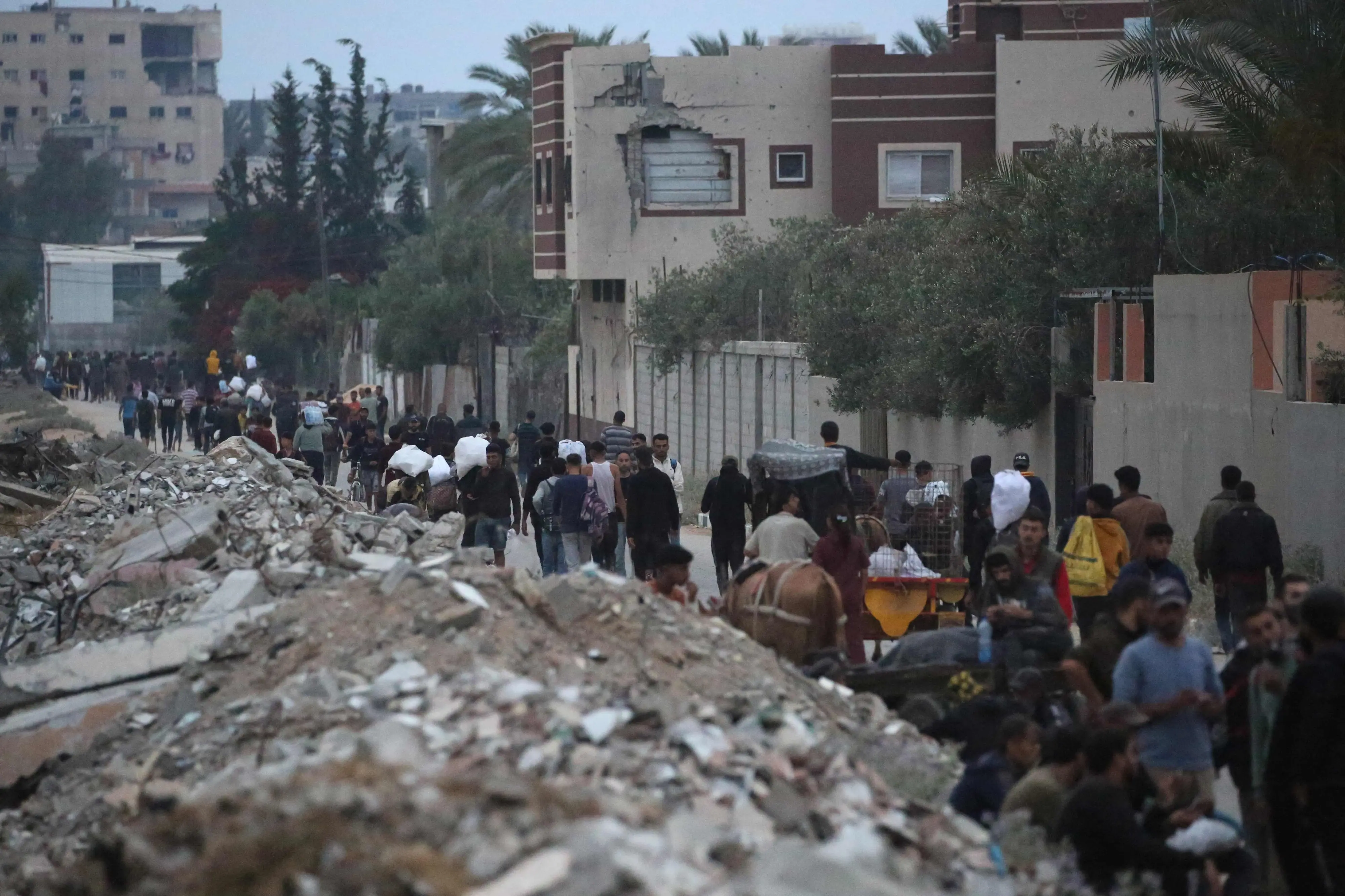
Under international law, proportionality must be maintained throughout a conflict. Legal precedent does not permit a military campaign to destroy an entire territory in pursuit of non-state actors. Military force should be directed at hostile combatants, not civilians — yet Israel’s campaign has resulted in widespread civilian deaths, famine-like conditions, and the devastation of entire towns.
Some argue Israel’s continuing actions, especially following Defence Minister Israel Katz’s statement on 30 May about “annihilating” Hamas, may no longer qualify as proportionate self-defence. Instead, these actions could meet the legal definition of an act of aggression — a violation under both the UN Charter and the Rome Statute of the International Criminal Court.
Although Israel could claim its operations are part of a legitimate security effort as an occupying power in Gaza, the scale and intensity of the offensive far exceed the scope of occupation-related military control. Moreover, the international community has already debated the legality of Israel’s long-term occupation of Gaza prior to the 2023 war.
If self-defence no longer applies, Israel’s actions may fall under the category of unjustified military aggression, much like Russia’s invasion of Ukraine, which has been widely condemned. Whether global powers apply the same standards to Israel remains a critical test of international legal consistency.
As Rothwell concludes, the legal right to self-defence is not indefinite. In the absence of proportionality and given the humanitarian impact of Israel’s prolonged military campaign, its justification under international law may no longer hold.