Netanyahu leads Israel election but falls short of majority: Will he remain PM as new Knesset takes oath on November 10?
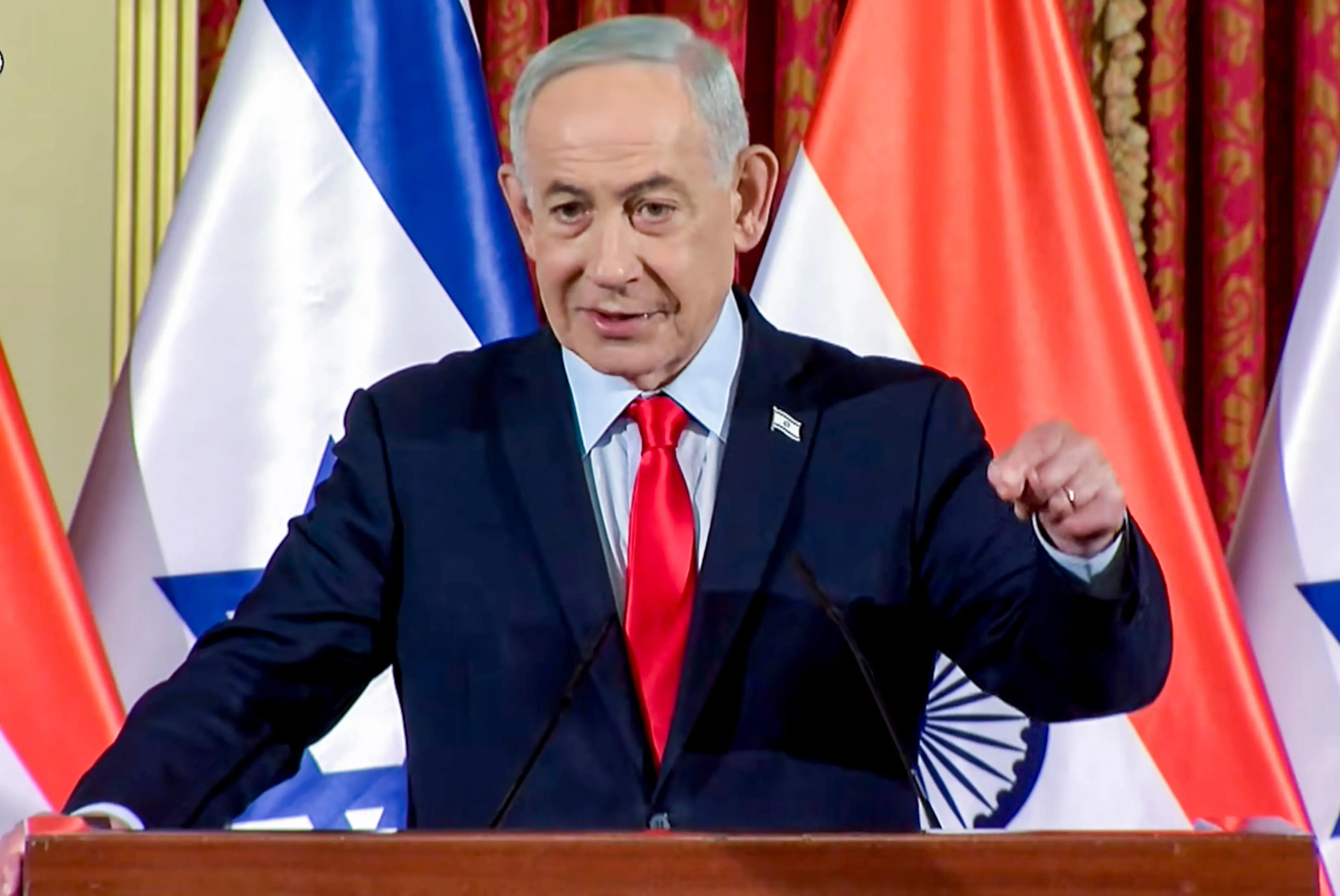
Jerusalem: Israel's Prime Minister Benjamin Netanyahu has emerged ahead of his political rivals in the October 27 general election, but his coalition has fallen short of a parliamentary majority, according to the final results published by the Central Elections Committee on Friday, October 30.
Netanyahu's right-wing and far-right coalition secured 53 seats in the 120-member Knesset, with his Likud party emerging as the largest single party with 27 seats. The opposition bloc led by centrist Gadi Eisenkot won 48 seats, while Arab political groupings secured a combined 19 seats.
A party or coalition needs at least 61 seats to command a majority in the Knesset. The results therefore leave both major political blocs short of the numbers required to form a government independently.
The outcome could lead to prolonged coalition negotiations, with Arab parties potentially playing a decisive role in determining the next government. If political parties fail to reach an agreement within the prescribed period, Israel could face another election.
Netanyahu's Likud emerges as largest party
The final results confirmed Likud's position as the largest party in the newly elected Knesset, securing 27 seats under Netanyahu's leadership.
According to the reported seat distribution, the opposition grouping led by Gadi Eisenkot secured 48 seats. The Arab political groupings, Ra'am and the Joint List, won a combined 19 seats.
The final voter turnout stood at 77.9 per cent, with 5,716,665 votes cast.
The newly elected 26th Knesset is scheduled to be sworn in on November 10. The official results will be submitted to Israeli President Isaac Herzog on November 4 after the completion of checks concerning possible errors and electoral inquiries.
Arab parties emerge as potential kingmakers
The election has increased the importance of Arab political parties in Israel's government formation process.
Ra'am, led by Mansour Abbas, and the Joint List together secured 19 seats. Their combined numbers could become significant in parliamentary negotiations because neither the Netanyahu-aligned bloc nor the opposition grouping has reached the 61-seat threshold.
Yousef Jabareen, head of the Joint List, told AFP that he was willing to cooperate with the opposition to remove Netanyahu from power but would not join an opposition-led government.
Meanwhile, Abbas reportedly expressed doubts about the possibility of establishing a minority government led by Eisenkot with outside support from Arab parties.
Only the Democrats have publicly indicated openness to including Arab-majority parties in a government arrangement, according to the reports.
A possible unity government involving Likud and opposition figures such as Eisenkot, Naftali Bennett and Avigdor Lieberman could theoretically command 66 seats. However, such an arrangement faces political obstacles because opposition parties campaigned on removing Netanyahu from office, while Netanyahu remains dependent on his right-wing and far-right allies.
Allegations of foreign interference add to election controversy
The publication of the results came amid allegations by Netanyahu's Likud party that foreign money may have been used to influence voting among Arab-Israeli communities.
The controversy centres on claims that Ra'am received funding from Qatar to finance alleged vote-buying operations. Likud described the allegations as the “Ra'amgate scandal” and claimed that the election had been stolen. However, the government has not provided evidence to substantiate the accusations.
Ra'am leader Mansour Abbas denied wrongdoing and welcomed an investigation. The Joint List accused Netanyahu and his allies of conducting a campaign of incitement against Arab voters.
Israel's domestic security agency, Shin Bet, is investigating suspected irregularities. However, it clarified that the investigation was not intended to cast suspicion on an entire community that had participated in the democratic process.
The Central Elections Committee also rejected suggestions of widespread electoral irregularities, describing claims of systematic problems as groundless. It clarified that the investigation would not affect the published seat distribution.
Opposition leaders accused Netanyahu of attempting to undermine confidence in the election results after failing to secure a majority. Gadi Eisenkot described the allegations as part of a coordinated effort to delegitimise the outcome.
Qatar also rejected the accusations, describing them as “ridiculous and dangerous”.
Netanyahu's political position and the road ahead
The election outcome presents a challenge for Netanyahu, who has served as Israel's prime minister for several years and depends on support from right-wing, far-right and ultra-Orthodox parties.
His coalition's 53 seats represent a significant reduction from the 68 seats held by the outgoing governing bloc.
The opposition, meanwhile, faces its own challenge in bringing together parties with differing political positions. Although cooperation with Arab parties could provide the numbers needed for a majority, several opposition factions have ruled out such an arrangement.
Israeli President Isaac Herzog is expected to consult political parties after receiving the official results on November 4. He will then nominate a candidate considered most capable of forming a government.
If the first candidate fails, another politician may be given the opportunity to secure parliamentary support. Failure to form a government within the prescribed timeframe could eventually lead to another election.
The new Knesset is scheduled to begin its term on November 10.