Eisenkot begins coalition talks with Netanyahu's Likud amid 10 demands for Israel unity government
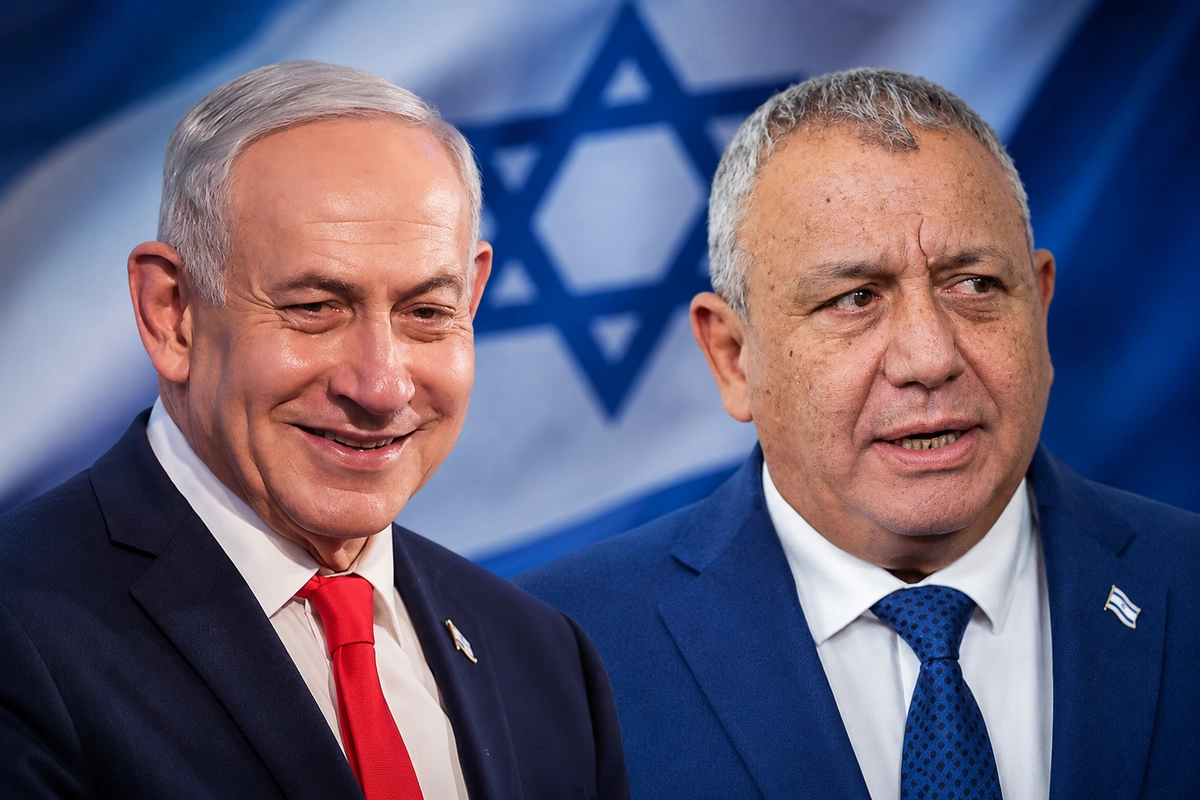
Jerusalem: Can Israel's political rivals put aside their differences to form a unity government?
Gadi Eisenkot's decision to invite Benjamin Netanyahu's Likud party to coalition negotiations has opened a new chapter in Israel's post-election government formation, even as the outgoing prime minister's list of demands threatens to complicate the process.
Eisenkot's centrist Yashar party announced on Saturday that talks with Likud would begin on Sunday, describing the move as a ‘genuine commitment to forming the broadest possible government’.
The former military chief, tasked with forming Israel's next government following the October election, faces a deadline next month.
The election failed to deliver a clear parliamentary majority to either political bloc, leaving coalition negotiations crucial to determining the country's next leadership.
However, the proposed unity arrangement faces considerable political hurdles.
Netanyahu reportedly insists he remain prime minister for the full four-year term, ruling out any rotational arrangement that would allow Eisenkot to take over the position.
According to Hebrew media reports, Likud's list of 10 demands was presented during an earlier meeting between representatives of the two parties.
The conditions reportedly reflect the party's initial negotiating position and highlight the significant differences between Netanyahu and Eisenkot's camps.
Among the key demands is forming a government that includes all political parties except the two Arab-led lists.
Likud has also called for coalition partners to support another offensive against Iran, maintain the current judicial overhaul legislation until a consensus is reached, and oppose the establishment of a Palestinian state.
The party has further demanded a political commission of inquiry into Hamas's October 7, 2023, attack on Israel, rather than a state commission.
Other conditions reportedly include advancing legislation on ultra-Orthodox military conscription, maintaining Israel Defence Forces positions in Gaza until the threat from Hamas is eliminated, and making no changes to the conditions of imprisoned Hamas Nukhba fighters.
Likud has also sought a joint declaration recognising Israel as the nation-state of the Jewish people.
In its statement on Saturday, Yashar said Eisenkot had instructed the party's negotiating team to invite its Likud counterparts for a ‘marathon series of talks’, beginning with the meeting scheduled for Sunday.
The announcement comes amid divisions within Eisenkot's broader political camp over the possible composition of the next government. The options include alliances with ultra-Orthodox parties, cooperation with Arab-majority lists, or a national unity arrangement involving Netanyahu's Likud.
Former prime minister Naftali Bennett, a key figure in Eisenkot's camp, has already drawn a clear line.
On Saturday, he called for a ‘Zionist unity government headed by Eisenkot’ and ruled out joining a government led by Netanyahu or his political bloc.
Netanyahu, meanwhile, has repeatedly advocated a national unity government, arguing that it is necessary to safeguard Israel's security.
Likud has also demanded an end to what it described as ‘all personal attacks and incitement’, alongside an end to political boycotts against Netanyahu and his government.
Eisenkot has previously indicated that he would be open to bringing members of Likud into his government, but has ruled out serving under Netanyahu's leadership.
The former military chief has also signalled that he does not intend to allow coalition negotiations to continue indefinitely.
On Friday, he said he would be prepared to put a minority national emergency government before parliament for a vote if efforts to establish a broad-based coalition fail.
With Likud's demands and Bennett's opposition to Netanyahu's leadership now firmly in the picture, Sunday's negotiations could prove critical in determining whether Israel moves towards a unity government or another political deadlock.