Israel kills Iran’s Intelligence Minister; Who was Esmaeil Khatib, Netanyahu vowed to ‘hunt down’
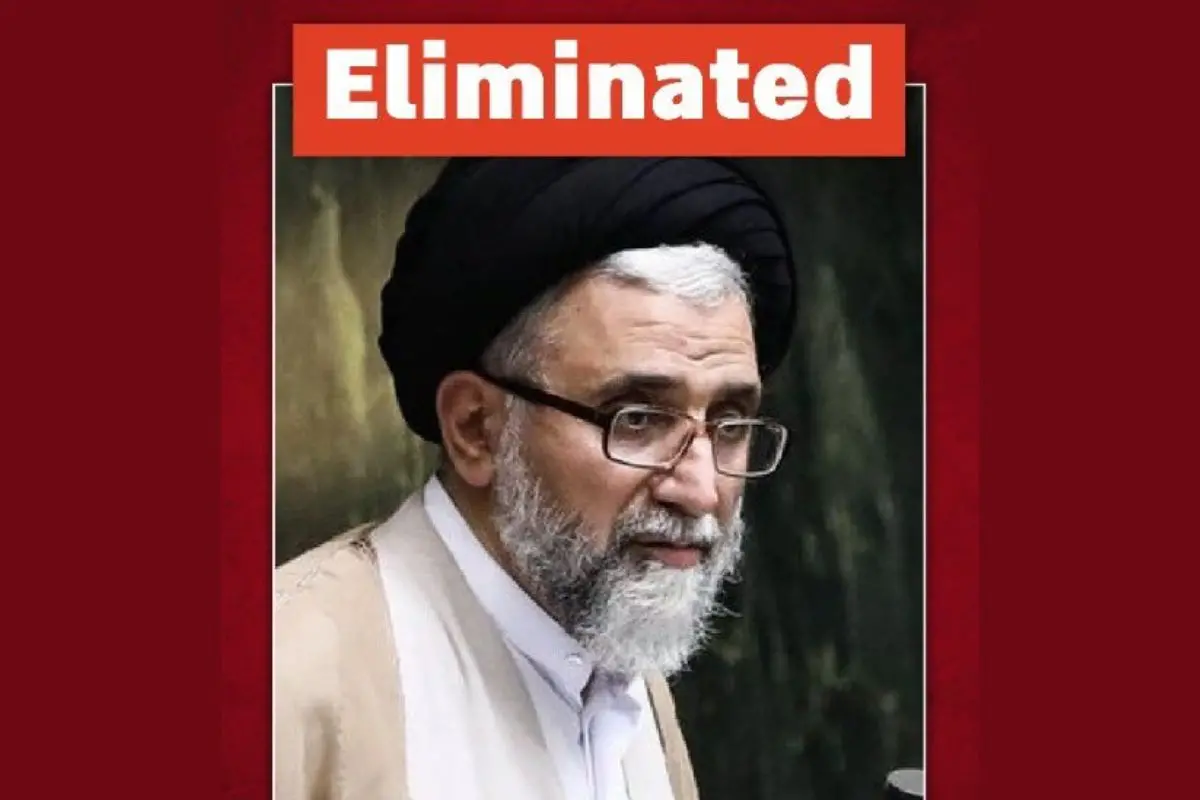
Jerusalem: The geopolitical landscape of the Middle East has shifted once again as the Israel-Iran war enters its third week of high-intensity conflict. On Wednesday, the Israeli government confirmed the elimination of another top-tier Iranian official, Intelligence Minister Esmaeil Khatib, marking a devastating blow to Tehran's internal security apparatus.
The announcement follows the confirmed death of Iranian security chief Ali Larijani just 24 hours prior. In a move that signals a total departure from traditional engagement rules, Israeli Defense Minister Yoav Katz declared that the military now has a standing "green light" to target any senior figure within the Islamic Republic without seeking further political approval.
Who was Esmaeil Khatib and why was he targeted?
Esmaeil Khatib served as the architect of Iran's domestic intelligence, responsible for suppressing internal dissent and coordinating shadow operations abroad. His elimination is seen as a strategic masterstroke by the Israel Defense Forces (IDF) aimed at blinding the regime's surveillance capabilities during an active war. Minister Katz emphasised that the "operational circle" has been closed on Khatib, following a "hunt" that began shortly after the conflict ignited in late February.
The IDF’s newfound authority allows Prime Minister Benjamin Netanyahu and the defense ministry to bypass bureaucratic delays.
Is the Middle East facing a total regime collapse in Iran?
The current conflict, which began on February 28, 2026, following the death of Supreme Leader Ayatollah Ali Khamenei in a US-Israeli strike, has rapidly escalated into a "campaign of decapitation." Israel has already confirmed the targeting of Akram al-Ajouri, the military head of Palestinian Islamic Jihad, and has publicly vowed to hunt down the new Supreme Leader, Mojtaba Khamenei.
Mojtaba Khamenei has notably remained in hiding since succeeding his father, a sharp contrast to Ali Larijani, who was seen walking among crowds in Tehran just days before his death. Analysts suggest that the systematic removal of figures like Larijani and Khatib leaves the regime without its most experienced survivalists, potentially triggering an internal power vacuum.
How has Iran responded to the death of its top leaders?
While Tehran has not yet officially commented on the death of Esmaeil Khatib, the atmosphere in the capital is one of fury and mourning. Funerals for Larijani and over 80 Iranian sailors, killed in a recent US strike near Sri Lanka, were scheduled for Wednesday, though the volatile security situation has made public gatherings increasingly dangerous.
The Islamic Revolutionary Guard Corps (IRGC) remains defiant, launching a fresh wave of missile strikes toward central Israel in retaliation for the loss of their "martyrs." The Guards have warned that the blood of their fallen leaders will serve as a "national awakening" against Israel and its allies. However, with the loss of its primary intelligence and security chiefs within 48 hours, the regime’s ability to coordinate a sustained counter-offensive remains in question.
What is the next phase of the Israel-Iran war?
As Israel continues its "search and destroy" mission against the Iranian leadership, the focus has shifted to the "shadow fleet" and regional proxies. Israel’s strategy appears to be a total dismantling of the "front of global arrogance," as Tehran describes its network.